

There is no ocean of abundance
What emerges from this moment is not a singular crisis but a layered one, shaped by global disruptions, local cost pressures, and structural vulnerabilities. Workers are leaving Delhi not because the city has stopped offering work, but because it has become increasingly difficult to live sustainably in the capital city while working.
It is high time South Asian countries not only pass stricter environmental regulations but also strictly enforce them, making sure that there is no factory releasing waste water without adequate treatment. Besides, upholding legally binding labour standards must also be a priority together with ensuring safety of the workplace environment.
The Korean noodle story is not really about noodles. It is about what happens when cultural influence travels faster than commercial infrastructure and faster than regulatory awareness. India's Gen Z - and possibly that of other South Asian countries - did not wait for brands to tell them what to eat. They watched K-dramas, did spice challenges, and built market demand that brands, regulators, and consumer education campaigns have simply not kept up with.
If “security” is to have real meaning, it must be grounded in the lived experiences of those it is intended to protect. This requires a shift from state‑centred metrics to civilian‑centred measures of stability; where continuity of daily life, equitable protection, and psychological well‑being are integral to how we define security.
There is no ocean of abundance
Emanating from curiosity, quest, or doubt, questioning had always been a part of our rich ancient intellectual, theological and philosophical traditions
“When asked to bend some chose to crawl”
When the then Indian railway minister Laloo Prasad Yadav introduced kulhads, or traditional earthen cups, as a substitute to phase out the nonbiodegradable plastic cups, some environmentalists were quick to point out that given the scale of demand, production of disposable kulhads would lead to consumption of the fertile topsoil, taking over a decade to fully decompose and replenish the soil
It has been revealed in the media that ISIS leaders have gone online due to COVID-19 and has published a new cybersecurity magazine to teach tactics, without coming into the radar of the intelligence agencies, on how to carry out their activities
After being ruled by foreign powers for centuries, 73 years after independence appear to be not very long. But in such a relatively short time, we have walked with strides by being loyal to our own constitution
Happiness is not a matter of chance
I was born in Lucknow, Uttar Pradesh, three years after independence and so smelled the early fragrance of independent India
After World War II, the world observed an increase in regional organisations with an objective to strengthen cooperation in shared areas
“Elephants, because of their size, appetite, and migratory habits, disperse more seeds of more species further than any other animal
In recent years, India has received considerable attention not only in the political and cultural world, but also in the financial world
It is reported that bank employees’ unions and the Indian Banks’ Association (IBA) have agreed for an annual wage hike of 15 percent to the bank staff, a move that will result in an additional yearly outgo of around Rs 7,900 crore for the banks
O, Hiroshima, O Nagasaki
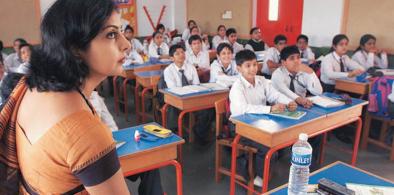
After nearly 34 years, the Government of India has come up with a new education policy, which aims to upgrade the school education system and higher education system as per the present need and to compete with the world-class education system
We never need read the Scriptures