During the recent green-chili crisis, India helped Bangladesh control and stabilize its local market prices through chili exports, even though that led to its sharp price rise back home.


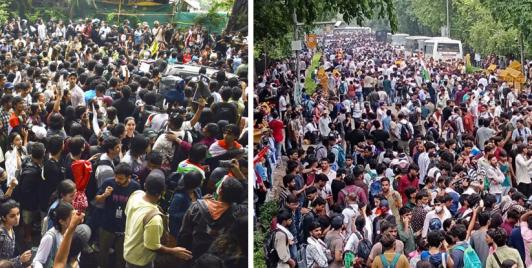
The power of the cockroach in the current viral moment of the CJP seems to resonate with something Kafkaesque that is crawling beneath: unwanted, impossible to eliminate. The apparent insult is meant to make someone feel unworthy. But when an insult is taken up by a community, it culminates in a “badge”, where shame becomes performance, humiliation becomes satire, and satire culminates in political self-recognition.
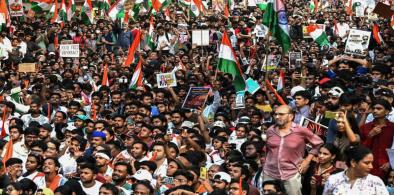
The CJP’s journey, however, is no longer confined to the politics of examination failures and youth precarity. Its School Thik Karo campaign has extended the movement’s work towards accountability for basic public-school infrastructure, while its latest mobilisation has turned to electoral accountability.
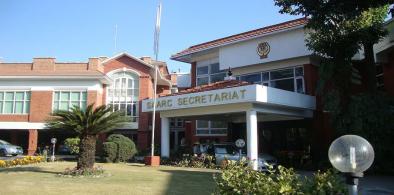
Whether or not “Himalayasia” ever catches on as a name, the underlying question it poses is a serious one for a region that houses a quarter of the world’s population, spends tens of billions of dollars a year arming itself against its own neighbors, and still trades more easily with the far side of the globe than across its own borders

South Asia often discusses youth mobility after a student has already decided to leave the region. A stronger regional system would give students another option before that point: international experience that is close enough to be practical, but different enough to change what they learn.

During the recent green-chili crisis, India helped Bangladesh control and stabilize its local market prices through chili exports, even though that led to its sharp price rise back home.
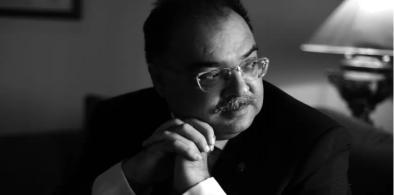
How disorderly politics and economics combined to create the roiling mess that sank the domestic infrastructure ecosystem, including the airlines, in Pakistan. This was after all, one of seven Pakistani planes to crash within a decade.
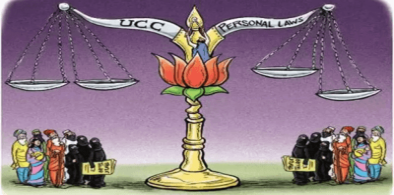
In the proposed UCC now being formulated, all aspects that are related to protecting the privileges of women should be taken out and included in a new Uniform Women Code.
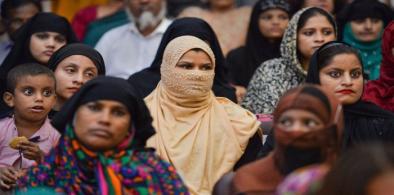
Prime Minister Narendra Modi’s government has proposed a Uniform Civil Code for India where all citizens would have the same law apply to their economic, social and religious rights. If such a law were to be enacted, it would ensure that injustices done to Muslim women in India were wiped out in one stroke.
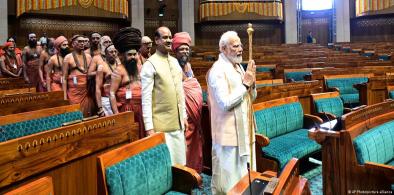
It is high time that every Indian, whether Christian, Muslim, Sikh, or Buddhist, recognize that India is essentially a country based on Hindu ethos, even as people belonging to other religions are at total liberty to follow their religious dictums. Any objection to Modi following Hindu religious practices for inaugurating the new parliament is not appropriate. Modi has shown the way and blown away the unreal secularism phobia.
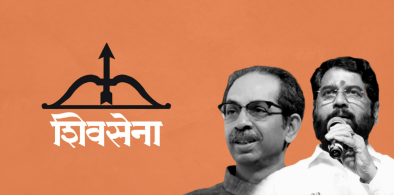
There was clearly visible cheap politics on all sides but the Supreme Court seems to prefer the politics of the Thackeray faction rather than the legislative majority.
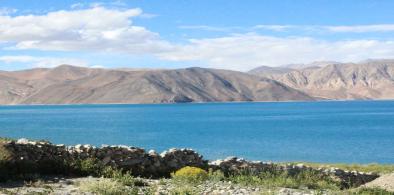
Ladakh is endowed with an excellent water supply through pristine rivers which flow across the land. This water can be used in the greenhouses to grow vegetables, fodder and other produce.
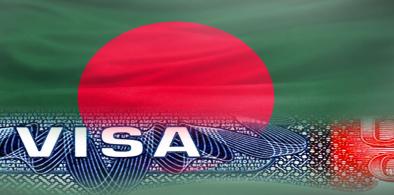
As a result of this new US policy, a major change is being observed in the policy of the Western world towards Bangladesh. If the BNP boycotts the elections as a result of the new policy, they will not get any support from the Western world - that is clear.
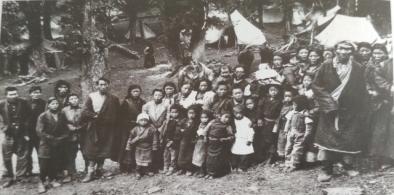
Modi’s laudable efforts for world peace by trying to bring accord between Ukraine and Russia would be an incomplete exercise if he fails to espouse nearer home the plight of the Tibetans and highlight their pain
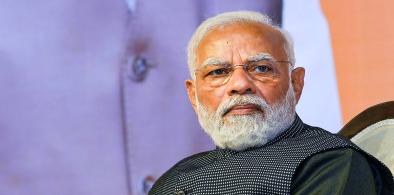
With just around 12 months before the next parliamentary election, Modi has little time to lose in meeting the expectations of the people in eradicating corruption.
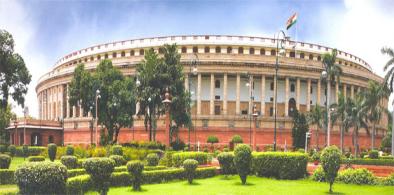
Otherwise, democracy will remain meaningless-- once in five-year exercise by ordinary citizens who are represented by MPs/MLAs who themselves are bonded labourers of a controlling coterie.
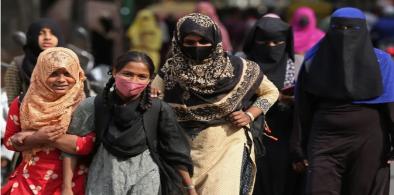
India has made school education free and compulsory for all and even provided additional privileges to minority and traditionally disadvantaged communities. However, the spread of education among the Muslim communities still lags behind the mainstream for a variety of reasons, mostly economic, regressive social practices, and an inadequately enlightened clergy.
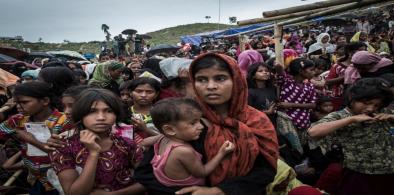
The Rohingyas will not consent to reside in the "model village" that is being constructed in Maungdoo for the rehabilitation of the Rohingyas. Most significantly, not a single Rohingya wants to go back to Rakhine until they can be assured of citizenship.

ChatGPT and Microsoft’s Bing on Edge are the trending experimental uses of artificial intelligence, harnessing its powers to write reports and collate information.
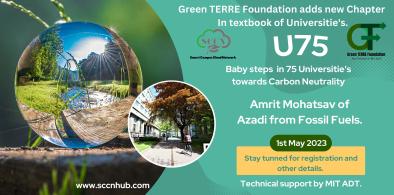
Under SCCN universities are encouraged to kick start the localising and implementing the SDGs and Net Zero on their campuses.






