
Bombing of Tehran

The Iran Conundrum, Trumpian Dilemma and the Shifting Sands of West Asia

Ray Takeyh, senior fellow for Middle East studies at the CFR believes that the West could have got much better dividends without this war. He says that Araghchi had tabled proposals that called for the suspension of uranium enrichment for several years before allowing it to then resume at low levels. Linda Robinson, CFR’s senior fellow, also feels that there will be mass American casualties if special forces are deployed. Already Arab States are upset with these joint operations with Israel. The consensus among CFR experts is that Trump’s ambitious objectives cannot be achieved merely with joint assaults by air or sea. 

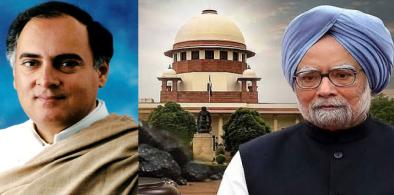
Custodial Killings with no Judicial Remedies: A Sad Tale Across Two Punjabs

Was this the legacy that the great freedom fighters from Punjab – or extend that logic to rest of India and Pakistan where custodial deaths are common – would have wanted their land and its future generations to inherit? As if the breakdown of the country and its gory partition with a divided Punjab were not enough to torment them in their graves, wouldn’t this thought leave them completely shattered and desolate: this divided land is united in its conviction to perpetuate the very colonial mindset they fought. 

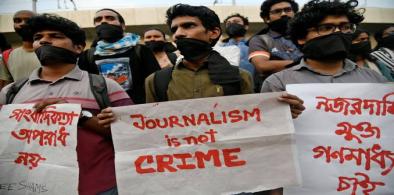
Bangladesh's Recent Election was Neither Free nor Fair

The Interim Government arranged extensive state protocol and privileges to the government-sponsored party, National Citizen Party (NCP), parties close to IG like Jamaat e Islami (JI) and their alliances, almost as if they were the government themselves. Similar privileges were given to the BNP and its allies. But no such facility was extended to the JP.

Competitive Populism vs Economic Development: When Forests are Monetised to Fund Revenue Expenditure

A democracy that is cutting down forests for votes risks mortgaging its ecological future for an electoral present. Welfare is essential; appeasement is corrosive. The difference lies in fiscal discipline, transparency and respect for citizens, who are not beneficiaries, but are owners of the republic. If we do not draw that line now, next year’s burden will demand another forest.

More on Perspective

As Nepal Goes to the Polls, Deepfakes and AI Manipulation Undermine Democracy

The smartphone that freed a generation is now being used against it. The platforms that carried the protest are now carrying the smears. The digital spaces where young Nepalis found their political voice are today flooded with manipulated images, fake audio, and AI-generated lies targeting the very candidates their movement made possible. The weapon and the wound are the same object.

Nepal’s Gen Z Seeks Alternative Politics, But Fragmentation a Concern

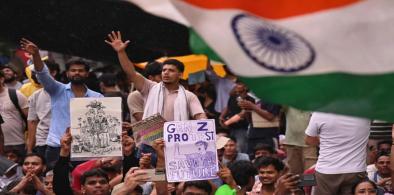
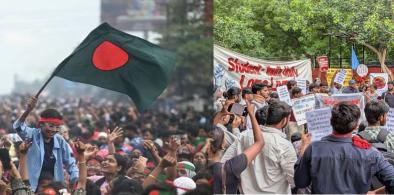
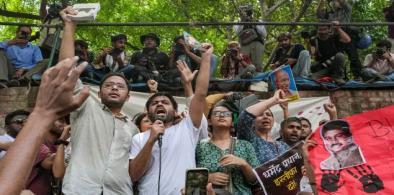
Politicians, who were silent, complicit, or even instigative during last September’s tragedy, are trying to rebrand themselves on social media to be palatable to “Gen Z” - Nepal’s youth population that was instrumental in overthrowing the last government, leading to comparisons with Bangladesh’s ‘Monsoon Revolution’ of 2024 and Sri Lanka’s Aragayala of 2022. 

'Honour’ Still Tries to Silence Women With Community-Sanctioned Enforcement

What links these cases — Pakistan, Britain, India, the Netherlands — is not geography or faith, but backlash. ‘Honour’ is used as a pretext to kill not because women are obedient, but because they are not. It is activated when women seek education, choose partners, leave abusive homes, testify in public, or simply insist on being treated as full human beings.


Challenges Facing an AI-Geared World: A Robot Called Out the Failings in India’s Higher Education System

How do our regulators allow a university to function with almost every leadership position, academic and administrative, occupied by a member of the promoter family? How does patent filing become a game, as alleged in this case, or how does a paper authored under the university on banging vessels to kill the coronavirus get written? The incident brought to sharp light how India has slipped into an education system run on high fees by private institutions with questionable credentials.

BNP Rule in Bangladesh May Not Augur Well For India

Under the BNP, particularly during Khaleda Zia’s rule, four major anti-India terrorist camps were being run in the Chittagong Hill Tracts. Notably, these terrorist training camps had Al Qaeda and Pakistan ISI/military instructors. As a young officer, Pervez Musharraf (later president of Pakistan) also served as an instructor in these terrorist training camps. To assume that the radical elements of the BNP will not be in league with the JeI will be the height of naviete.

Four Stars of Destiny: Questions The Debate Is Missing

India needs to evolve a comprehensive and integrated strategy for the defence of the LAC, one that brings together military preparedness, diplomatic engagement, infrastructure development, technological surveillance, economic resilience, and informed public communication. Such a strategy cannot remain confined to closed institutional silos; while operational specifics must remain confidential, the broad contours of national intent and preparedness should be placed in the public domain. Transparency at the strategic level strengthens public confidence, builds national consensus, and signals clarity of purpose to adversaries.

Are Indian Farmers Being Trapped In Asymmetric Trade Relationships?

This is not a level playing field. American agriculture is industrial-scale, capital-intensive, and backed by massive state subsidies. Indian agriculture, on the other hand, survives on small and marginal farmers, fragmented landholdings, and minimal state support that often arrives late or not at all. Cheap imports don’t merely compete; they crush.
 

Profit And Purpose Are Not Enemies: Customers Patronise Companies That Are Making The World A Better Place

Companies that align what they earn with what they stand for can transform industries, drive innovation, and actually leave things better than they found them. They build trust that lasts. They attract talent that stays. They create customers who come back. The future belongs to businesses that figure out how to balance purpose and profit. Indian founders face a choice: build like Tata, with purpose woven into the foundation, or chase short-term efficiency like IndiGo and Micromax until the wheels come off.

This Is Not The Road To A Developed India

The emphasis on Vikisit Bharat (Developed India) is to be welcomed. Who would not want India to be developed fully but there remain huge questions in terms of the direction of this development and what the nature of development ought to be in an India where inequality remains high, health services are poor, and education poses many challenges that have been highlighted time and again.  Consider that the total percentage on education (Centre and State expenditure on education combined) is merely 3.3% of the GDP, and on health it stands at just 1.5%. This is a shockingly low number

India Needs A Strong Political Culture That Upholds Democratic Values

It may be argued that invoking the Bhutanese king’s principled stance as a reference point for a country as vast and diverse as India is deeply flawed—or, at best, a theoretical abstraction. Yet the fact remains: the ethos of good governance knows no geographical boundaries. If the highest leadership of a small, landlocked nation with limited resources could believe in, and strive towards, such ideals, why should our country fall short of visionary leadership, especially when it is far larger and endowed with greater capacities, opportunities, and strategic advantages?

India Needs To Get Real With The US and China

In this backdrop, opening up India fully to Chinese, including inviting the Chinese delegations, is akin to arranging visits of KFC owners to poultry farms! The hubris that this was to familiarize two big political parties and two economic powers with each other must have amused Beijing endlessly. Finally, insecurity is palpable in India’s handling of China and the US.  About time we get over this.

Somnath Temple: Instrumentalizing History As A Political Tool

History is not a tool to divide society and perpetuate the injustices of the past. It is there to show us what wrongs have happened in the past which should not happen again. We need to march towards a just society where all live the life of dignity and respect, a society where all of us enjoy equal citizenship rights.

Sri Lankan Government In A Fix Over Proposed Education Reforms: PM Under Pressure

Public opposition towards the reforms escalated after a web link to a gay dating site was found in one of the lessons in the grade six English language module.  This website was subsequently blocked by the regulator for internet users in Sri Lanka.  The lesson was intended to teach ten-year-old kids how to make online friends.

India's Celebrated Space Programme Under Cloud: ISRO’s second successive rocket failure Raises Uncomfortable Questions

Producing satellites for any purpose is an expensive endeavor. Failure to launch them has a profound impact not just on the client entities’ bottom lines but even the quality of science and services they may be seeking to pursue. Fifteen out of the sixteen satellites on the failed mission were from foreign entities, which constitute a lucrative market for ISRO. If they begin to nurse misgivings about ISRO’s reliability it can seriously dent not only the agency’s revenue but, more important, its reputation

Internationalisation Of Higher Education In India Is Key To India's Social Progress And National Strength

Internationalisation also plays a crucial role in addressing the long-standing issue of brain drain. For decades, large numbers of Indian students have pursued higher education abroad, particularly in North America, Europe, and Australia. While this has strengthened India’s global presence, it has also resulted in substantial outflow of talent and financial resources. Many students who leave choose not to return, contributing their skills to other economies.