Declining funds, deteriorating camp conditions, growing insecurity, and the adverse impact of the refugees on the host community have made Bangladesh a desperate host looking to reduce the burden. This crisis is also destabilizing regional security.
Sri Lanka’s political debate has long revolved around spy narratives, often casting suspicion on India and the United States. Yet, this fixation risks obscuring a more pressing reality. CrowdStrike’s 2025 Global Threat Report identifies Chinese espionage agencies as the most active worldwide, surpassing even the CIA. In 2024, China’s cyber operations expanded by 150 percent, while attacks on financial services, media, manufacturing, and industrial sectors surged by 200 to 300 percent compared to the previous year.
As Imran Khan enters his seventies behind bars, the stakes extend far beyond his individual fate. Should his detention continue—or worse, should harm befall him in custody—the consequences could be explosive. Public anger, already simmering, may erupt into widespread unrest, challenging the state’s ability to maintain control.
Bangladesh has survived partition, the liberation war, famine, floods, military coups, and democratic collapse. It has always returned. But returning is not the same as resolving. Fifty-six years after independence, the founding paradox remains: a nation whose birth is still debated cannot fully inhabit its future. The gun salutes will be loud and unambiguous. The questions they echo, however, about what Bangladesh is, who founded it, and whose vision should guide it, remain, as they have always been
For India, this raises complex challenges. Historically, India has positioned itself as a strong advocate of anti-colonialism and sovereignty. However, in the current context, its responses have often appeared measured and cautious, despite the direct implications for its interests—ranging from energy security and regional stability to strategic initiatives such as connectivity through Iran.
Declining funds, deteriorating camp conditions, growing insecurity, and the adverse impact of the refugees on the host community have made Bangladesh a desperate host looking to reduce the burden. This crisis is also destabilizing regional security.
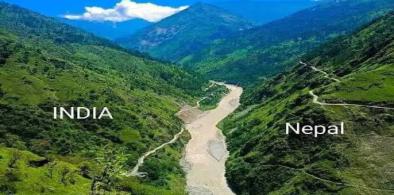
The Indus, the Brahmaputra, and the Ganges, as well as the Kabul river basin, which is interconnected to South Asian nations, are perennial rivers that have shaped and influenced South Asia's history, politics, culture, economy, and civilizations for many millennia on a shared basis.
If BRICS can truly identify issues of larger common interest and move forward on the basis of consensus, it can become the new leader of the post-Western world order where the NDB will be the primary competitor of the World Bank and IMF.
A few months back the members of the Taliban regime in Kabul attended a four-day ‘India immersion’ online course offered by the Ministry of External Affairs through IIM Kozhikode. The course was part of the capacity-building assistance through the ITEC (Indian Technical and Economic Cooperation) programme to developing countries, including Afghanistan.
The Major General-level talks (initially described as confidence building) apparently aim for a conducive atmosphere when Modi comes face to face with Xi at Johannesburg for the BRICS summit August 22-24.
If Bangladesh applies to join this year, it can be a member of RCEP from 2025 onward. Apart from Bangladesh, Nepal, and Sri Lanka are also reportedly eager to join the China-led trade bloc.
The Helmand River water issue has the capacity to escalate into a protracted and intense conflict, drawing both countries into a state of violence.
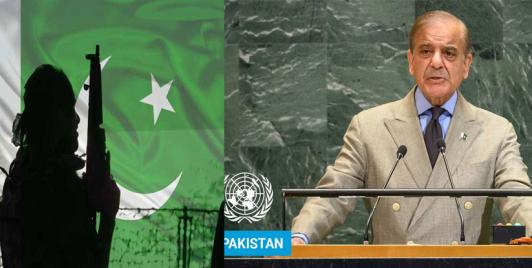
It is apparent the Pakistani military is the sole decision-maker for Pakistan and the arbiter of its destiny. The probability of a prolonged interim government under caretaker PM Kakar is a strong possibility during which time the Pakistani military will call the shots through its puppet figure.
Some South Asian countries have taken welcome steps toward the release of undertrial prisoners, including India, Pakistan, Nepal, Bhutan, and Bangladesh. These measures need to be implemented and applied consistently. Biraj Patnaik, Amnesty International's South Asia Director, says, “South Asia’s prisons are a blight on the region’s conscience...
The latest round of military-to-military talks was orchestrated to time with Prime Minister Narendra Modi attending the BRICS Summit in South Africa on August 22-24 and the G20 Summit in New Delhi on September 9-10, which Chinese President Xi Jinping is slated to attend.
The ISKP’s current objective is to prevent the Taliban from accomplishing its objective as a government in Kabul and prevent it from fulfilling its promises to the Afghan people. In order to achieve this, ISIS/ISKP will continue to target not just Taliban fighters but also nations that may have alliances with the Taliban government, such as China, Russia, and Pakistan.
As the US tries to break the stranglehold of China on its supply chains, especially in hi-tech, India is emerging as a venue for what is now called 'friendshoring' – developing manufacturing in friendly countries that can be reliable partners. From being a recipient of food aid from the US seven decades ago, India has emerged as a partner in defence, space, health and technology.
The project, like several other initiatives of Bangladesh PM Hasina, has caught the attention of the world's policymakers as the largest such rehabilitation project in the world.
With over 4000 weapons in unauthorized hands, the Manipur tinderbox can explode anytime. Firing at each other between the Meities and Kukis using an assortment of small weaponry is going on intermittently with the Manipur Police and security forces unable to effectively control the violence.
Even if the role of women is overlooked or unacknowledged, they should continue to break barriers by fighting the challenges. Only then all gender-blind and biased, often spurious claims of men that they have greater roles and responsibilities in combating ill effects of the climate crisis will be replaced by women who are fighters of climate action, incandescent in their love, ardor and purpose to be changemakers.