

Will Bangladesh's New Government Shelve the July Charter?
Bangladesh stands at a decisive moment. The July Charter challenges the entrenched dominance that has defined its post-1991 political order. Whether it is implemented, diluted, or quietly sidelined will determine not only the balance of power among parties, but also the credibility of reformist politics in the country’s democratic future. If the BNP continues to delay or dilute implementation, and if tacit understandings emerge between the country’s two dominant parties, the reformist aspirations of the July movement may gradually lose momentum.
 Mar 14, 2026
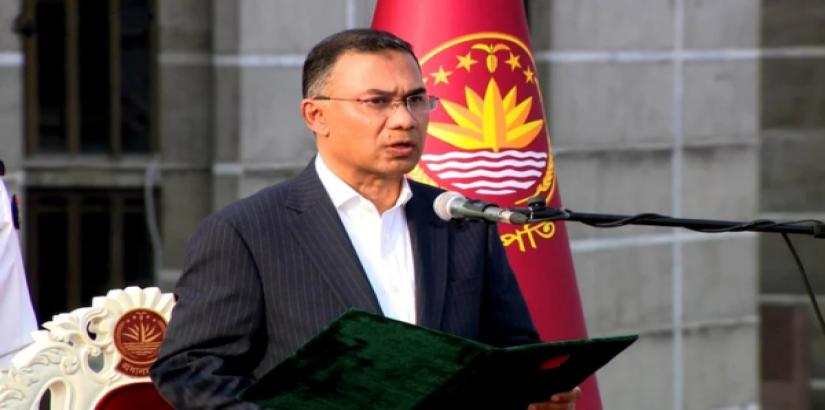
Ever since the overthrow of the Hasina regime that ruled Bangladesh for one and half a decade on 5 August 2024, a political debate regarding the reforms to be made to the existing governance system to prevent the emergence of another civilian dictatorship surfaced in the country’s politics. Acquiring public consensus through a referendum held alongside the General Polls on 12 February this year, the July Charter - among other reforms - looks to curtail the overwhelming influence of the ruling party. The ruling Bangladesh Nationalist Party (BNP), however, appears reluctant to endorse it wholeheartedly, while Prime Minister Tarique Rahman resorts to populist agendas to weather any possible public resentment.as his government seems willing to allow the banned Awami League (A.L) to return to politics, putting the country at risk of further polarization and violence, given that the horrific violence the A.L. government meted out to student protesters still linger on the public memory.
The July Charter formally came into its final form by the end of 2025 under the supervision of the Nobel Laureate Professor Muhammad Yunus’ Interim government. This charter, drawing inspiration from the lives fallen during the July protests against the iron-fisted rule of Hasina, looks to establish checks and balances among public institutions . However, this charter was not thoroughly accepted by major parties like the BNP, which initially sent mixed signals, indicating its reluctance to enforce the reforms proposed in the July Charter, before eventually agreeing to endorse it weeks prior to the general polls. Surprisingly, the pro-BNP Members of Parliament — who won in 212 constituencies to claim a majority in parliament — refused to take an oath pledging to implement the Charter through the Constitutional Reform Council, drawing criticism from the National Citizen Party (NCP), which consists of students who spearheaded the July Revolution that toppled the Hasina-led A.L regime, putting an end to her 16-year long rule. With Hasina exiled in neighboring India, the A.L, though currently banned from politics, sees an opening for it to return to politics. Yet, the pathway to rehabilitation does not look promisingly smooth, even though the BNP needs the presence of another actor to countervail the influence of the NCP-Jamaat alliance.
BNP uncomfortable With July Charter?
The Constitution of Bangladesh traditionally provides the prime minister with overwhelming control over all three branches of governance — the executive, legislature, and judiciary — which experts consider a major factor enabling the ruling party to turn into a civilian dictatorship. The Charter fleshes out a series of governance reforms. To begin with, the unicameral legislature presently passes or amends legislation with a two-thirds majority of the popularly elected MPs. Conversely, the Charter proposes transforming it into a two-tier legislature, with the lower house formed by directly elected MPs and a 100-member upper house constituted based on total votes received — contrary to the BNP’s demand that the upper house be composed in proportion to seats in the lower house. Although the upper house would lack the authority to veto legislation, it would have a say in constitutional amendments. The BNP disagrees with this provision as well.
Regarding the prime ministerial powers, the BNP is unwilling to endorse the Charter’s proposal restricting the head of the ruling party to a 10-year tenure as Prime Minister. The party opposes it, as it is headed by Tarique Rahman, the eldest son of BNP’s founder, former President Ziaur Rahman, and former Prime Minister Khaleda Zia. Taken together, the BNP and the Awami League (A.L.) find common ground in pushing back against the Charter’s implementation, as the A.L. is also led by the ousted Prime Minister Sheikh Hasina, daughter of Sheikh Mujibur Rahman, the founding leader of the party.
Tarique's Populist Appeals
With the Charter’s future enveloped in uncertainty, the BNP, in preparation for any unforeseen situation, appears to be taking measures to sustain public support as well as quell possible protests demanding the Charter’s implementation. Since assuming power, Prime Minister Tarique Rahman has sought to convey the message that the BNP would remain attentive to public sentiment, unlike the A.L., which was often perceived as displaying elitist behavior and turning into an authoritarian regime. To that end, Tarique has taken several steps. Notably, he has opted to use his personal vehicle to attend office instead of the official prime ministerial car and has reduced the traditionally extensive prime ministerial convoy to a minimum, which often stalled traffic in Dhaka due to security protocols. On various occasions, Tarique has been seen stuck in traffic and waving to pedestrians, indicating his willingness to share the hardships that ordinary citizens endure on a regular basis.
Tarique’s populist appeals do not end there. In a clear move to distinguish himself from the A.L., which used to emphasize the Sheikh family legacy by prominently displaying Sheikh Mujib’s portrait and the party symbol ‘boat’ in the Prime Minister’s office, Tarique chose not to display his parents’ portraits in his office. Instead, he keeps the Arabic Shahada phrase — “La ilaha illallahu Muhammadur Rasulullah” (There is no God but Allah, and Prophet Muhammad is the Messenger of God) — which suggests that he wants to be seen as a representative of the Bangladeshi people as a whole rather than merely the leader of the ruling party. Such initiatives would reduce public anxieties that Tarique’s government would not take authoritarian form, thus rendering calls of the pro-July Charter parties upon the mass to take to the streets to pressurize the government to implement the charter ineffective.
Nonetheless, Tarique likely has two objectives in mind in orchestrating this apparent shift in the country’s confrontational political culture. First, he could be seeking to increase his popularity through such political gestures, which are highly appreciated in Bangladesh, thereby eroding the relevance of the July Charter that seeks to curtail the overwhelming dominance of the ruling party. Such behavior may convince the public that, unlike preceding regimes, Tarique does not adopt an oppressive posture vis-à-vis his opposition. His amicable approach toward opposition leaders seems to reinforce this perception. It is worth mentioning that Tarique met the leaders of the NCP–Jamaat alliance after his sweeping victory in the general polls and served them confectionery, receiving accolades on social media.
Now that the Awami League, currently banned in Bangladesh, is a natural opponent of the pro-July forces, and given that the BNP seems reluctant to materialize the July reforms, the two parties may find themselves on the same side and team up to preclude the Charter, as well as keep the Jamaat–NCP alliance at bay. The ruling BNP and the exiled Awami League, being the two largest political parties, find the July Charter troublesome, given that they have alternated in power since the restoration of democracy in 1991. This trend appears likely to continue in the years to come, as neither the NCP nor BJI is strong enough to replace the A.L., offering a window for the Awami League to return to politics, for which it may go to considerable lengths. If required, it may assist the BNP in quelling any challenge the NCP–Jamaat alliance poses to pressure the BNP regarding the Charter.
Rehabilitation of AL in Offing?
Many vocal A.L. leaders are no longer seen strongly opposing the BNP, as Tarique Rahman appears willing to offer partial or full rehabilitation of the A.L. so that the pro-Charter NCP–Jamaat alliance’s influence remains in check. The rehabilitation process appears to be gaining momentum, as the government seems welcoming toward the resumption of A.L.’s party activities in the country. Furthermore, A.L. undercover activists could also partner with the BNP in curbing the street-fighting strength of the Jamaat-led opposition. Under such circumstances, there is a widely held notion that the BNP would utilize the desperation (to return to politics) of the A.L. to shield itself against a stronger Jamaat with 70 seats in parliament — the highest in its history in Bangladesh — while also managing public resentment, as the BNP does not want to lose public support by any means.
Bangladesh stands at a decisive moment. The July Charter challenges the entrenched dominance that has defined its post-1991 political order. Whether it is implemented, diluted, or quietly sidelined will determine not only the balance of power among parties, but also the credibility of reformist politics in the country’s democratic future. If the BNP continues to delay or dilute implementation, and if tacit understandings emerge between the country’s two dominant parties, the reformist aspirations of the July movement may gradually lose momentum. Conversely, sustained pressure from the NCP–Jamaat alliance could intensify political polarization, potentially ushering in renewed instability.
(The writer is a Political Science graduate from Shahjalal University of Science and Technology (SUST), Sylhet, Bangladesh. Views expressed are personal. He can be reached at fahimahmedsust86@gmail.com)





Post a Comment