

Trumpian Caprice Has India In A Bind: Will Need Foreign Policy Recalibration
This fully unfettered approach to everything Trump does also has serious consequences for India. At least through the duration of the Trump administration until 2028, the Modi government will have to spread around its geostrategic and geoeconomic needs among various countries such as Japan, Australia, Germany, France and the United Kingdom or collectives such as the European Union, even as it deals with America with some judicious leveraging.
 Jan 10, 2026
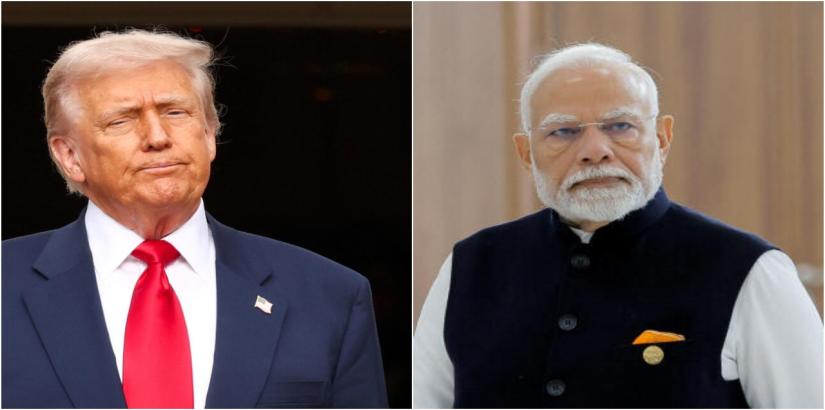
The long-held and perhaps somewhat overstated belief that the United States needs and wants India as a countervailing force against China globally is showing signs of serious fraying. Viewed against the near constant jibes against Prime Minister Narendra Modi by President Donald Trump, his top officials as well as Congressional acolytes suggest that the India as counter to China calculus is perhaps coming undone.
The latest instance of this turn of events is an upcoming bipartisan bill by Republican Senator Lindsey Graham of South Carolina that expressly targets both China, India and Brazil for U.S. sanctions arising out their purchase of Russian oil. Graham has said in a statement that Trump has “greenlit the bipartisan Russia sanctions bill that I have been working on for months with (Democratic) Senator (Richard) Blumenthal (of Connecticut) and many others.”
“This will be well-timed, as Ukraine is making concessions for peace and (Russia’s President Vladimir) Putin is all talk, continuing to kill the innocent,” Graham said in a statement. “This bill will allow President Trump to punish those countries who buy cheap Russian oil fueling Putin’s war machine,” he said.
“This bill would give President Trump tremendous leverage against countries like China, India and Brazil to incentivize them to stop buying the cheap Russian oil that provides the financing for Putin’s bloodbath against Ukraine,” he said.
Shifting US Attitudes
The fact that the bill targeting China and India together as a “punishment” has the backing of Trump is indicative of how Washington may no longer be treating New Delhi as a counter to China, particularly in Asia. There appears to be a fundamental shift in the way Washington generally and Trump particularly view New Delhi and Modi in both bilateral and global contexts. India’s import of Russian oil has come in handy to the U.S. president to recast the bilateral relationship that has been described as this century’s most defining. Clearly, that is no longer the case with the Trump administration treating China as its near equal and India as a maybe partner in a limited sense.
What is propelling this shift is that the U.S. foreign policy, quite like its domestic policies, flows entirely from the singular thinking of one man—Trump. What he said in an extensive interview with The New York Times on January 7 is striking in this context. Asked how he sees his global powers and whether there are any limits on them, he said, “Yeah, there is one thing. My own morality. My own mind. It’s the only thing that can stop me.”
He also said, "I don’t need international law. I’m not looking to hurt people.”
Consequences For India
This fully unfettered approach to everything Trump does also has serious consequences for India. At least through the duration of the Trump administration until 2028, the Modi government will have to spread around its geostrategic and geoeconomic needs among various countries such as Japan, Australia, Germany, France and the United Kingdom or collectives such as the European Union, even as it deals with America with some judicious leveraging.
One piece of this jigsaw is the long-pending trade deal between India and the United States. Reeling under 50% tariffs, half of which is due to the import of Russian oil, for India an updated trade deal is crucial given its about $250 billion trade with the U.S.
In an instance of the continuing jibes from Washington, Commerce Secretary Howard Lutnick said of the trade deal during a podcast interview, "It was all set up. I said [to the Indian side] you got to have Modi call the president. They were uncomfortable doing it, so Modi didn't call.”
India called the characterization “not accurate.” "India and the US were committed to negotiating a bilateral trade agreement as far back as 13 February last year. Since then, both sides have held multiple rounds of negotiations to arrive at a balanced and mutually beneficial trade agreement. On several occasions, we have been close to a deal," India’s foreign ministry spokesperson Randhir Jaiswal told reporters.
Now with the Graham-Blumenthal oil sanctions bill coming up likely as early as next week, New Delhi has to brace for even more pressure with the threat of 500% tariffs on India, China and Brazil by the Trump administration.
(The writer is a Chicago-based journalist, author and commentator. Views are personal. He can be reached at mcsix@outlook.com)





Post a Comment