

Strait of Hormuz: From Oil Chokepoint to Clean Energy Turning Point ?
Renewable energy is no longer a distant aspiration. It is increasingly the cheapest, safest, and most secure energy option available. The Strait of Hormuz may be shaking the global economy today - but it may also be opening a window of opportunity. If the world chooses wisely, this crisis could mark the moment when humanity finally begins to move decisively beyond the fossil-fuel era.
 Mar 17, 2026
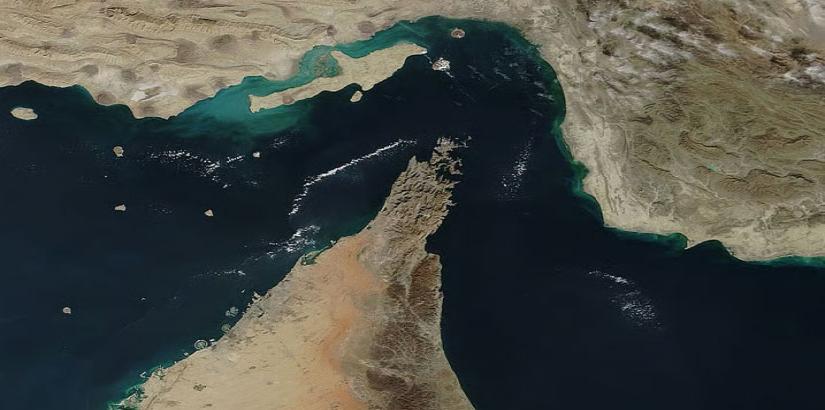
The Strait of Hormuz is barely 21 nautical miles wide at its narrowest point. Yet, through this narrow corridor flows nearly 20 percent of the world’s oil and gas supply, meeting close to 80 percent of global energy demand. When tensions escalate in the Gulf and tankers hesitate to pass through these waters, the consequences ripple across the planet—from transport costs in Asia to inflation in Europe and food prices in Africa.
From the 1973 oil embargo to the current tensions involving Iran, repeated Gulf conflicts have reminded the world how fragile the global fossil-fuel system really is. But unlike in the past, this time may be different.
For the first time in history, humanity possesses both the scientific consensus and the technological alternatives needed to break free from this cycle of geopolitical vulnerability rooted in fossil fuels. This could well be the first oil crisis capable of triggering a long-awaited transformation away from fossil fuels.
Oil Crises Before Climate Consciousness
The global economy has faced multiple oil shocks. The 1973–74 Arab oil embargo forced oil-importing nations to confront their dependence on Middle Eastern energy. The 1979–80 crisis during the Iranian Revolution and the Iran–Iraq War triggered another surge in prices and a global recession. The 1990–91 Gulf War again disrupted oil markets.
These crises reshaped geopolitics, influenced OPEC’s production strategies, and led countries to build strategic petroleum reserves, improve energy efficiency, and diversify supply routes. However, they shared a critical limitation: the absence of viable alternatives to fossil fuels. The oil industry retained its power to influence supply and prices.
Until the late 20th century, solar and wind technologies remained experimental. Electric vehicles were not commercially viable, and climate change was still on the margins of public discourse. The Intergovernmental Panel on Climate Change (IPCC) was established only in 1988, followed by the UN Framework Convention on Climate Change (UNFCCC) in 1992. Consequently, earlier oil crises ultimately reinforced dependence on fossil fuels rather than transforming it.
New Energy Reality
While renewable energy has ancient roots, the rise of coal and oil constrained its development. Renewed interest in renewables has been driven by the increasing frequency and intensity of extreme weather events and their undeniable link to climate change, along with the need to reduce dependence on imported fossil fuels.
Global momentum has been shaped by major international efforts—from the 1972 Stockholm Conference to the 1992 Rio Earth Summit, the 1997 Kyoto Protocol, and the 2015 Paris Agreement. Financing mechanisms such as the Global Environment Facility and the Green Climate Fund have further supported adoption, particularly in developing countries.
The IPCC’s scientific assessments have made it clear that continued reliance on fossil fuels threatens the stability of the Earth’s climate system. This understanding culminated in the Paris Agreement and, more recently, the COP28 decision in Dubai (2023), where governments agreed to transition away from fossil fuels in energy systems. Although momentum has shown signs of weakening in subsequent negotiations, the structural shift toward renewables continues.
Ironically, disruptions in the Strait of Hormuz may accelerate this transition. What appears as a bottleneck for oil could become a floodgate for clean energy adoption.
Rise of Renewables
The stage is set for a global energy transformation. According to the International Energy Agency (IEA), renewable energy capacity is expanding at an unprecedented pace. The world is expected to add over 5,500 GW of new capacity between 2024 and 2030—nearly triple the growth seen from 2017 to 2023.
In 2024 alone, additions surged by around 25 percent to nearly 700 GW, with solar photovoltaic (PV) accounting for over 75 percent of new capacity. Solar and wind are now the fastest-growing sources of electricity in history.
Costs have plummeted dramatically. Over the past decade, solar PV costs have fallen by 80–90 percent, while wind energy has also become significantly cheaper. In many regions, solar power is now the cheapest source of new electricity ever recorded. Renewables are no longer just a climate solution—they are the most economically rational choice.
Epicentre of Energy Transformation
Asia provides the most compelling evidence of this shift. The region is also among the most vulnerable to oil disruptions.
China, the world’s largest importer of crude oil, and India, the third-largest consumer, importing over 85 percent of its crude requirements, are rapidly scaling up renewable energy. Both countries are leading in solar and wind deployment and have set ambitious targets for green hydrogen and electric mobility.
Renewable energy offers something fossil fuels never could: strategic independence. Sunlight cannot be blockaded; wind cannot be embargoed. Unlike oil, these resources are not subject to geopolitical chokepoints.
In this sense, the narrow Strait of Hormuz is teaching a wider lesson—energy security in the 21st century lies in decentralisation.
Redefining Energy Security
Every tanker that hesitates to cross the Strait of Hormuz underscores a fundamental vulnerability: the global economy still depends on fragile supply chains and geopolitical stability.
Renewable energy, by contrast, is inherently decentralised. Rooftop solar panels, distributed wind farms, and emerging green hydrogen systems can create a resilient energy architecture far less exposed to geopolitical shocks.
The transition to clean energy is therefore not only about reducing emissions—it is about building a more stable and secure global system.
Crisis as Catalyst
History shows that crises often accelerate change. While conflicts devastate lives and ecosystems, they can also hasten transformations already underway.
The COVID-19 pandemic exposed the fragility of global systems while prompting innovation and adaptation. Similarly, disruptions in the Strait of Hormuz could catalyse a faster transition toward sustainable energy systems.
As the proverb suggests, necessity is the mother of invention. Today’s turmoil may push humanity to innovate faster and rethink the foundations of its energy systems.
Opportunity Before Us
For decades, climate scientists have warned of the dangers of continued fossil-fuel dependence. Today, geopolitics is reinforcing that warning.
The question facing global leaders is whether this crisis will be treated as yet another temporary oil shock—or as a decisive moment to accelerate the ongoing energy transition.
Renewable energy is no longer a distant aspiration. It is increasingly the cheapest, safest, and most secure option available. The Strait of Hormuz may be shaking the global economy today—but it may also be opening a window of opportunity. If the world acts wisely, this crisis could mark the turning point when humanity finally begins moving decisively beyond the fossil-fuel era.
(The author is former Director, UNEP OzonAction; Coordinating Lead Author, Nobel Peace Prize–winning IPCC (2007); and Founder, Green TERRE Foundation. Views expressed are personal.)





Post a Comment