

Sri Lanka's Shadowy Ties With Israel: Between Disclosures and Reality
It becomes evident that the emergence of Sri Lanka–Israel relations in the 1980s was fundamentally driven by the realist imperatives of both states: Sri Lanka sought to strengthen its defence sector, while Israel aimed to legitimize its ties with Colombo. Each actor pursued distinct strategic objectives. However, what largely remains unknown is the US involvement in bringing Israel to Sri Lanka’s platform in the early 1980s.
 Apr 08, 2026
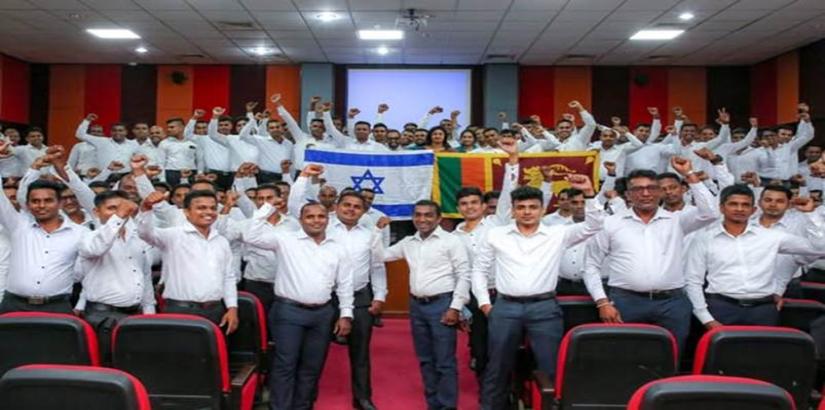
Following a period of relative silence, Etay Mack, a human rights lawyer from Israel, has reignited discussion regarding Sri Lanka’s multifaceted relationship with Israel, a subject that remains contentious among critics of Sri Lanka’s strategies for addressing LTTE terrorism. Mack’s article in The Wire resembles an apology from a Jewish citizen for his country’s historical support of a 'totalitarian regime' in the Global South. However, a significant portion of the information Mack presents, purportedly sourced from declassified documents, diverges considerably from the actual events of the turbulent 1980s, during which Sri Lanka sought Israeli assistance to preserve its statehood.
Mack largely overlooks the complex geopolitical dynamics that shaped Sri Lanka in the 1980s and significantly influenced Colombo’s relationship with Jerusalem. Notably, Mack fails to acknowledge that Israel was not consistently forthcoming in supplying arms to Sri Lankan forces, particularly regarding the sale of Dvora-class boats. General Cyril Ranatunga, then Chief of Staff of the Sri Lankan Army, later recounted Israel’s reluctance to provide Dvora boats, which culminated when the Israeli Defence Ministry repeatedly ignored Colombo’s requests. Although Mack references a cable from the foreign department, the procurement of Dvora boats by Sri Lanka’s navy only materialised after Ravi Jayawardene, son of President Jayawardene, met with then Israeli President Shimon Perez. During this meeting, Jayawardene emphasised that the LTTE received training from PLO officials in Lebanon. In response, Perez stated, “in that case, we both have a common enemy.” This exchange ultimately facilitated the acquisition of Dvora boats for Sri Lanka’s navy. Documentation of this event is available at the Jayewardene Memorial Centre archives in Colombo.
Questionable Claims
A central yet problematic claim advanced by Mack concerns the alleged involvement of the Israeli intelligence agency Mossad in President Jayewardene’s purported election campaign in 1987. In support of this assertion, Mack cites purportedly declassified material, including a cable attributed to Haim Divon, then head of the Israeli Section in Colombo. The cable claims that Divon met President Jayawardene in late 1987, together with a Mossad representative, during which the latter allegedly requested $1 million in campaign financing. Despite its purportedly declassified status, the evidentiary value of this report remains highly questionable. Sri Lanka’s electoral record indicates that no national election took place until the end of 1988, by which time Jayawardene had effectively withdrawn from active political life.
Consequently, the broader body of detail presented by Mack under the guise of declassification warrants careful scrutiny with regard to its accuracy. A further inconsistency is evident in Mack’s attribution of a statement on Israel to a senior Sri Lankan cabinet minister, which appears to be misleadingly represented. According to the cable cited by Mack, the speaker asserts a willingness to accept assistance from any source—even “the devil”—in efforts to suppress Tamil militancy. However, available historical evidence indicates that this statement was in fact made by President Jayewardene in 1984, in the context of defending his decision to normalize relations with Israel. Notwithstanding these issues, certain elements of Mack’s account—particularly those referring to a cable from an Israeli agent in Colombo describing the operational cover of Mossad personnel in Sri Lanka—appear to be corroborated by local sources. These operatives were reportedly initially based on the ninth floor of the Oberoi Hotel in Colombo before relocating to Liberty Plaza, a commercial complex in Colombo, where they established an agricultural service outlet as a front. Some of these operatives are reported to have assisted Sri Lankan authorities in the expansion of the country’s largest development initiative, the Mahaweli project.
In one reported incident, an operative posing as an agricultural advisor shot a wild boar that had charged at then minister Gamini Dissanayake during a site inspection. Following this incident, the apparent heroism of what was assumed to be an ordinary agricultural advisor prompted on-site Sri Lankan personnel to speculate about his true identity.
The US Factor
It becomes evident that the emergence of Sri Lanka–Israel relations in the 1980s was fundamentally driven by the realist imperatives of both states: Sri Lanka sought to strengthen its defence sector, while Israel aimed to legitimize its ties with Colombo. Each actor pursued distinct strategic objectives. However, what largely remains unknown is the US involvement in bringing Israel to Sri Lanka’s platform in the early 1980s. In particular, the role played by former CIA official Vernon Walters was remarkable as he secretly advised the Sri Lankans to get support from Israel. Benjamin Beit-Hallahni, an Israeli academic focusing on Israel’s arm deals with the Global South remarks that Israel was the only country that did not hesitate to come to help Sri Lanka and also notes that its involvement in the island nation would have never got succeeded without the help from the US, which affirms the Cold War dynamics filled with America’s longer term geopolitical ambitions in the Indian Ocean. This was evident when the US allowed Israel to operate its interest section within the American Embassy in Colombo, which was the first instance that the USA offered its embassy compound for another country, indicating how fervently Americans wanted to bring Israelis to Sri Lanka.
Mack often uses a term called “Dirty Diplomacy” to corroborate his claims on Israeli support for the Sri Lankan government to suppress dissent. But, in truth, Israel’s tryst with Sri Lanka was confined to its sole objective of legitimising its shadowy ties with the island nation, which has been the long-standing policy of Jerusalem until this day. On the contrary, Colombo’s attitude towards Israel has always been on volatile ground, depending on local and regional dynamics.
(The author is a lecturer at the Faculty of Law, General Sir John Kotelawala Defence University, Sri Lanka. Views expressed are personal. He can be reached at punsaraprint10@gmail.com )




Post a Comment