

The Quiet Unraveling Of The Global Nuclear Order And Its Dangerous Implications
According to realist paradigms, nuclear weapons can be seen as the ultimate guarantee of national security and when there will be no restrictions, states will strive to dominate or achieve parity. Lapse of New START can thus create worsening security dilemmas, where efforts of any state to enhance its deterrent value is seen as a threat, and the state retaliates. The position of nuclear weapons as power projectors will, therefore, be more intense.
 Jan 17, 2026
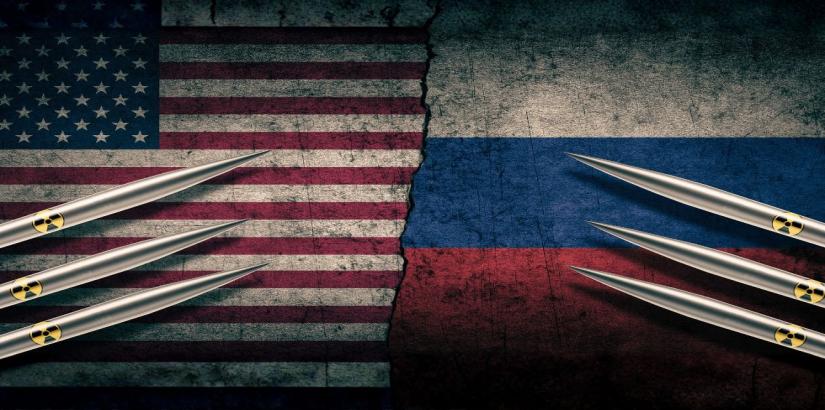
The New START (Strategic Arms Reduction Treaty), the final remaining nuclear arms-control pact between the United States and Russia, expires on 5 February 2026. The treaty was signed in 2010 by Presidents Barack Obama and Dmitry Medvedev and has over a decade put verifiable caps on the strategic nuclear capabilities of the two biggest nuclear powers in the world. It limits deployed warheads (1,550 each side) and delivery systems, including intercontinental ballistic missiles and heavy bombers (700 each side), and so limits the speed and intensity of nuclear competition.
The expiration of the treaty is an inflection point in the international security structure and says not only the weakening of the old arms-control structures but also the new geopolitics of the 21st century nuclear order. Its consequences, regarding peace and war, relationships between the great powers, and the principles of international cooperation are enormous.
The key success of the New START has been the ability to create transparency and predictability among the strategic rivals. The agreement required on-site inspections, information transfers and reporting which minimized uncertainty, a vital process in nuclear deterrence theory where misperception can easily attract crises. Its shortcomings served to reduce the world strategic arsenals of the Cold War era of about 70,000 warheads to about 12,000 in the modern times.
Notably, as New START was a diplomatic anchor past numerical boundaries. During periods of tension, such as the Russia-Georgia crisis of 2008, it offered Washington and Moscow a limited point of structured strategic discussion. Even after verification was suspended in 2023 when Russia accused Ukraine of non-compliance, and Ukraine accused Russia of war hostility, the warhead limits set by the treaty were in practice largely observed by both sides.
Chances Of Miscalculation, A New Arms Race?
Diplomatic discussions to renew or expire New START have been stalemated in 2025 and early 2026. Russian President Vladimir Putin extended an extra-voluntary compliance with treaty boundaries for one more year after expiration, highlighting the fact that the lapse of the treaty would lead to disruption of the strategic balance and a new arms race. However, in the meantime, U.S. President Donald Trump took a completely different course. In a 2026 interview with The New York Times, he opined that New START might just expire, and he would like to focus on negotiating a more ambitious successor that would involve China as a nuclear power with its fast-growing arsenal.
China, in its turn, has opined numerous times that it would not take part in trilateral negotiations of nuclear arms control as it was unrealistic and immoderate considering the comparative scale of its armory. This stalemate is indicative of the larger strategic change between bilateral Cold-War-era arms control and a multipolar nuclear environment in which emerging powers do not welcome structures that they perceive to be solidifying a U.S.-Russia duopoly.
In the absence of the verification regime provided by New START, the two nuclear superpowers will not have an official procedure to conduct on-site checks and data disclosures, which will increase the incentive to adopt the policy of strategic ambiguity. There will be confusion in the posture of the forces especially during crisis situations which can increase chances of miscalculation. Even involuntary movements or deployments, strategists warn, might be misunderstood and accidentally lead to conflict.
Lacking legal restraint opens the prospect of Washington and Moscow to enhance nuclear forces, particularly with new technologies of delivery like the hypersonics, autonomous weapons, and platforms at sea. Other pundits believe that such a permissive environment can rekindle a new arms race akin to the most dangerous periods of the Cold War. This trend might not stay within the U.S and Russian arsenals alone: rapid Chinese growth can further encourage competitive accumulations and other states might be motivated to increase their deterrent powers in a weakened nuclear normative regime.
Will Affect WMD Governance Regimes
The lapse of New START to most observers is a sign of the deterioration of arms-control diplomacy. The post-Cold War period was also the time when a series of treaties, starting with INF, then continuing with START I and START II accumulated confidence and restraints. Having these mechanisms terminated or impaired can affect weapons of mass destruction (WMD) governance, which in turn negatively affect the Non-Proliferation Treaty (NPT) regime and the larger goals of disarmament. This is not just nuclear erosion; the norms against chemical and biological weapons are also highly dependent on a larger structure of arms-control cooperation.
According to realist paradigms, nuclear weapons can be seen as the ultimate guarantee of national security and when there will be no restrictions, states will strive to dominate or achieve parity. Lapse of New START can thus create worsening security dilemmas, where efforts of any state to enhance its deterrent value is seen as a threat, and the state retaliates. The position of nuclear weapons as power projectors will, therefore, be more intense.
A More Unstable Strategic Equilibrium?
This is an indication that the failure to bring in new nuclear powers like China and Russia who are unwilling to merely accept the U.S offers is an indication that the world order is multipolar and not dyadic in terms of treaties. This makes it challenging to establish future international regimes, turning diplomacy to the consultation forums on an ad hoc basis instead of establishing legal regimes.
Lastly, the lapse highlights the ever-increasing rivalry between world powers. The Ukrainian war, sanctions policy, and the general geopolitical hostility between NATO and Moscow have undermined the political goodwill to be used in arms control. Without a spirit of trust, even the shared interests in restraint fail to be converted into strong arrangements.
The future of peace and conflict, however, will not only be determined by the technical architecture of arms control but also by the desire of states to balance conflicting security interests with the help of diplomacy. The question now is whether international relations can find a new direction to limit the bomb, or will the world be pushed back into a dangerously unstable strategic equilibrium?
(The author is an Islamabad-based researcher, did her MPhil from National Defence University (NDU) in Strategic Studies and her BSc from University of London (UOL) in International Relations. Views expressed are personal. She tweets by the handle @rushmeentweets and can be reached on sehrrushmeenwrites@gmail.com )





Post a Comment