

Macroeconomic Stability and Fiscal Sustainability in South Asia: Takeaways from IMF–World Bank Spring Meetings
Macroeconomic stability and fiscal sustainability in South Asia are deeply interconnected and increasingly fragile. While the region continues to grow rapidly, structural weaknesses and external vulnerabilities pose significant risks. Insights from the World Bank and Asian Development Bank highlight that sustaining stability will require improved revenue mobilisation, credible fiscal consolidation, structural economic reforms and reduced exposure to external shocks.
 Apr 30, 2026
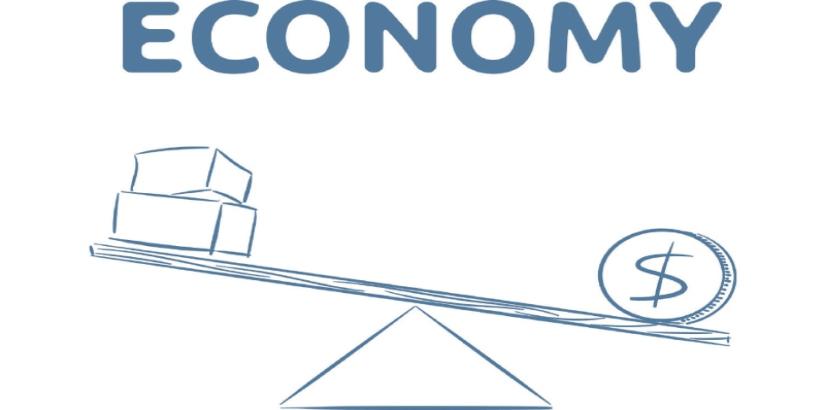
The recently concluded Spring Meetings of the International Monetary Fund (IMF) and the World Bank in Washington, D.C., underscored a growing concern: rising public debt in developing economies is sharply constraining fiscal space, with interest burdens increasingly crowding out developmental expenditure. This warning is particularly relevant for South Asia, where elevated debt levels and weak revenue bases are heightening vulnerability to fiscal stress.
Macroeconomic stability and fiscal sustainability are critical for sustaining long-term economic growth, especially in developing regions. South Asia—comprising economies such as India, Bangladesh, Pakistan, and Sri Lanka—has been among the fastest-growing regions globally over the past two decades. However, recent global and domestic developments have exposed structural vulnerabilities that threaten long-term stability.
Recent assessments by the World Bank and the Asian Development Bank (ADB) suggest that while growth remains relatively robust, it is increasingly constrained by limited fiscal space, rising inflation, and exposure to external shocks. A heavy reliance on borrowing, without commensurate increases in tax revenues, has further exacerbated these pressures.
Macroeconomic Stability and Fiscal Sustainability
Macroeconomic stability refers to an environment characterised by low inflation, sustainable growth, and stable external balances. Fiscal sustainability, by contrast, relates to a government’s ability to maintain public debt at manageable levels without resorting to drastic fiscal adjustments.
A critical indicator of debt sustainability is whether economic growth exceeds the effective interest rate on government borrowing. When this condition does not hold, economies become more vulnerable to fiscal and macroeconomic instability.
Economic Outlook: World Bank and ADB Perspectives
The World Bank’s South Asia Economic Update (2026) projects regional growth at around 6.3 percent, despite global uncertainties such as energy price shocks and tightening financial conditions. While South Asia remains the fastest-growing region globally, the report highlights underlying fragility driven by limited fiscal space, low tax-to-GDP ratios, large informal sectors, and rising public debt.
Similarly, the ADB’s Asian Development Outlook (2026) notes that growth, though still strong, is moderating. Inflationary pressures persist across several economies, and fiscal consolidation efforts remain uneven. Importantly, the ADB underscores a key policy dilemma: while fiscal consolidation is essential for long-term sustainability, it can dampen short-term growth and aggregate demand. This trade-off complicates policy choices and underscores the absence of easy solutions.
Emerging Macroeconomic Trends in South Asia
Despite continued growth, the region faces increasing fragility due to both domestic and external factors.
Inflationary pressures remain a significant concern. Pakistan has experienced persistently high inflation, while Sri Lanka faced extreme inflation during its recent economic crisis. India, in contrast, has maintained relative price stability, supported by credible monetary policy anchored by the Reserve Bank of India.
Fiscal sustainability challenges are widespread. Persistent fiscal deficits, rising public debt, and weak revenue mobilisation constrain governments’ ability to respond to shocks. Low tax-to-GDP ratios—particularly in Bangladesh and Pakistan—limit fiscal capacity and increase reliance on borrowing.
External sector vulnerabilities further compound risks. Dependence on energy imports and exposure to global financial conditions make the region susceptible to exchange rate volatility and rising global interest rates, adding to fiscal pressures.
Country-Level Dynamics
A closer look at individual economies highlights both common challenges and divergent trajectories.
India presents a relatively stable macroeconomic environment. Despite high public debt, a diversified economy and credible monetary policy framework have supported stability. However, fiscal deficits and subsidy burdens remain concerns.
Sri Lanka illustrates the consequences of fiscal mismanagement. Persistent deficits, tax cuts, and excessive external borrowing culminated in a severe debt crisis and IMF intervention.
Pakistan continues to face chronic fiscal imbalances, characterised by low tax revenues, repeated balance-of-payments crises, and dependence on external assistance—reflecting deep structural weaknesses.
Bangladesh has achieved strong growth but is encountering emerging challenges, including rising inflation, declining foreign exchange reserves, and limited fiscal capacity. Sustaining stability will require strengthening revenue systems and financial institutions.
Across Sri Lanka, Pakistan, and Bangladesh, fiscal stress remains pronounced, though their trajectories have diverged. A common thread is vulnerability to external shocks—particularly oil price fluctuations and global interest rate movements—combined with weak fiscal capacity.
Growth, Poverty and Inequality: An Uneven Story
South Asia’s rapid economic growth has contributed significantly to poverty reduction over recent decades. World Bank estimates indicate a sharp decline in extreme poverty between the 1990s and 2010s, driven by rising incomes, improved employment opportunities, and social welfare programmes.
However, this growth has been uneven. Rising income and wealth inequality have accompanied economic expansion. Structural factors—such as unequal access to education, healthcare, land, and financial resources—continue to limit inclusive growth. Urban areas and skilled workers have benefited disproportionately, while rural populations and informal labour remain disadvantaged.
In India, high-growth sectors such as technology and finance have generated substantial wealth, yet a large share of the workforce remains in low-productivity employment. In Bangladesh, the garment sector has driven growth and poverty reduction, but wage disparities and working conditions remain concerns.
As economists such as Thomas Piketty have argued, when returns to capital exceed overall economic growth, wealth concentration intensifies—an emerging pattern visible across South Asia.
Key Policy Challenges
Several structural challenges continue to constrain macroeconomic stability in the region:
- Growth is not sufficient: High growth alone does not ensure stability if fiscal systems remain weak.
- Structural fiscal weaknesses: Low revenue mobilisation, large informal sectors, and inefficient public expenditure persist across economies.
- External dependence: Heavy reliance on energy imports and external financing increases vulnerability to global shocks.
- Policy trade-offs: Fiscal consolidation may stabilise economies but can also slow growth, complicating policy choices.
Way Forward: Stability, Resilience and Inclusion
Macroeconomic stability and fiscal sustainability in South Asia are deeply interconnected and increasingly fragile. While the region continues to grow rapidly, structural weaknesses and external vulnerabilities pose significant risks.
Recent IMF–World Bank deliberations signal a shift toward “resilience-first” macroeconomic management. This approach emphasises the need for economies to withstand recurring global shocks, including commodity price volatility and capital flow reversals. For South Asia, this implies strengthening foreign exchange buffers, maintaining flexible exchange rates, and ensuring prudent monetary policy.
At the same time, fiscal consolidation must be balanced with growth imperatives. Improving revenue mobilisation, enhancing expenditure efficiency, and undertaking structural reforms will be critical. Institutional strength and policy credibility will play a decisive role in sustaining long-term stability.
Equally important is ensuring that growth remains inclusive. While economic expansion has reduced absolute poverty, rising inequality poses long-term social and economic risks. Policies promoting equitable access to education, healthcare, social protection, and productive employment will be essential.
Ultimately, South Asia’s development trajectory will depend on its ability to balance fiscal prudence with growth, resilience with inclusion, and macroeconomic stability with social equity.
References
World Bank (2026), South Asia Economic Update: Taxing Times. Washington, DC.
Asian Development Bank (2026), Asian Development Outlook (April 2026). Manila.
International Monetary Fund (2023), Fiscal Monitor. Washington, DC.
Reinhart, C.M. and Rogoff, K.S. (2010), ‘Growth in a Time of Debt’, American Economic Review, 100(2).
OECD (2021), Macro-prudential Policies in Emerging Economies. Paris.
World Bank (2020–2024), South Asia poverty and inequality reports.
IMF, Regional Economic Outlook: Asia and Pacific.
UNDP, Human Development Reports.
Piketty, T. (2014), Capital in the Twenty-First Century.
(The writer is a retired Special Secretary, Government of India. Views expressed are personal. He can be reached at ppmitra56@gmail.com.)





Post a Comment