

Iran Is No Pushover: Lessons from a Troop-less War With Regional Ramifications
The first 15 days of the conflict have demonstrated that Iran is far from a pushover. While the United States and Israel dominate in technological sophistication and overall military strength, Iran’s resilience, indigenous capabilities, and asymmetric strategies have prevented a quick or decisive victory. What was perhaps expected to be a short, high-intensity campaign is increasingly resembling a protracted and unpredictable conflict—one with serious implications for regional and global stabilit
 Mar 17, 2026
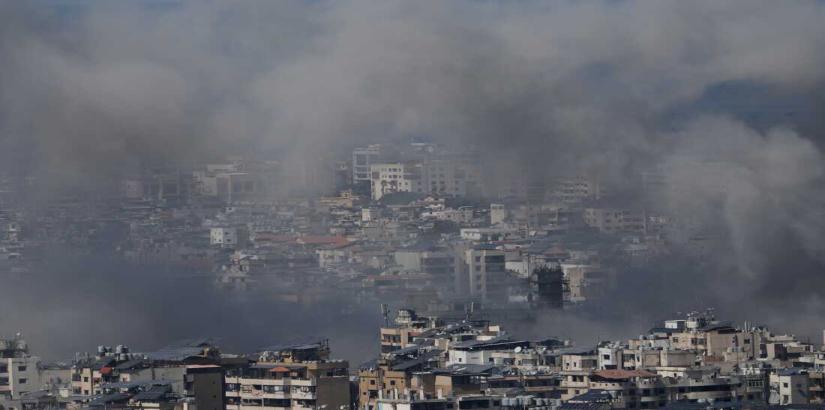
President Donald Trump reportedly chose the name “Operation Epic Fury” from a shortlist of around 20 options, saying it conveyed strength and resolve. Under this operation, the United States, in coordination with Israel, launched a military campaign against Iran on February 28, 2026, employing advanced precision-guided missiles and bunker-buster munitions. Over fifteen days into what remains a largely “troop-less” war—dominated by missile strikes and aerial bombardment causing significant civilian damage—it is instructive to assess the relative military capabilities of the United States, Israel, and Iran.
U.S.–Israeli Technological Edge
The United States deployed a formidable array of advanced weaponry. These included Tomahawk cruise missiles launched from naval platforms, GBU-28 bunker-buster bombs targeting fortified underground facilities, and Joint Direct Attack Munition (JDAM) kits converting conventional bombs into precision-guided weapons. B-2 stealth bombers were used against hardened targets, while Hellfire “Ninja” missiles enabled highly precise strikes. Ground-based systems such as HIMARS were also reportedly employed.
Israel complemented these capabilities with its own advanced systems, including Delilah stand-off missiles and Rampage supersonic air-to-surface missiles. SPICE guidance kits enhanced strike accuracy even in GPS-denied environments. Its F-35I “Adir” stealth fighters and F-15I “Ra’am” strike aircraft enabled deep-penetration and heavy payload missions.
Despite these technological advantages, the campaign has not yielded the swift strategic outcomes anticipated by Washington and Tel Aviv.
Miscalculation and Iranian Resilience
Developments over the past two weeks suggest that both Trump and Israeli Prime Minister Benjamin Netanyahu may have miscalculated Iran’s capacity to absorb and respond to military pressure. While the U.S.–Israeli strikes achieved tactical successes—damaging infrastructure and eliminating senior personnel—Iran demonstrated considerable resilience and retaliatory capability.
Contrary to claims of internal collapse or popular uprising, Iran’s political and security structures have held firm. Reports of public reactions remain inconclusive and often contradictory. Rather than capitulating, Tehran responded with sustained missile and drone strikes targeting U.S. and Israeli interests.
Iran’s actions have underscored a key reality: its defensive depth and offensive capabilities were underestimated.
Iran’s Expanding Missile Arsenal
Iran’s response has been driven by an increasingly sophisticated and diverse missile inventory.
Its medium-range ballistic missiles include the Kheibar Shekan, Fattah-1 (reportedly hypersonic), and Haj Qassem, each with ranges of around 1,400–1,450 km. Short-range systems such as the Zolfaghar and Fateh-110 series, along with Hormuz anti-ship missiles, have also been deployed.
In addition, Iran has used cruise missiles like the Paveh, Soumar, and Quds families to overwhelm air defence systems. Older liquid-fuel missiles such as the Shahab-3 and Emad remain operational.
Particularly notable is the Khorramshahr-4 missile, capable of carrying a 1,800 kg warhead over distances of up to 2,000 km. Its reported use against targets including Tel Aviv and Ben Gurion Airport highlights Iran’s ability to inflict significant damage despite sustained bombardment.
Asymmetric Warfare and Drone Dominance
A defining feature of Iran’s strategy is its emphasis on asymmetric warfare. Its large stockpile of one-way attack drones—such as the Shahed-136—enables “swarming” tactics designed to overwhelm even advanced air defence systems.
Estimates suggest Iran possesses 2,500–3,000 ballistic missiles and produces over 100 offensive missiles per month. In contrast, U.S. defensive interceptors are significantly more expensive and slower to produce. The cost imbalance—drones costing tens of thousands of dollars versus interceptors costing millions—favours Iran in a prolonged conflict.
While the United States retains overwhelming superiority in overall military capability, Iran’s focus on regional, high-volume, low-cost warfare provides it with a critical operational advantage in this theatre.
Narratives, Claims, and Contestation
The Trump administration has justified the campaign through a range of claims that have drawn scrutiny and criticism. Assertions of “imminent threats” to U.S. personnel, including alleged plans targeting American embassies, have reportedly been based on limited or inconclusive intelligence. Similarly, claims of having “obliterated” Iran’s nuclear programme appear inconsistent with continued reports of operational capabilities. Statements regarding Iran’s missile reach and the war’s swift success have also been contested by analysts and emerging evidence.
Such narrative inconsistencies have raised broader questions about the political framing of the conflict.
A Protracted Conflict Ahead
Despite sustained strikes, Iran has maintained operational continuity, with its leadership structure intact and defence industries functioning. Its doctrine of “passive defence”—including dispersal, concealment, and hardened infrastructure—has enabled it to endure prolonged pressure. With both sides entrenched—the U.S. and Israel seeking regime change, and Iran demanding compensation while signalling continued resistance—the prospects for de-escalation remain uncertain. Any potential escalation, including the activation of regional proxies such as Hamas, the Houthis, and Hezbollah, could widen the conflict significantly.
The first 15 days of the conflict have demonstrated that Iran is far from a pushover. While the United States and Israel dominate in technological sophistication and overall military strength, Iran’s resilience, indigenous capabilities, and asymmetric strategies have prevented a quick or decisive victory. What was perhaps expected to be a short, high-intensity campaign is increasingly resembling a protracted and unpredictable conflict—one with serious implications for regional and global stability, particularly energy security.
(The author, a strategic affairs analyst, is a former spokesperson, Defence Ministry and Indian Army. He can be reached at wordsword02@gmail.com, https://www.linkedin.com/in/anil-bhat-70b94766/ and @ColAnilBhat8252, https://www.youtube.com/channel/UCPJKaZOcAt9K8fcDkb_onng )





Post a Comment