

A Foreign Push to Reshape Bangladesh Politics? Critical Reassessment of Yunus' Role Needed
However, concerns persist that efforts to reshape Bangladesh’s political landscape have not ceased. There are allegations that Yunus has mobilized aligned groups, including student activists, to push for constitutional reforms that critics argue could weaken the current government and create conditions for renewed political upheaval.
 Apr 08, 2026
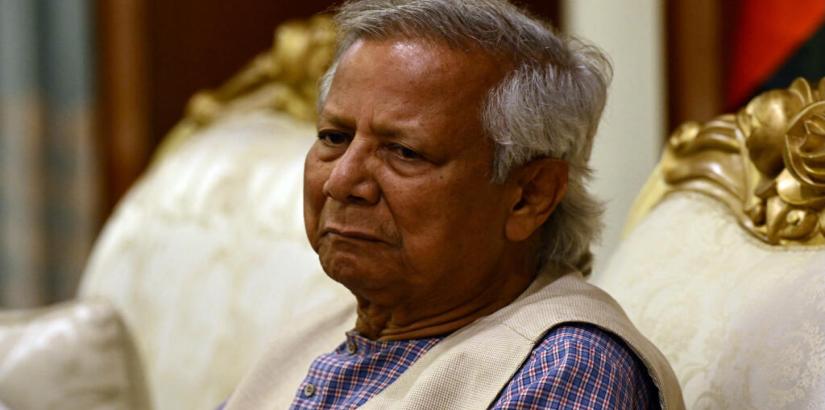
Although Bangladesh has succeeded in returning to a democratic path after 18 months of the controversial unelected regime led by Muhammad Yunus—which allegedly facilitated and encouraged Islamist-jihadist forces and anti-India elements in spreading hostility towards India through multiple channels, including harboring Pakistan-based terrorist outfits such as Lashkar-e-Taiba and Jaish-e-Mohammed—it now appears that forces backing Yunus are once again attempting to destabilize the country.
These forces—allegedly including elements within the US “Deep State”, Pakistan’s Inter-Services Intelligence (ISI), and Turkey’s National Intelligence Organization (MIT)—are reportedly working in concert to undermine the current government of Prime Minister Tarique Rahman, with the objective of reinstalling Muhammad Yunus in power. It is worth noting that Yunus has long enjoyed support from influential figures in the United States, including former Secretary of State Hillary Clinton, as well as George and Alex Soros.
According to reports by The Daily Caller, Bill and Hillary Clinton actively promoted Yunus, presenting him as a global figure at various Clinton Foundation events. With backing from the Clintons, Yunus had previously explored the possibility of forming a political party to lead a military-backed administration following the January 11, 2007 political crisis. What major segment of the international media must have already forgotten is that Yunus’s international image as a pioneer of microfinance has not been without controversy. Serious allegations surrounding the microcredit model itself have surfaced over the years.
Investigations and reports in international media, including The Christian Science Monitor, highlighted troubling consequences linked to aggressive microfinance practices. These included instances where impoverished borrowers in Bangladesh resorted to selling their kidneys to repay microcredit loans, raising profound ethical questions about the structural impact of such financial systems. As one report observed, the initial optimism surrounding microfinance was “dampened” by these outcomes, underscoring that extending credit to the poor, without adequate safeguards, can in some cases deepen rather than alleviate their vulnerability.
Yunus' Influential Connections
Taken together, these controversies challenge the carefully cultivated global narrative around Yunus and call for a more critical reassessment of both his legacy and the networks that continue to promote him.
Due to connections of Yunus with powerful circles in Washington, there were concerns at the time that the military leadership might support Yunus as a replacement for Bangladesh’s established political leadership, potentially sidelining both the Awami League and the Bangladesh Nationalist Party (BNP). Army Chief General Moeen U Ahmed had notably remarked that Bangladesh needed to “rethink” and “re-invent” its democratic system with new leadership.
The role of the United Nations has also drawn scrutiny. Reports suggest that during the political upheaval of August 5, 2024, the Bangladesh Army faced external pressure not to intervene in escalating street protests, which ultimately led to the removal of Prime Minister Sheikh Hasina from office.
Following Hasina’s ouster, Yunus was brought from Paris to assume leadership of an interim administration—despite the absence of any constitutional provision for such a government. During this period, UN Resident Coordinator Gwyn Lewis expressed “unwavering solidarity” with Bangladesh’s transition process and reiterated the UN’s commitment to supporting the country’s development trajectory.
Controversially, Lewis also indicated support for political developments that excluded the Awami League from participation, raising serious questions about the inclusivity and legitimacy of the political process, particularly given the party’s substantial support base.
Despite strong backing from segments of the international community and political circles in Washington, Yunus was ultimately unable to maintain prolonged control, facing mounting domestic pressure from the BNP, other political forces, and sections of the media.
Political Meddling and Media Narratives
However, concerns persist that efforts to reshape Bangladesh’s political landscape have not ceased. There are allegations that Yunus has mobilized aligned groups, including student activists, to push for constitutional reforms that critics argue could weaken the current government and create conditions for renewed political upheaval.
Simultaneously, there are claims of continued outreach to international actors, including the United Nations and influential policymakers in Washington, with the aim of influencing Bangladesh’s internal political dynamics.
In parallel, a coordinated media narrative appears to be emerging in sections of the Western press. Within a short span, major British publications such as The Independent and The Daily Telegraph carried reports warning of severe economic risks facing Bangladesh. Critics argue that such narratives may contribute to shaping negative international perceptions about the country’s political and economic stability.
Notably, there has been no visible response from official channels of the Bangladesh government or its diplomatic missions abroad to counter such narratives as during his previous tenure, Yunus strategically positioned loyalists within key communication channels abroad—effectively turning parts of Bangladesh’s foreign representation into extensions of his influence network.
The recent developments suggest a potentially volatile political environment in Bangladesh. Some analysts warn of the risk of renewed instability reminiscent of past political crises. The possibility of coordinated internal and external pressures aimed at reshaping the country’s leadership remains a subject of intense debate.
(The author is a journalist, writer, and editor-publisher of the Weekly Blitz. He specializes in counterterrorism and regional geopolitics. He can be contacted at salahuddinshoaibchoudhury@yahoo.com, follow him on X: @Salah_Shoaib )





Post a Comment