

From Ecological Decline to Food Insecurity: Pollinator Loss has Long-Term Consequences for Pakistan Agriculture
The decline of pollinators in Pakistan is not an isolated environmental issue. It is a structural signal of imbalance within agricultural ecosystems. It reflects how modern farming practices, if not carefully managed, can inadvertently weaken the very systems upon which they depend. The danger lies not in sudden collapse but in gradual erosion that goes unnoticed until productivity begins to decline in visible and irreversible ways.
 Apr 16, 2026
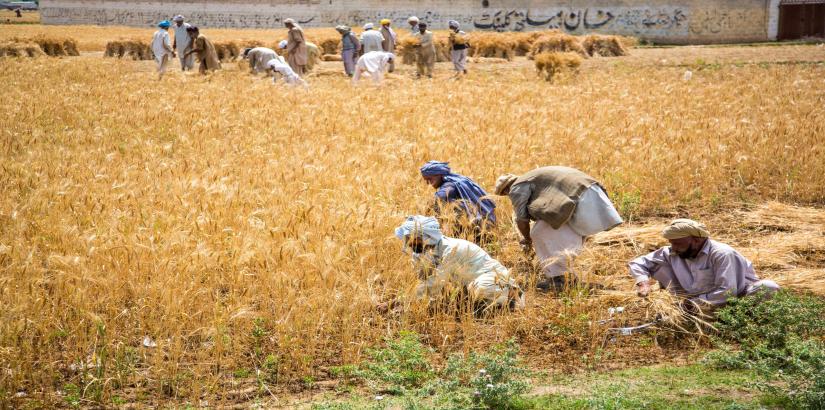
A crisis does not always arrive with immediacy or visibility. Some unfold quietly, beneath notice, until their consequences become impossible to ignore. The gradual decline of pollinators in Pakistan represents one such unfolding crisis. It is not dramatic in appearance, nor is it widely debated in policy circles, yet it sits at the intersection of ecology, agriculture, and food security in a way that demands urgent attention.
Pollinators, particularly bees, butterflies, and other insects, perform a function that is foundational to both natural ecosystems and agricultural productivity. A significant proportion of fruit, vegetable, and oilseed crops depend on pollination to sustain yield and quality. When this ecological service weakens, the effects are not abstract. They manifest in reduced harvests, higher production costs, and increased pressure on already strained agricultural systems.
Drivers of Decline
The drivers of pollinator decline are neither isolated nor accidental. They are rooted in a combination of habitat loss, pesticide dependency, monoculture farming practices, and climate variability. Expansion of agricultural land and urban development has steadily reduced wild flowering habitats that sustain pollinator populations. In many regions, the replacement of diverse vegetation with uniform crop cycles has further limited food sources for pollinating species throughout the year.
Among the most significant pressures is the widespread use of chemical pesticides. While these substances are intended to control agricultural pests, their broader ecological impact is often underestimated. Exposure to certain pesticides affects pollinator navigation, reproduction, and survival rates. In areas of intensive farming, repeated exposure compounds these effects, leading to gradual population decline. This is not a sudden collapse but a slow erosion of ecological resilience.
Climate change adds another layer of complexity. Shifts in temperature and rainfall patterns alter flowering cycles, disrupting the synchronisation between plants and their pollinators. In some regions, plants bloom earlier or later than usual, while pollinator life cycles remain unchanged. This temporal mismatch reduces effective pollination, even where both plants and insects are still present. Over time, such mismatches accumulate into measurable agricultural losses.
Food Security Implications
The consequences of pollinator decline extend beyond environmental concern. They directly affect agricultural output, particularly in crops that are economically and nutritionally significant. Fruits such as mangoes, apples, and citrus, along with vegetables and oilseed crops, rely heavily on insect pollination. Any reduction in pollinator activity translates into lower yields, reduced quality, and increased production uncertainty for farmers.
For a country like Pakistan, where agriculture remains a critical component of the economy and rural livelihoods, this emerging trend carries serious implications. Food security is not only a matter of production volume but also of stability. When ecological systems that support agriculture begin to weaken, the resulting volatility places additional strain on farmers, markets, and consumers alike.
Despite this, the policy response remains limited. Agricultural planning often prioritises productivity inputs such as irrigation and fertilizers, while ecological processes like pollination receive far less attention. Environmental regulations exist but are inconsistently implemented at the field level. The absence of integrated planning between agricultural and environmental institutions further deepens this structural gap.
Awareness and Agricultural Practice
There is a noticeable lack of public awareness regarding the importance of pollinators. In rural communities, declines in insect populations are often observed anecdotally but not understood in ecological terms. This disconnect between observation and understanding prevents meaningful behavioural change. As a result, practices such as indiscriminate pesticide use continue without full awareness of their long-term ecological consequences.
Policy and Institutional Response
Addressing pollinator decline requires a shift in both policy and perception. At the policy level, integrated pest management strategies should be promoted more aggressively to reduce dependence on harmful chemicals. Encouraging biodiversity-friendly farming practices, such as crop rotation and the preservation of natural vegetation strips, can help restore ecological balance within agricultural landscapes.
Research and monitoring also remain critical. Pakistan currently lacks comprehensive data on pollinator population trends. Strengthening collaboration between agricultural universities, research institutions, and government departments can help build a clearer picture of ecological change. Without data, policy remains reactive rather than preventive.
Long-Term Resilience
In addition, the establishment of pollinator-friendly zones, particularly in agricultural corridors, can provide refuge for insect populations. These areas do not require large-scale land conversion but rather thoughtful land-use planning that integrates ecological needs into existing farming systems. Small interventions at the landscape level can yield disproportionately large benefits over time.
Public awareness must also be treated as a long-term investment. Farmers, in particular, need access to practical knowledge about the ecological role of pollinators and the risks associated with chemical overuse. Extension programs that combine agricultural productivity with ecological education can help bridge this gap. When farmers understand that pollinators are not external to agriculture but central to it, behavioural change becomes more likely.
The decline of pollinators in Pakistan is not an isolated environmental issue. It is a structural signal of imbalance within agricultural ecosystems. It reflects how modern farming practices, if not carefully managed, can inadvertently weaken the very systems upon which they depend. The danger lies not in sudden collapse but in gradual erosion that goes unnoticed until productivity begins to decline in visible and irreversible ways.
Pakistan stands at a point where early intervention is still possible. The challenge is not one of technological limitation but of policy attention and ecological integration. Recognising pollinators as a critical component of agricultural infrastructure is the first step toward building a more resilient food system.
In the end, the survival of pollinators is not only an environmental concern. It is a question of agricultural stability, rural livelihoods, and long-term food security. What appears small in scale carries consequences large enough to shape the future of the country’s ecological and economic landscape.
References
IPBES. (2016). The assessment report on pollinators, pollination and food production. Intergovernmental Science-Policy Platform on Biodiversity and Ecosystem Services.
Klein, A. M., Vaissière, B. E., Cane, J. H., Steffan-Dewenter, I., Cunningham, S. A., Kremen, C., & Tscharntke, T. (2007). Importance of pollinators in changing landscapes for world crops. Proceedings of the Royal Society B: Biological Sciences, 274(1608), 303–313.
Potts, S. G., Biesmeijer, J. C., Kremen, C., Neumann, P., Schweiger, O., & Kunin, W. E. (2010). Global pollinator declines: Trends, impacts and drivers. Trends in Ecology & Evolution, 25(6), 345–353.
Goulson, D., Nicholls, E., Botías, C., & Rotheray, E. L. (2015). Bee declines driven by combined stress from parasites, pesticides, and lack of flowers. Science, 347(6229), 1255957.
Food and Agriculture Organization of the United Nations. (2019). The state of the world’s biodiversity for food and agriculture. FAO.
Winfree, R., Williams, N. M., Gaines, H., Ascher, J. S., & Kremen, C. (2008). Wild bee pollinators provide the majority of crop visitation across land-use gradients in New Jersey and Pennsylvania, USA. Journal of Applied Ecology, 45(3), 793–802.
(The author is a Pakistani zoologist with a focus on wildlife conservation, mountain ecosystems, and the role of environmental cooperation in protecting endangered species. Views expressed are personal. She can be contacted at zonamumtazz@gmail.com )





Post a Comment