

Defining the End Game: Challenges of Power, Pacts and Faith in the West Asia Conundrum
History offers a consistent lesson: the difficulty is rarely in beginning a conflict; it lies in defining its limits. Sovereignty can be defended. Regimes can be challenged. Alliances can be activated. Yet none of these guarantee clarity about the end state. Without a defined objective and a disciplined exit, events gather their own momentum.
 Mar 04, 2026
History rarely announces itself politely - it erupts, and the world scrambles to interpret the smoke. In West Asia, long-brewing tensions have crossed the invisible line into open confrontation. What follows will test not just armies and alliances, but judgment itself.
Markets Earliest Barometer
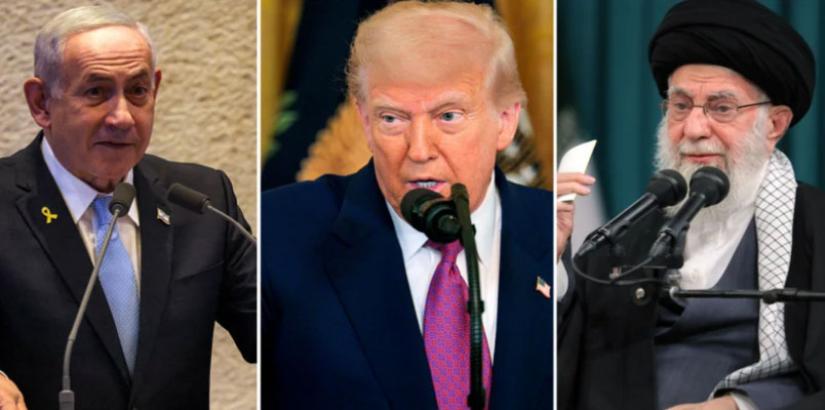
Israel has attacked Iran. The United States has thrown its weight behind Israel. The world had long sensed it was coming. I felt its imminence when the Nifty fell sharply at 3:01 PM on Friday and the Dow Jones dropped over 500 points later the same day. Markets are often the earliest barometer of geopolitical consequence. Money moves before missiles do.
Within hours, Iran confirmed that Ayatollah Ali Khamenei had been killed, and succession arrangements were immediately set in motion. Iran retaliated with missile strikes on Israel and on what it described as U.S. military bases in the region.
This strike on Iran is not merely a plan hatched overnight by Benjamin Netanyahu or Donald Trump. They are, at best, the visible executors. Strategic thinking of this nature matures over years. At some point, someone judges that the moment has arrived and that the political leadership in place is suitable to carry it forward.
Life and War Coexist
What follows now is uncertain. Even active participants may be navigating events rather than controlling them. The world watches - some with anxiety, others with detached curiosity. Crowds following an India–West Indies match at Eden Gardens or a Manchester United–Crystal Palace fixture at Old Trafford on Sunday remained largely indifferent. Life and war coexist strangely in the modern age.
Economists will forecast doomsday. Commentators will choose sides. Some allies of Washington will offer cautious support for what is plainly an attack on a sovereign state, while continuing to condemn Russia for transgressions in Europe. Narratives will harden quickly. Context will be selectively remembered.
Ironically, this unfolds during Ramadan - a month devoted to reflection and prayer for peace.
What is right is rarely debated when might is right.
Dilemma is Real
The situation involving Israel, Iran, and the United States sits precisely in that Malayalam proverb: “Kayichittu erakknum vaiyya, madhurichittu thuppanum vaiyya.” Bitter to swallow, sweet to spit out.
On one hand, any military strike on a sovereign nation destabilized the international order. If such actions become normalised, the world slides toward might-over-right. On the other hand, the regime under Khamenei faced sustained criticism for internal repression and for projecting ideological influence across the region through proxies. Many argue that this contributed to instability across parts of the Middle East.
Thus, the dilemma is real: Defending sovereignty may feel like defending oppression.
Opposing a regime may appear to justify external intervention. neither position is morally comfortable. That is the gooseberry, sharp, complex, resistant to easy digestion. History shows that externally removing regimes rarely produces tidy outcomes. Yet ignoring destabilising ambitions carries its own risks. International politics offers not clean choices, but competing dangers.
Experts often point out that martyrdom forms a central pillar of the Iranian regime’s worldview. The decision not to flee, even at mortal risk, may now create a “blood debt” legacy among rival factions, strengthening hardliners and reshaping internal power equations.
It is sobering that even in the twenty-first century, blind faith and rigid belief systems continue to fuel hunger, suffering, and conflict. When national ambition is driven by power and economics, the global system is often capable of managing escalation — except in cases burdened by heavy historical baggage, such as the Russian aggression on Ukraine. But faith is another matter; it does not always yield to deterrence, diplomacy, or rational calculus. And the ripple effects may not end in the Gulf.
Pacts and Alliances
Even as missiles fly and rhetoric hardens, alliances reposition. The United States stands firmly behind Israel, and its military footprint across the Gulf - from air bases in Qatar and the UAE to naval facilities in Bahrain - is no abstraction. Power is physically embedded in the region. Gulf monarchies calibrate their responses carefully, balancing public sentiment with strategic dependence.
Strategic partnerships across West Asia, whether between Washington and Tel Aviv, Riyadh and Islamabad, or other emerging alignments, are invoked in moments like these. Yet all defence pacts, however solemn their language, are rarely automatic war switches. They signal intent; they preserve discretion.
In 2025, Saudi Arabia and Pakistan signed a mutual understanding declaring that aggression against one would be treated as aggression against both. The announcement triggered predictable alarm. But the language mirrors conventional collective security formulations worldwide. It signals solidarity; it does not publicly mandate automatic deployment, fixed timelines, or pre-committed combat action.
Saudi financial assistance to Pakistan is no secret. Strategic partnerships often rest on economic foundations as much as military ones. Yet financial proximity does not equal battlefield inevitability. If the pact were as binding as the noise suggests, Pakistan could theoretically open a front along Iran’s eastern border. That would widen the theatre and shift tremors closer to India’s strategic perimeter.
But geopolitics rarely unfolds according to headline logic. Pacts create options. They rarely eliminate discretion. In international politics, impact is sometimes real. At other times, it is merely theatre.
Defining Limits of Conflict
In moments such as these, it is tempting to frame events purely in terms of military capability. But the deeper currents run through conviction and perception. When belief hardens into absolute certainty, compromise appears as weakness. When power seeks demonstration rather than resolution, escalation becomes easier than restraint.
History offers a consistent lesson: the difficulty is rarely in beginning a conflict; it lies in defining its limits. Sovereignty can be defended. Regimes can be challenged. Alliances can be activated. Yet none of these guarantee clarity about the end state. Without a defined objective and a disciplined exit, events gather their own momentum.
Pacts create options. They do not remove discretion. Strength provides leverage. It does not substitute for judgment. And faith, whether national, ideological, or civilisational, can inspire resilience, but it can also harden positions beyond the reach of negotiation.
The Middle East has long carried layers of memory, grievance, and aspiration. In such terrain, actions reverberate far beyond their immediate targets. The true measure of leadership will not be the capacity to strike, but the capacity to define when striking has achieved its purpose.
Interesting times ahead, to say the least.
(The author is an Indian Army veteran and a contemporary affairs commentator. The views are personal. He can be reached at kl.viswanathan@gmail.com )





Post a Comment