

Bridging the Climate Gap: India’s Path from Belém to Viksit Bharat
COP30, Viksit Bharat, and SDG 13 cannot be separated into silos of policy. They have to be woven into one coherent climate-development narrative. At COP30, India can exercise credible ambition and obtain enabling mechanisms from international partners. At home, Viksit Bharat has to internalise climate—not as a compulsion, but as the basis for India’s success. SDG 13 is the yardstick by which India’s growth needs to be measured to determine if growth is both sustainable and future-proof.
 May 01, 2026
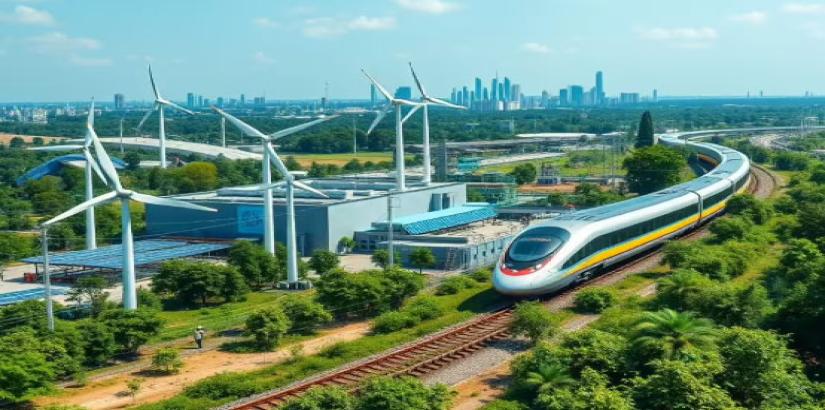
As the planet moves toward the historic United Nations Climate Change Conference—COP30—to be held in Belém, Brazil, global climate discourse is on the threshold of a critical moment. For India, this is not just another multilateral meeting; it is an opportunity to demonstrate to the world how a rapidly expanding economy can reconcile its long-term vision of development, Viksit Bharat 2047, with the imperative of a world constrained by climate change. India is at a crossroads: the nation that aspires to become part of the world’s top three economies by mid-century must do so while charting a course that is defined through low emissions of carbon, climate resilience, and social fairness. This simultaneous striving for economic success as well as international cooperation will cement India’s credibility within the international sustainability conversation.
COP30: A Global Pivot
During COP30, it is expected that nations will put forward enhanced Nationally Determined Contributions (NDCs), aiming to step up efforts to close existing gaps. Experts highlight that the summit should produce a strong ‘cover decision’ integrating mitigation, adaptation, finance, loss and damage, and just transition into a single package. Brazil’s offer of a Tropical Forests Forever Facility—a fund that rewards forest conservation in tropical countries—is placing nature-based solutions squarely on the agenda. For India, COP30 is not only an exercise in compliance but also a limited diplomatic chance to influence global norms, acquire technology partnerships, and build legitimacy for deeper domestic emission cuts and resilience options.
Viksit Bharat and Climate Integration
Viksit Bharat 2047 captures India’s vision for the long term, for prosperity, infrastructure, equity, and capability. But without climate resilience, low-carbon development, and environmental constraints being introduced within that vision, the benefits may be lost to climate shocks. Instead of being an afterthought, decarbonised growth must become the norm. India needs to integrate climate risk assessments into infrastructure planning, have every investment undergo a climate test, and develop capacities in states and districts to internalise climate measures in development planning. Resilience cannot remain on a peripheral track; it has to drive agriculture, water infrastructure, urban planning, and local livelihoods instead. Meanwhile, the approach has to be inclusive as well: coastal, tribal, agricultural, and other vulnerable groups must be given priority for adaptation assistance, and changes in carbon-intensive areas have to ensure socio economic justice.
India’s Climate Diplomacy at COP30
India’s climate diplomacy strategy has evolved over recent years from reactive to proactive leadership. India has sought to lead by example and position itself within the interests of the Global South through frameworks such as the International Solar Alliance and the Coalition for Disaster Resilient Infrastructure. India’s leadership during the G20 presidency (2023) reasserted its commitment to climate justice as well as sustainable development. With COP30 in sight, India is well-placed to champion a vision that interlinks development rights and environmental responsibility, rather than climate finance, technology transfer, and cooperative frameworks that are differentiated. The validity of India’s voice will rely on the ability to show domestic coherence, rather than that Viksit Bharat is in conflict with Sustainable Development Goal 13 (SDG 13: Climate Action), but rather is based fundamentally on it.
SDG 13 in Practice
SDG 13 cannot be an aspirational to-do list; its success or failure determines the destiny of practically every other development objective—food security, water, health, cities, and poverty reduction. To render it functional, India will need to eliminate inconsistent incentives, like fossil fuel subsidies, and align policy structure to consistency across sectors like transport, agriculture, energy, and urban planning. Climate-labelled indicators—emissions per capita, adaptation resilience indicators, and climate finance flows—need to be institutionalised in national, state, and district monitoring systems. Budget processes would be reshaped to integrate climate sensitivity as standard practice with the aim of promoting sustainable investment through budgetary tools like green bonds and climate budget tagging, or climate risk premia. Equally critical is broader communication with the public and with stakeholders: policy is unsustainable without awareness among citizens, private sector credibility, and civil society accountability.
Synergies and Tensions
The interplay among COP30, Viksit Bharat, and SDG 13 offers profound synergies as well as friction. On the synergy side, COP30 can legitimise higher ambitions and unlock financing; Viksit Bharat provides a long-term horizon to anchor climate policies; and SDG13 supplies measurable benchmarks. Yet tensions are inevitable. The development imperatives can clash with emission limits; institutional capacity in most states to mainstream climate in policy-making could be wanting; financing public budgets could be stretched by huge climate spending; and global outcomes from COP30 could fail to meet enabling expectations. Resolving these paradoxes will demand sequential strategies, governance adaptation, political determination, and the ability to redesign midcourse.
Policy Agenda: From Vision to Execution
In preparation for COP30, India must put forward a strengthened NDC pathway with mid-term milestones (e.g., 2035 and 2040), sectoral paths, and costed, transparent action plans consistent with Viksit Bharat timelines. At the same time, the national Green India Fund must be institutionalised and funded from domestic, international, and blended sources to enable rural resilience, ecosystem recovery, green infrastructure, and climate innovation. State and district climate action plans should be supported by capacity, data systems, and incentive structures closely tied to SDG 13 indicators. India’s fiscal system has to be overhauled: climate budget tagging should be routine across ministries, fossil fuel subsidies rethought, and market tools such as carbon pricing and green bonds encouraged to channel investment. Carbon-intensive, economy-dependent regions need careful just transition planning, including retraining, income protection, and alternative livelihood options. In diplomacy, India will need to employ COP30 as a platform to obtain improved technology transfer, concessional finance, and multilateral frameworks adapted for emerging economies.
Test of Implementation
COP30, Viksit Bharat, and SDG 13 cannot be separated into silos of policy. They have to be woven into one coherent climate-development narrative. At COP30, India can exercise credible ambition and obtain enabling mechanisms from international partners. At home, Viksit Bharat has to internalise climate—not as a compulsion, but as the basis for India’s success. SDG 13 is the yardstick by which India’s growth needs to be measured to determine if growth is both sustainable and future-proof.
The true test is not of vision but of implementation—whether policy is turned into climate-sensitive infrastructure, whether money is translated into resilience and innovation, and whether leadership is turned into lives enhanced and made more secure and dignified. The time is here: India’s triumph depends on how it spearheads in a world where development and climate action go hand in hand.
(The author is working as an ICSSR Postdoctoral Fellow at the Centre for Korean Studies, SLL&CS-II, Jawaharlal Nehru University, New Delhi, India. Views expressed are personal. She can be reached at sutandra.singha@gmail.com and https://in.linkedin.com/in/dr-sutandra-singha-b5562749 )







Post a Comment