Bangladesh press freedom

Two Years After the July Uprising, Bangladesh's Press Freedom Remains Under Question

Another defining feature of Bangladesh's current media environment is the emergence of "mob culture." The attack on The Daily Star and Prothom Alo offices is a serious example of mob attack. Media owners often hesitate to invite commentators associated with the previous government or opposing political viewpoints because they fear public backlash, protests, or attacks 

India Loves Political Scandals, But Don't Care How They End Up

For decades, Bofors was treated as a national scandal of almost Biblical proportions, with international ramifications. All guns ablaze. Yet when its judicial afterlife finally reaches a dead end, the story seems to have lost its political ammunition. Not even a recall that the much-maligned gun, which was accused of backfiring at those who fired, not at the target, had vindicated its purchase during the 1999 Kargil conflict.  

From Hashtags to Handcuffs: When Digital Democracy Becomes Digital Surveillance

India therefore needs a serious conversation on algorithmic accountability. If AI increasingly informs policing, citizens deserve clarity on its legal basis, safeguards against misuse, limits on data retention, independent oversight and effective judicial remedies. 

Changing Architecture of the Indian State: Public Trust can Neither be Legislated nor Certified

The recurring examination scandals were failures of governance. Likewise, concerns regarding foreign influence should not preclude critical examination of how regulatory institutions themselves function.

More on Public Policy and Governance

Why Workers Are Leaving Delhi: When Policy Needs to Align With Ground Reality

What emerges from this moment is not a singular crisis but a layered one, shaped by global disruptions, local cost pressures, and structural vulnerabilities. Workers are leaving Delhi not because the city has stopped offering work, but because it has become increasingly difficult to live sustainably in the capital city while working.

Where the World Drifts into a Grey Twilight

Conflicts today often lack clearly stated aims, making end states difficult to define. The ongoing engagements involving Russia, Israel, and the United States illustrate this ambiguity. In such situations, conflicts risk being driven more by national ego than by achievable objectives, prolonging destruction and human suffering.

Ethanol as Cooking Fuel: India can Become Self-Sufficient

Nevertheless, ethanol is a homegrown, renewable fuel which can being great advantage to the country, increase the remuneration to the farmers and help in expanding industrial crop production base in India.

Empowering Women of South Asia: India Can Play a Generous Role

India, for one, can offer to create - if required - segregated facilities for education, IT services and upskilling training centres in those communities as there are both kinds of establishments in the country and the economic capacity to be generous to neighbours in need without expectation of a quid pro quo.
 

Security for Whom? Needed a Human-Centred Approach to ‘National Security’

If “security” is to have real meaning, it must be grounded in the lived experiences of those it is intended to protect. This requires a shift from state‑centred metrics to civilian‑centred measures of stability; where continuity of daily life, equitable protection, and psychological well‑being are integral to how we define security.

Amid Global Turmoil, India Must Seize the Moment to Play a Defining Role

Assuming leadership requires both inherent strength and ideological positioning. While the world covets India as a market, India should also become a market leader in strategic areas where it needs to be self-reliant and has export potential. These include space, defence, aeronautics, AI, semiconductors, and skilled manpower. India must leverage economic diplomacy and soft power 

Assam Elections: Of Identity Politics, Development Spectacles and Voter Disillusionment

There is also a subtle but perceptible fatigue with the continued reliance on polarisation as a political tool. Identity-based mobilisation, while effective in the short term, risks diminishing returns when overused. If these undercurrents - internal dissent, governance gaps, and narrative fatigue - begin to converge, they may not immediately overturn electoral outcomes, but they could signal the early stages of a more substantive political challenge to the BJP

AI171 Crash Probe: India Owes the truth to the 260 who Died and Their Families

Prime Minister Narendra Modi will be cognizant of the fact that the crash occurred in Ahmedabad, in his home state. People will come to their own conclusions as to whether they saw Modi standing up to American pressure or give in. India has not forgotten the Bhopal Gas Tragedy, that Warren Anderson and Union Carbide Chemicals went scot-free, that India settled for a meagre $470 million compensation – 25 years later – for the families of the thousands who died and the millions who were adversely affected.

Whither Commitment to Truth? How AI, Media, and Visuals Shape Our Sense of Threat

The social media takes advantage of the reward systems in the brain, especially the dopamine circuits within the basal ganglia and the prefrontal cortex. Using signals of micro-engagement, including the duration of time a user hovers over a video or the number of times a user rewatches a clip, algorithms develop a feedback loop that over time redirects the feed of a user to more intense or provocative content.

To Mediate - or not to Mediate: Not Necessary for India to be at Head of Table at Peace Talks

To step into the role of mediator in a conflict of this nature would inevitably test that balance. It would invite scrutiny, of intent, of tilt, of perceived bias. Even the most well-intentioned effort could be interpreted through the prism of existing relationships. In such a situation, neutrality is not merely a matter of policy; it becomes a matter of perception, and perceptions are notoriously difficult to manage.

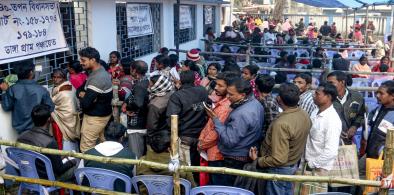
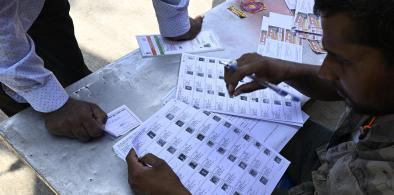
Large-scale Voter Abstention: Was Bangladesh's Parliamentary Election a Genuine Democratic Exercise?

One notable point is that Awami League (AL) supporters and minority community voters reportedly did not vote for any of the contesting parties. This narrative may have been constructed to justify inflated vote counts. It may also suggest that none of the contesting parties—including the BNP, Jamaat alliances, and others—command the level of public support often claimed. Additionally, it can be inferred that communal politics has not achieved the level of social penetration in Bangladesh as was talked about.

Mental Health in Schools and Colleges: An Ignored Chapter in Bangladesh's Education System

The loss of 403 young lives is a stark wake-up call for Bangladesh. Schools and colleges are meant to nurture dreams, not silently witness the suffering of students. A collaborative effort involving the government, educational institutions, and families is urgently needed. With empathy, awareness, and institutional support, many of these young lives can still be saved.

The Hormuz Lifeline: Why India’s Energy Security Still Runs Through A 33-Km Strait

India’s diversification strategy, often cited as a mitigating factor, provides only partial relief. The country now sources crude from over 40 countries, and in recent years has increased imports from Russia, the United States, and West Africa. In fact, about 70% of crude imports are now routed outside Hormuz, reflecting a conscious shift in sourcing strategy.

Can Ladakhis' trust be restored by freeing Sonam Wangchuk?

Wangchuk was arrested - he has since been released -  obviously to allow allotment of land to corporates without engaging with the locals. Under the circumstances, how much trust of the Ladakhis the government can regain, remains questionable.

Delivering West Bengal From Its Vice-Laden Politics: Voters Must Draw Strength From Their Electoral Power

As owners of the republic—not merely beneficiaries of electoral inducements timed for political gain—electorates must act as empowered, assertive and demanding citizens, carefully examining party positions on substantive issues. They must insist on time-bound job creation strategies and measurable improvements in key sectors such as education and healthcare, rather than settling for vague manifesto assurances.