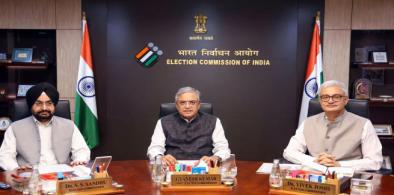
The Election Commission belongs neither to the government of the day nor to the Opposition. It belongs to the people of India. Its first duty is to protect the citizens' vote. That is the standard by which the CEC, the two ECs should be examined.


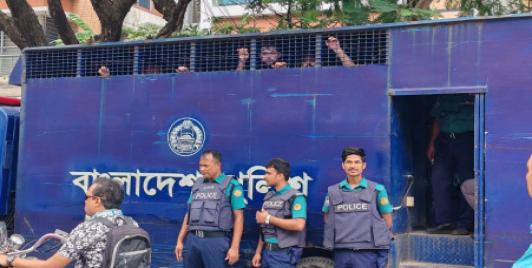
To what extent has the current BNP government been able to realise the vision that drove the 2024 mass uprising in Bangladesh? Will the BNP government, too, manipulate state mechanisms and law enforcement agencies to serve its own interests, much like the previous Sheikh Hasina regime, to suppress the opposition and silence critics? The government must therefore take serious steps to amend police laws and prevent deaths in police custody. This is one of the crucial reforms facing the administration.
The Commission's authority rests ultimately on public confidence. Like Caesar's wife, the Election Commission must be above suspicion. It should welcome scrutiny and answer legitimate questions, especially when millions of voting rights are involved.
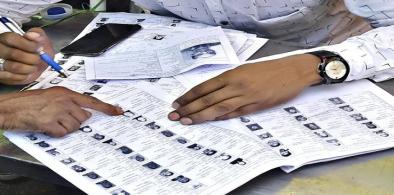
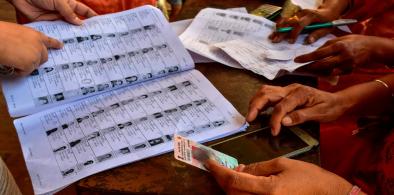
If the government and EC are confident, the answer is not a counter-letter but transparent data: a district-wise, gender-wise audit of deletions, restorations, reasons – all details to be placed on affidavit, as Lokur panel demands.
The ongoing SIR is not merely about helping a particular party win an election; it points to a much deeper design - to create a customised electorate in the country. It is intended to turn India into a Republic in which only some sections of the population remain politically relevant.
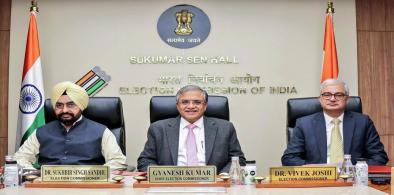
The Election Commission belongs neither to the government of the day nor to the Opposition. It belongs to the people of India. Its first duty is to protect the citizens' vote. That is the standard by which the CEC, the two ECs should be examined.
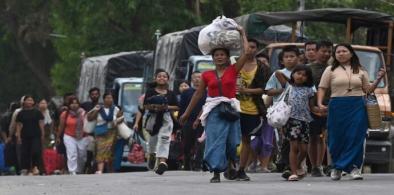
Manipur therefore needs to move beyond the language of relief and towards the language of restoration. The ultimate measure of recovery will not be how many camps have closed. It will be how many families can safely return, rebuild their livelihoods, educate their children, access justice and live without fear.
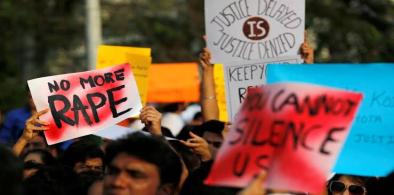
The Chopra siblings' murder in 1978, the Nirbhaya case of 2012, R.G. Kar Kolkata in 2024 and Kalkaji in 2026 belong to different historical contexts. Yet they reveal a recurring difficulty in Indian governance: we are capable of extraordinary mobilisation after extraordinary violence, yet less consistent at converting that mobilisation into permanent institutional practice.

The Tata group is a national icon, a picture of enterprise, growth and service packed in a business model that many Indians cherish and hold as an exemplar. That model, in which the bulk of a great enterprise’s profits flows to charitable trusts for the public good, is rare anywhere in the world.
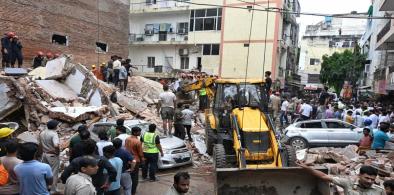
Aggressive migration of youth and workers to metro cities in search of better opportunities is common across the region. And so is the response deficit by local and central governments in providing them with basic, dignified lifestyles. The time has come for the elected representatives to think differently and narrow the gap between government schemes and results on the ground.

These achievements have positioned India as a digital governance exporter. Singapore, Nepal, Bhutan, France, Mauritius, Sri Lanka, and the United Arab Emirates have already established UPI connectivity, and more than 50 countries have expressed interest in replicating aspects of India Stack’s open digital infrastructure.

This raises the issue not whether Islamabad has surpassed its outmoded and fragmented administrative structure but whether governance would keep pace with its growth. Islamabad has to evolve from being administered as a capital city into being governed as a metropolis.

The inhabitants of Manipur have had long-standing experiences of living insecurely in their own homeland, even as migrants from the Northeast have encountered prejudice in metropolitan India....India has produced a paradox where communities that belong formally to India can also face exclusion from the social mainstream.

Before asking how quickly a project can be implemented, policymakers should ask whether it can be redesigned to reduce displacement. Before acquiring new land, can existing degraded land be used? Can infrastructure be built around communities rather than communities being moved around infrastructure?

Identity and financial crimes that occur across India's borders never begin with anything overtly fraudulent. They generally begin with a small breach in routine authentication processes. Biometrics, forensic document examination, and audit trails can each
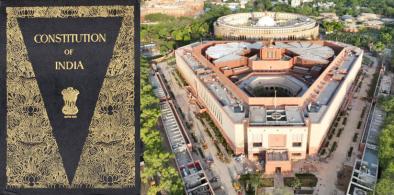
India’s constitutional design operates on the line of a fully functional parliamentary democracy anchored in constitutional supremacy rather than parliamentary sovereignty. In an era of evolving challenges, the supremacy of the Constitution continues to serve as the ultimate safeguard of Indian polity.
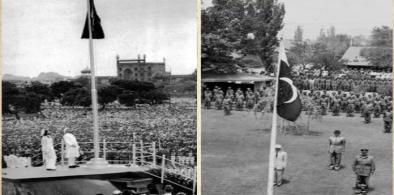
Eighty years after Partition, the overarching lesson of this comparative history of India and Pakistan is that national trajectories are not preordained by culture, talent, or geography. They are determined by the rules and values a state enshrines for itself in its formative years.
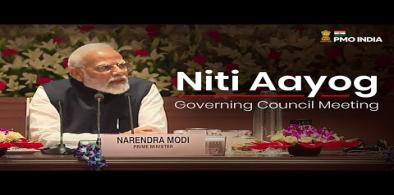
It is time the Indian district administration’s focus shifts to economic development and prosperity-building through strategic planning, resource mobilisation, and effective resource allocation; productivity enhancement, competitiveness, skill-building, employment generation and ensuring the security of life and property.

The man who once led Pakistan to its only World Cup triumph has now become the subject of an international cricketing appeal for humane treatment. The more the authorities try to keep his story behind prison walls, the more the cricketing world appears determined to take it beyond them.

The common thread running through the remarks of Asif, Naqvi and Fazlur Rehman is that Pakistan's problem is no longer simply who governs it. It is how it is governed. Asif's comparison with India highlights the widening developmental gap.