Bangladesh press freedom

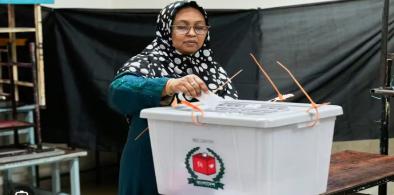
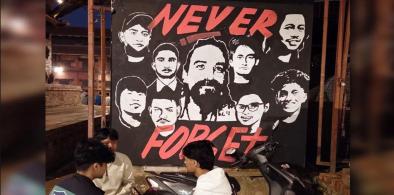
Two Years After the July Uprising, Bangladesh's Press Freedom Remains Under Question

Another defining feature of Bangladesh's current media environment is the emergence of "mob culture." The attack on The Daily Star and Prothom Alo offices is a serious example of mob attack. Media owners often hesitate to invite commentators associated with the previous government or opposing political viewpoints because they fear public backlash, protests, or attacks 

India Loves Political Scandals, But Don't Care How They End Up

For decades, Bofors was treated as a national scandal of almost Biblical proportions, with international ramifications. All guns ablaze. Yet when its judicial afterlife finally reaches a dead end, the story seems to have lost its political ammunition. Not even a recall that the much-maligned gun, which was accused of backfiring at those who fired, not at the target, had vindicated its purchase during the 1999 Kargil conflict.  

From Hashtags to Handcuffs: When Digital Democracy Becomes Digital Surveillance

India therefore needs a serious conversation on algorithmic accountability. If AI increasingly informs policing, citizens deserve clarity on its legal basis, safeguards against misuse, limits on data retention, independent oversight and effective judicial remedies. 

Changing Architecture of the Indian State: Public Trust can Neither be Legislated nor Certified

The recurring examination scandals were failures of governance. Likewise, concerns regarding foreign influence should not preclude critical examination of how regulatory institutions themselves function.

More on Public Policy and Governance

India Needs A Strong Political Culture That Upholds Democratic Values

It may be argued that invoking the Bhutanese king’s principled stance as a reference point for a country as vast and diverse as India is deeply flawed—or, at best, a theoretical abstraction. Yet the fact remains: the ethos of good governance knows no geographical boundaries. If the highest leadership of a small, landlocked nation with limited resources could believe in, and strive towards, such ideals, why should our country fall short of visionary leadership, especially when it is far larger and endowed with greater capacities, opportunities, and strategic advantages?

India Needs To Get Real With The US and China

In this backdrop, opening up India fully to Chinese, including inviting the Chinese delegations, is akin to arranging visits of KFC owners to poultry farms! The hubris that this was to familiarize two big political parties and two economic powers with each other must have amused Beijing endlessly. Finally, insecurity is palpable in India’s handling of China and the US.  About time we get over this.

Somnath Temple: Instrumentalizing History As A Political Tool

History is not a tool to divide society and perpetuate the injustices of the past. It is there to show us what wrongs have happened in the past which should not happen again. We need to march towards a just society where all live the life of dignity and respect, a society where all of us enjoy equal citizenship rights.

Sri Lankan Government In A Fix Over Proposed Education Reforms: PM Under Pressure

Public opposition towards the reforms escalated after a web link to a gay dating site was found in one of the lessons in the grade six English language module.  This website was subsequently blocked by the regulator for internet users in Sri Lanka.  The lesson was intended to teach ten-year-old kids how to make online friends.

India's Celebrated Space Programme Under Cloud: ISRO’s second successive rocket failure Raises Uncomfortable Questions

Producing satellites for any purpose is an expensive endeavor. Failure to launch them has a profound impact not just on the client entities’ bottom lines but even the quality of science and services they may be seeking to pursue. Fifteen out of the sixteen satellites on the failed mission were from foreign entities, which constitute a lucrative market for ISRO. If they begin to nurse misgivings about ISRO’s reliability it can seriously dent not only the agency’s revenue but, more important, its reputation

Internationalisation Of Higher Education In India Is Key To India's Social Progress And National Strength

Internationalisation also plays a crucial role in addressing the long-standing issue of brain drain. For decades, large numbers of Indian students have pursued higher education abroad, particularly in North America, Europe, and Australia. While this has strengthened India’s global presence, it has also resulted in substantial outflow of talent and financial resources. Many students who leave choose not to return, contributing their skills to other economies.


Mumbai's infamous shantytown: Can Dharavi’s ‘Heart’ Survive Its Makeover?

The Dharavi Redevelopment Project has the potential to serve as a model for inclusive urban planning. However, this outcome depends on whether economic growth, social equity, and environmental sustainability are treated as equal priorities. Without adequate safeguards, the project risks becoming another instance where redevelopment favors corporate interests over human needs. 

Even As Ruling BJP Grows Politically Stronger, Question Marks On Indian Democracy

While in operational terms, India’s democracy was downgraded by several international bodies in recent years to ‘partly free’, its perceptible decline is perhaps most evident in the distrust generated by the bureaucratic fiat of a selective voter revision. As the exercise has struck off names without a clear audit or requisite time for discussion for explaining and correcting such deletions, the tag of the world’s largest democracy appears troubled by these developments. 

Why India Must Invest More In Childcare

Economic benefits also arise because of the jobs created in the childcare industry. Investing in childcare offers a clear pathway to unlock short and long-term economic gains, while enabling women and children to realise their full potential. If every young child in the pre-primary age group had access to childcare, millions of mothers could enter paid work between 2023 and 2030. In India alone, this could mean 6.2 million mothers joining the workforce.  

Chasing Oil While Losing The Future: America’s Strategic Error In Venezuela

For a president who prides himself on deal-making, the logic is straightforward. Clean-energy and circular-economy partnerships create domestic jobs, anchor supply chains at home, attract private capital rather than public subsidy, and reduce exposure to geopolitical shocks that oil markets have never been able to eliminate.

Why Sinhalese Buddhist Nationalists Adore Israel? An Alternative Reading

These myth-based narratives reveal a deeper psychological impulse: the desire to anchor Sinhalese Buddhist identity within a framework of global uniqueness and divine purpose. While Sri Lanka’s diplomatic relations with Israel have fluctuated since independence, Sinhalese Buddhist nationalist sentiment continues to exhibit a strong emotional affinity toward Israel.

A Distracted Generation And The Erosion Of State Capacity In India

India’s youth are growing up in an ecosystem defined by continuous stimulation and accelerated consumption of information. Attention is fragmented, patience for complexity is declining, and long-form engagement—essential for policy, administration, and strategic thinking—is increasingly marginal. This is not a cultural lament. It is a structural shift with direct consequences for how future administrators, policymakers, and institutional leaders are formed.

India’s outreach to West Asia and Africa: Strengthening Global South Leadership

By engaging Jordan, Ethiopia and Oman, India demonstrated its capacity to operate across geopolitical divides while remaining anchored in Global South solidarity. These visits were not isolated diplomatic events but part of a sustained effort to reshape international engagement through inclusivity, responsibility, and shared growth. As global uncertainties persist, India’s outreach to West Asia and Africa strengthens its claim to leadership rooted in partnership and a collective vision for a more equitable world order.

Growing Mistrust, Fragile Sunni-Shia Political Balance Deepen Gilgit-Baltistan Unrest

The security situation deteriorated further in 2025. A terrorist attack on a Gilgit-Baltistan Scouts checkpost resulted in two fatalities and one injury, heightening tensions. Protests later resumed in Sost, disrupting trade between Pakistan and China via the Khunjerab Pass. The year culminated in two high-profile attacks on October 5, when unidentified gunmen ambushed Maulana Qazi Nisar Ahmed, Ameer of the Ahl-e-Sunnat wal Jamaat in Gilgit-Baltistan and Kohistan, near the police headquarters in Gilgit, injuring him and several others. On the same day, Malik Inayat-ur-Rehman, the Chief Court Judge of Gilgit-Baltistan, narrowly escaped an assassination attempt near the City Hospital.