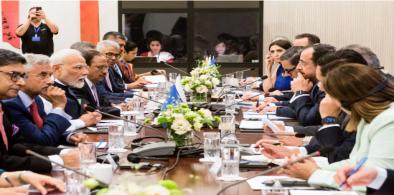

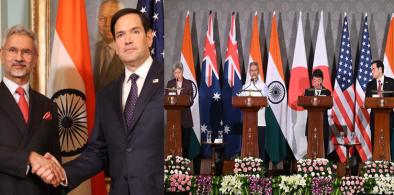
Japanese Prime Minister Sanae Takaichi arrived in New Delhi

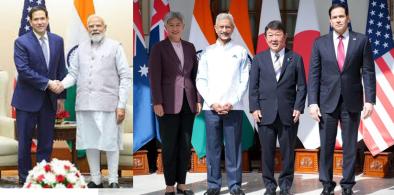
India–Japan Summit: Strategic Convergence in a Changing Indo-Pacific Order

Japan has also proposed developing a Bay of Bengal–Northeast India Industrial Value Chain aimed at transforming the region into an integrated industrial zone. As part of the Free and Open Indo-Pacific vision, this includes strengthening cross-border connectivity with Bangladesh, Myanmar, Nepal and Bhutan. 

China and the Emerging Scenario in the Bay of Bengal

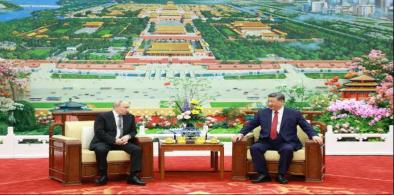
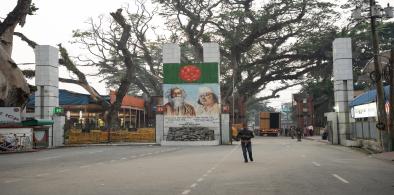
China's expressed interest in modernising and upgrading both Chattogram and Mongla ports suggests the emergence of an interconnected infrastructure network linking the Bay of Bengal with southwestern China through Myanmar. If realised, such connectivity would enhance trade flows, improve regional logistics and deepen China's economic footprint across the Bay of Bengal littoral, while simultaneously increasing Bangladesh's importance as a regional transit and connectivity hub.

Colombo to Kathmandu, China Seeks to Counteract US Moves Across South Asia

While Washington and New Delhi seek to strengthen bilateral ties with Colombo, Beijing has strategically engaged with the political forces that control the government. By engaging directly with actors at the core of Sri Lanka’s governance, Beijing appears to be signalling its strategic intent—projecting influence and reinforcing ideological ties. 

A Divided EU Faces Growing Scrutiny Over Taliban Contacts

Some analysts accuse the EU of double-standards arguing  that the EU has been condemning Taliban policies since they assumed power, but were now holding direct discussions with them. Such meetings undermine the EU's credibility as a defender of human rights and democratic values.

More on Geopolitics and Strategic Affairs

India, BRICS Fail the Iran Test: It Could Seek to Bridge Divides

For India, the failure is particularly significant as its presidency was an opportunity to translate “strategic autonomy”, the current buzzword in foreign policy circles, into multilateral leadership. True, its response is shaped by structural constraints. The country imports more than 85% of its crude oil, much of it from West Asia and Russia. Some nine million of its citizens live in the Gulf. The United States is its largest trading partner. Iran anchors the Chabahar port project and India’s access to Afghanistan and Central Asia. Each relationship is too consequential to risk.

Bhutan Under China’s Doklam Shadow: Delhi Needs to Move Away From Protector-Protected Dynamic With Thimpu

A key consideration for Delhi is Bhutan’s occasional denial or downplay of any Chinese encroachment on its territory, even when satellite data suggests otherwise. This is coupled with a growing perception within Bhutan that India is preventing it from completing its border negotiations with China. Although Thimphu remains closely aligned with Delhi, there is growing interest in expanding its engagement with China.

AI in Elder Care: Potential for Broader Social Transformation

For India, the opportunity is significant as its robust digital infrastructure and large demographic dividend can create a significant opportunity for adoption and deployment of Artificial Intelligence across sectors, particularly in the care economy. There is an ample room for the development of age-friendly products and services using AI innovation which are of scalable commercial value.

South Asia's EdTech Moment: Centre of Gravity of Global Education is Shifting

South Asia's higher education ecosystem — with over 1,500 universities and 60 million enrolled learners — is uniquely positioned to absorb and scale new models: work-integrated degrees, on-demand micro-credentials, lifelong learning. The Global South — Africa, Southeast Asia, Latin America, the Middle East — shares the same structural challenges. The solutions that work at scale in India, Bangladesh or Nepal will travel naturally to these geographies.

Sri Lanka’s 'Survival Balancing' is a Test of its Foreign Policy in This Gulf War

For three decades, Sri Lanka successfully navigated the India-China rivalry, turning great-power competition into economic opportunity. Today, the country faces a far narrower and more dangerous corridor. Balancing between India and China was a game of leverage. But, balancing between the United States-Israel axis and Iran is a test of survival.

India Reopens Door to Chinese FDI—with Limits: A Missed Opportunity? Lessons from Vietnam

India’s calibrated reopening to Chinese FDI is a step forward, but its restrictive framework may limit the inflow of capital, technology, and expertise needed to boost high-tech manufacturing. If the objective is to transform India into a global manufacturing hub and reduce the trade deficit with China, a more nuanced approach may be required—one that balances security concerns with economic imperatives.

South Asia’s Cities Are Growing - But May Not Remain Livable

What is unfolding across South Asia’s cities is not just an urban crisis, it is a reflection of deeper tensions within development itself. Growth is happening, but it is not translating into stability. Opportunities exist, but they are unevenly distributed. Systems are expanding, but not fast enough to keep up with demand. Cities, which have long been seen as places where people come to improve their lives, are increasingly becoming spaces where people struggle to sustain them. 

Why Can't South Asia trade with itself? Tariff Shock Can be Turned Into Opportunity

South Asia’s tragedy is not geography or lack of industrial capacity. It is the failure to convert proximity into predictable partnerships. Trump’s tariff threats could remain episodic political theatre, or they could signal a more protectionist global environment. Either way, South Asia’s dependence on Western concessions exposes it to recurring uncertainty. Reviving SAFTA in spirit and substance would not eliminate trade with the West. It would diversify risk and embed value creation within the region.

Gulf War Strains Bangladesh's Economic Fragility, Test for New Government

The current war has exposed Bangladesh’s structural vulnerabilities: dependence on imported energy, fragile reserves, and narrow fiscal space. For the new government, the stakes are clear—stabilize fuel and food supplies now while building resilience through diversified energy, broader exports, and stronger social protection. Wars in the Gulf may be fought thousands of miles away, but their economic shockwaves reach Bangladesh within days. In the end, the crisis will be felt in three simple pressures shaping everyday life: oil prices, food costs, and migrant jobs.

Re-imagining Pakistan’s Human Capital Crisis: It Must Dismantle Policy Structures That Serve Elite Interests

This crisis did not emerge overnight. It is a product of neglecting the foundational capacity to invest in human capital, where Pakistan hardly puts less than 2% of its national GDP on human capital factors. Meanwhile, the regional peers like Bangladesh and India invest more in education and health, and Pakistan is still trapped in a cycle of short-term fiscal thinking, political instability, and elite capture that is systematically hollowing out the nation’s potential to rise and grow.

The Delhi Tightrope: Can India Lead BRICS without Triggering a Trumpian Trade War?

In 2026, the “strategic autonomy” that we so often discuss must evolve from a defensive crouch to a balanced offensive infrastructure play. India’s success will be measured by its ability to convince the Trump administration that a stable, digitally-sovereign BRICS is actually a better trade partner than a chaotic, bankrupt one.

Bangladesh’s International Crimes Tribunal Under Fire: Serving Justice or Political Retribution?

Yunus created a suffocating atmosphere in Bangladesh by pushing the country towards the fate of a Caliphate, threatening the nation’s Bengali soul. Simultaneously, he weaponized the ICT and turned it into an instrument of targeting Sheikh Hasina by appointing Jamaat-e-Islami leaders into key positions in it. As a result, Hasina was handed death penalty in two cases, while she faces hundreds of murder charges—most of which were lodged by the activists of Bangladesh Nationalist Party (BNP) and Jamaat. 

Reevaluating Shakti: Transforming Divine Energy into Powerful Social Capital in South Asia

In modern South Asia, Shakti has been reborn in a different way through social reforms, feminist movement and gender equality policies. Rather than being rooted mainly in the kinship systems, feminine power now becomes more manifest in legal rights, schooling, political involvement and social movements. South Asian feminist movements have been inspired by world notions about gender justice and local cultural practices. In most situations, activists rebrand the concept of Shakti to mean the power of women, their independence and their struggle against patriarchy. 

Iran Is No Pushover: Lessons from a Troop-less War With Regional Ramifications

The first 15 days of the conflict have demonstrated that Iran is far from a pushover. While the United States and Israel dominate in technological sophistication and overall military strength, Iran’s resilience, indigenous capabilities, and asymmetric strategies have prevented a quick or decisive victory. What was perhaps expected to be a short, high-intensity campaign is increasingly resembling a protracted and unpredictable conflict—one with serious implications for regional and global stabilit

Strait of Hormuz: From Oil Chokepoint to Clean Energy Turning Point ?

Renewable energy is no longer a distant aspiration. It is increasingly the cheapest, safest, and most secure energy option available. The Strait of Hormuz may be shaking the global economy today - but it may also be opening a window of opportunity. If the world chooses wisely, this crisis could mark the moment when humanity finally begins to move decisively beyond the fossil-fuel era.