

Pakistan: Oppressor at Home, Peace Broker Abroad
This contradiction—peace abroad, repression at home—defines Pakistan’s current posture. While Islamabad seeks international recognition as a mediator, its domestic record is marred by bloodshed and denial of democracy. The JAAC movement, rooted in basic economic grievances, has become a symbol of resistance against this hypocrisy.
 Jun 12, 2026
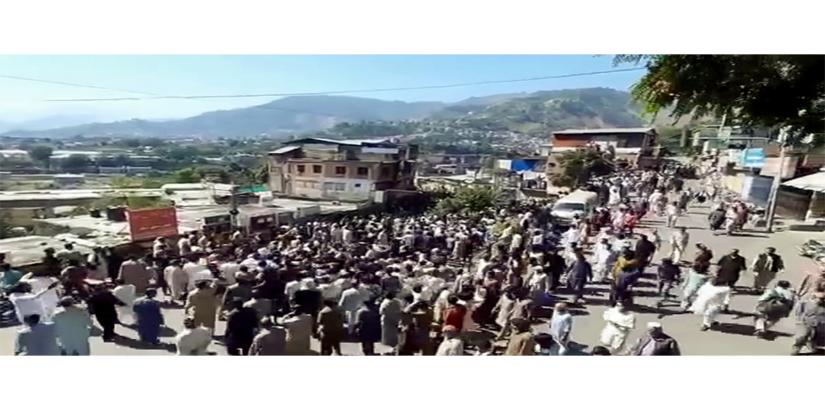
Startling contradictions define Pakistan’s posture today. To the outside world, Islamabad parades as a peace broker—courting Washington and Tehran with the language of diplomacy. Yet at home, the same State unleashes bullets on its own citizens, crushing peaceful protesters who dare to demand democracy and basic rights.
Crackdown in Pakistan-Occupied Kashmir
The recent crackdown in Pakistan-occupied Kashmir, referred to by Pakistan as "Azad Jammu and Kashmir (PoJK)", illustrates this duplicity. More than 30 civilians were killed and over 200 injured when Pakistani troops opened fire on demonstrators. Thousands of protesters, mobilised by the Joint Awami Action Committee (JAAC) Long March, had converged on towns including Rawalakot and Muzaffarabad to demand genuine rights and the abolition of 12 reserved seats in the PoJK assembly. Rawalakot and Muzaffarabad are major cities in Azad Kashmir, with Muzaffarabad serving as the regional capital, situated just 138 km from capital Islamabad.
In the face of Pakistan’s actions, the suppression of peaceful protest in occupied Kashmir is nothing new. Human Rights Watch and Amnesty International have long documented Islamabad’s systematic detention and harassment of activists in the region. Amnesty International recently described the ongoing crackdown as involving “an internet shutdown, mass arbitrary arrests, and deadly use of force,” warning that these measures reflect an alarming “deterioration of human rights in the region”.
Protests Turn Into National Outrage
The JAAC, formed in 2023, is a grassroots coalition of traders, transporters, lawyers, students, and civic groups. Within a short period, it gained remarkable momentum by aligning itself with the people’s most basic demands. Its 38-point charter calls for immediate economic reforms—such as reduced electricity tariffs and subsidised wheat flour—and long-term structural changes, including abolishing perks for lawmakers and eliminating the 12 reserved assembly seats. According to JAAC leaders, these seats are filled by Pakistani military nominees, ensuring the army’s dominance in the PoJK assembly.
In 2024, the JAAC marched towards the capital, demanding subsidies and relief from soaring electricity bills. The peaceful demonstration ended in tragedy when paramilitary forces opened fire, killing three activists. Following this, the bloodshed transformed a livelihood protest into a national outrage.
In response, the JAAC declared a nationwide shutdown, naming it “Black Day”. The movement was never about political power—it was about survival. As Shaukat Nawaz Mir, the JAAC chairman, explained: “Our movement began last year during the wheat crisis, when flour prices skyrocketed. Soon after, electricity rates spiked, and we began protesting to demand relief.”
Branding Protesters as Terrorists
Islamabad’s response has been to brand these legitimate demands as the work of “enemies.” In reality, the peaceful struggle of the JAAC has been turned into yet another killing field. Common sense dictates that the so‑called “enemies” are those who genuinely care about the people’s interests. By pointing fingers at India, Islamabad inadvertently concedes that New Delhi is concerned with the real aspirations of Kashmiris
On 5 June, under the Anti-Terrorism Act, Islamabad went further by labeling the JAAC as a group “engaged in terrorism” and acting “in a manner prejudicial to the peace and security of the State.” The logic is twisted: when Pakistan sponsors terrorist attacks on India, it calls the perpetrators “freedom fighters,” but when its own citizens peacefully demand subsidies for flour and reduced electricity rates, they are branded as terrorists.
Hollow Rhetoric and Global Response
Independent observers note that wherever Pakistan’s hand is visible, violence and bloodshed follow—and nowhere is this more evident than in Kashmir. On 5 January, Islamabad marked “Right to Self-Determination Day,” with Prime Minister Shehbaz Sharif declaring that resolving the Kashmir dispute was the only path to peace in South Asia. Yet the killings in Rawalakot expose the hollowness of such claims. Pakistan’s rhetoric of self‑determination rings false when its own forces violently suppress Kashmiris’ right to protest peacefully.
The crackdown in PoJK has reverberated beyond the region. Members of the Kashmiri diaspora in Europe and North America staged protests outside Pakistani embassies and consulates, likening the events to a “mini Tiananmen Square” in South Asia. Their message was clear: Pakistan’s actions in Kashmir are not those of a peace broker but of a butcher.
Real Threat to Peace
This contradiction—peace abroad, repression at home—defines Pakistan’s current posture. While Islamabad seeks international recognition as a mediator, its domestic record is marred by bloodshed and denial of democracy. The JAAC movement, rooted in basic economic grievances, has become a symbol of resistance against this hypocrisy. Its demands are modest: affordable electricity, subsidised flour, and an end to military manipulation of the assembly. Yet even these have been met with bullets.
The question that remains is stark: Who truly threatens peace in South Asia? The answer lies in Pakistan’s own actions in PoJK. Can a state that guns down its citizens, strips them of basic rights, and brands their voices as “enemies” ever credibly claim to be a champion of peace abroad?
(The author is Founding Director, Centre for Strategic Studies–Trincomalee (CSST), Sri Lanka, and a geopolitical analyst. The views expressed are personal. He can be contacted at jjathi@gmail.com / director@trincocss.org / www.trincocss.org.)





Post a Comment