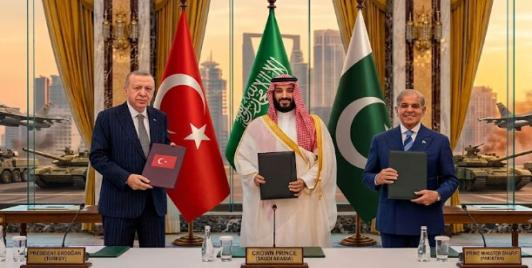



International Border between Bangladesh and West Bengal

Bangladesh–West Bengal Relations: Beyond ‘Islamisation’ and ‘Hinduisation’

Neither Bangladesh nor India — including West Bengal — is likely to fully concede its position. The future instead lies in pragmatic compromise, where domestic political constraints are balanced against the imperatives of regional cooperation. Ultimately, the trajectory of India–Bangladesh relations will depend less on identity politics and more on whether both sides can align economic necessity with political will.

Strait of Hormuz: More than a Regional Flashpoint; Prolonged Instability Could Ripple Across Continents

The broader reality is that even if a political understanding emerges, restoring confidence in the Strait may take far longer than restoring a ceasefire. Shipping markets operate as much on perception of risk as on military realities. Tanker operators, insurers, charterers, and energy traders require predictability — and that predictability is currently absent.

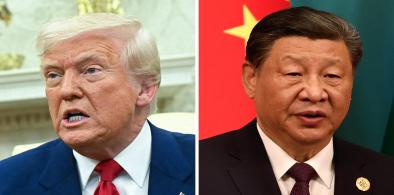
Trump-Xi Reset Could Leave India Strategically Exposed

New Delhi now occupies an awkward middle space: not fully trusted by the West, yet no longer fully aligned with the broader Global South consensus either. That ambiguity becomes riskier if Washington and Beijing move into even a temporary phase of strategic stabilisation.

Renewing Ties with Bangladesh: An Agenda for the new Indian High Commissioner

The major bilateral issue is border security and management. While India claims that millions of Bangladeshis enter India illegally, reside and work here, Bangladesh dismisses that contention outright, saying that as their per capita income was higher than India’s, there was no reason for economic migration from Bangladesh to India. 

More on Geopolitics and Strategic Affairs

Jaish-e-Mohammed's Female Brigade: ISI-Backed New Jihadi Units Intensify Counterterrorism Challenges in South Asia

Unlike earlier jihadist cells dominated by Pakistani nationals, this unit deliberately recruits women from Indonesia, the Philippines, Uzbekistan, and other foreign countries. Reason behind recruiting non-Pakistani nationals serves a dual purpose: it complicates attribution and shields Pakistan’s security apparatus from direct accountability. Such operational sophistication reflects ISI’s continued role not merely as a passive enabler but as an active architect of jihadist adaptation.

Securing The Digital Frontier: A Unified Call For Cybersecurity In South Asia

South Asia has the potential to be a global digital leader. It has a young population and a booming tech industry. However, this potential will only be realized if the region is secure. We must treat cybersecurity as a pillar of national security, just like border defense. This requires better technology, smarter laws, and stronger regional ties. The digital threats of 2026 are fast and complex. To meet them, South Asia must be faster and more united. The time to build a collective digital shield is now, before the next major crisis occurs.

Aid, Ports, And The Limits of Incrementalism: What India’s Budget Says About Its Foreign Policy

Yet the strategic costs are real. Reduced engagement in Bangladesh risks ceding influence at a moment when Dhaka is actively diversifying its partnerships. Hesitation over Chabahar weakens India’s leverage in Iran and Central Asia and underscores its vulnerability to US pressure even as it seeks a more multipolar foreign policy. The 2026–27 Budget does not signal a dramatic shift in Indian foreign policy. There is no abandonment of neighbours-first rhetoric or of connectivity-led diplomacy. What it reveals instead is a narrowing circle of feasible economic action.
 

Mob Rule As Political Strategy: Reshaping Bangladesh's Secular Memory And Pluralistic Bengali Culture

The ideals of 1971 represent inclusivity, human dignity, and resistance to oppression. Baul and Sufi traditions reject radical views and promote humanism and coexistence. Islam in Bengal arrived largely through Sufis—from Persia, Arabia, and Central Asia—who emphasized spirituality, tolerance, and accommodation. These traditions resonated with local Hindu practices and gave rise to syncretic forms such as Baul philosophy. Rabindranath Tagore and Nazrul Islam embodied this civilizational synthesis.     
 

How the US Misreads Bangladesh: Backing Dubious Figures Can Have Dangerous Implications

Bangladesh is almost entirely surrounded by India, with Myanmar forming a smaller eastern frontier. India remains the dominant regional power and Bangladesh’s most consequential neighbor in economic, cultural, and security terms. Any American strategy in Bangladesh that ignores India is inherently flawed. Aligning regionally with Pakistan—a country with which Bangladesh shares a traumatic history—offers Washington no meaningful strategic advantage in Dhaka.  

Power Sharing For Sri Lanka's Tamils: Does The JVP Have The Chinese System In Mind?

Despite expectations that the JVP would move in a pro-Chinese direction after coming to power, not shown such moves so far. Instead, there has been moderation. China’s wolf-warrior moves of the Rajapaksa era also seem to have faced setbacks. Meanwhile, global politics is shifting, with regional hegemony once again becoming visible. In this context, will the JVP attempt to sever India’s long-standing engagement with Sri Lankan Tamils?

Air Pollution Knows No Borders: Smog Over Kathmandu Is A Regional Failure

As the World Bank notes, isolated national actions are insufficient when pollution itself ignores borders. India, Nepal, Bangladesh, and Pakistan share the same airshed. Without cooperation, each country keeps breathing its neighbour’s mistakes. “As the government representing the largest population affected by air pollution, India should lead this effort. Instead, the region has drifted away from cooperation, and the cost has been catastrophic,” Dr Subedee said.

When Cricket Stops Being ‘Just Cricket’: South Asian Sporting Diplomacy in Retreat

This is certainly not a call to romanticise sport or overstate its diplomatic capacity. Neither did cricket ever resolve South Asia’s conflicts. But it softened their edges. It reminded the public that despite borders and disputes there existed a cultural language. The erosion of that language should now concern the whole of South Asia. Because when even the simplest forms of cultural exchange become difficult, rebuilding trust happens to be infinitely harder.      

Bangladesh’s February Referendum and the Future of Secularism

Bangladesh, though Muslim‑majority, has historically significant Hindu, Buddhist, Christian, and Indigenous minorities. Removing secularism would create a profound democratic dilemma as it is the safeguard against majoritarian dominance and structural exclusion. The South Asian experience shows the risks of privileging religion in constitutions.

With India-EU Trade Deal, It's Time To Recast India's Foreign Policy

What India next needs to consider is opening a dialogue with Beijing, while remaining mindful of its security concerns. Years of hostility and China’s anti-India posturing, coupled with its hegemonic aspirations, have understandably created an atmosphere of deep distrust. However, the atmospherics are now right for a rethink as to whether current distancing serves mutual interest. The middle path approach justifies seeking out areas of collaboration, especially through enhanced trade and thereby dilute the overdependence on the US market, both for China and for India.

Bangladesh Drifting Into A Nexus Of Military Dependency And Proxy Competition? Ominous Consequences For India, South Asia

Taken together, these developments should ring alarm bells. The convergence of foreign military-industrial interests, Islamist political forces, and great-power rivalry risks turning Bangladesh into an epicenter of proxy competition and ideological confrontation. For a nation that has paid dearly for its independence and pluralistic identity, the cost of such entanglements may prove far higher than the short-term gains promised by arms deals and infrastructure projects.

Between Treaty And Truth: Sri Lanka's Conflict-Related Sexual Violence And Limits Of International Law

Sri Lanka's case highlights the central weakness of the ICC’s complementarity principle. The Rome Statute grants jurisdiction only where states are unwilling or unable genuinely to carry out the investigation or prosecution. Sri Lanka maintains functioning judicial institutions, conducts some prosecutions, and has established reparations frameworks, thereby technically satisfying the ability threshold while systematically failing to deliver accountability for conflict-related crimes.

Davos: Noise, Narratives, And The Reality Beneath

If Davos had a clear centre of gravity this year, it was technology—not geopolitics. The tech industry arrived in force, underscored by high-profile appearances from Elon Musk and Nvidia CEO Jensen Huang. The message was unmistakable: this is where attention, ambition, and capital are converging. With extraordinary sums being poured into artificial intelligence, unease among lenders and investors is understandable. Yet many executives were keen to reassure markets that fears of an AI bubble were overstated.

Abandoned U.S. Weapons Empowering Terrorists, Undermining Pakistan’s And Regional Security

Strategically, these developments underscore the importance of regional counterterrorism cooperation and rigorous monitoring of cross-border arms flows. The proliferation of foreign-supplied weapons into Pakistan not only strengthens terrorist organizations but also threatens regional stability. Each attack executed with U.S.-origin rifles or advanced tactical gear reinforces the need for Pakistan’s zero-tolerance policy against militancy while exposing the organized external support networks that continue to embolden groups like the TTP.

A Year of Dissanayake Government: People Keeping Faith Despite Disappointments

It is not easy for a country faced with heavy debt payments to find resources to accelerate domestic growth, exports and infrastructure development. It has to carefully balance infrastructure priorities, social spending, and ongoing economic reforms. Next two years will be crucial for the government  to at least complete the ongoing projects to fulfil major promises while taking up the remaining ones that were temporarily shelved for early implementation.