

Islamabad’s defiance may complicate Trump’s Abraham Accords ambitions: Difficult Strategic Choices for South Asian Nations and Muslim World
Trump’s demand for Pakistan to recognize Israel threatens to trigger serious domestic backlash inside the country. Public sentiment in Pakistan overwhelmingly supports the Palestinian cause, while religious and political groups strongly oppose normalization with Israel without the creation of an independent Palestinian state.
 May 29, 2026
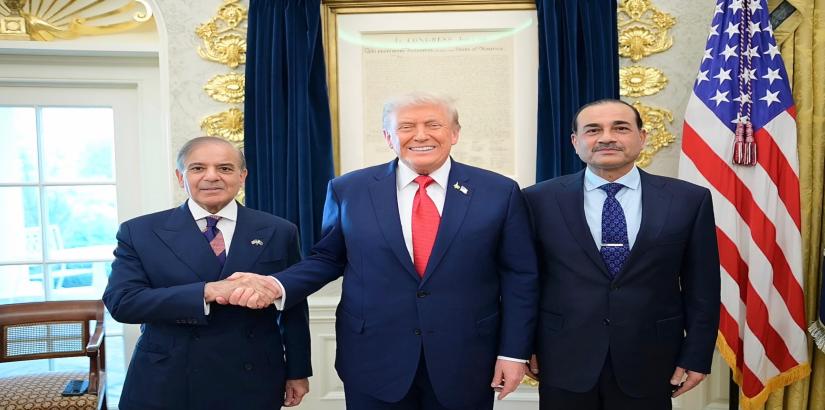
South Asia may soon become the next major battleground in President Donald Trump’s campaign to expand the Abraham Accords and normalize relations between Muslim-majority nations and Israel. While Islamabad and Dhaka currently maintain strong pro-Palestinian positions, growing American pressure on regional allies is creating new diplomatic fault lines that could reshape political alignments across the subcontinent. Pakistan’s initial rejection of Trump’s proposal is therefore being closely watched, not only in Washington and Jerusalem, but also throughout South Asia.
US President Donald Trump’s ambitious drive to expand the Abraham Accords is now heading toward a potentially explosive confrontation with Pakistan and several influential Muslim-majority nations. While Trump has enjoyed unusually warm relations with Pakistan’s Army Chief Field Marshal Asim Munir and Prime Minister Shehbaz Sharif, his latest push demanding Islamabad normalize ties with Israel may fundamentally alter this strategic equation.
For months, Trump has publicly praised Pakistan’s military and political leadership, repeatedly referring to Asim Munir and Shehbaz Sharif as trusted allies and “brothers”. Islamabad, in return, has carefully cultivated this relationship, presenting itself as one of Washington’s most dependable Muslim partners at a time of growing instability across the Middle East and South Asia.
Yet the White House’s latest pressure campaign concerning the Abraham Accords may place Pakistan in an extraordinarily difficult position — one where domestic political realities, ideological sensitivities, and geopolitical calculations collide head-on with American strategic expectations.
Trump's Strategic Aspirations
President Trump recently declared that countries such as Saudi Arabia, Qatar, Pakistan, Turkey, Egypt, Jordan, Bahrain, and the United Arab Emirates should “simultaneously” sign onto the Abraham Accords as part of broader regional stabilization efforts following the Iran conflict.
“After all the work done by the United States to try and pull this very complex puzzle together, it should be mandatory that all of these Countries, at a minimum, simultaneously, sign onto the Abraham Accords”, Trump wrote in a social media post.
Trump further insisted that Saudi Arabia and Qatar should immediately formalize relations with Israel and that “everybody else should follow suit”.
The Abraham Accords, first brokered in 2020 under Trump’s presidency, normalized diplomatic relations between Israel and several Arab states, including the United Arab Emirates and Bahrain. Trump continues to view the accords as one of his greatest foreign policy achievements and reportedly hopes an expanded normalization framework involving key Muslim-majority nations would dramatically strengthen his international legacy and potentially boost his prospects for the 2026 Nobel Peace Prize.
Islamabad's Longstanding Position
However, Pakistan’s response has been markedly cautious and increasingly resistant.
Islamabad currently occupies a uniquely sensitive geopolitical position. Pakistan has played a critical mediatory role during the recent US-Israel-Iran conflict and reportedly helped convince Washington in April to halt military operations against Iran that began on February 28. Pakistan continues to project itself as an intermediary capable of facilitating broader de-escalation efforts between Tehran and Washington.
This role has significantly elevated Pakistan’s global diplomatic standing. President Trump himself has repeatedly praised Pakistan’s mediation efforts, while openly expressing admiration for both Asim Munir and Shehbaz Sharif. Yet analysts believe this closeness may now become a liability rather than an advantage.
Trump’s demand for Pakistan to recognize Israel threatens to trigger serious domestic backlash inside the country. Public sentiment in Pakistan overwhelmingly supports the Palestinian cause, while religious and political groups strongly oppose normalization with Israel without the creation of an independent Palestinian state.
Pakistan’s Defence Minister Khawaja Asif openly criticized the idea of joining the Abraham Accords, questioning Israel’s credibility and asking, “How will you sit down with those people whose word cannot be trusted even for a single day?”
Deputy Prime Minister and Foreign Minister Ishaq Dar similarly reaffirmed Islamabad’s longstanding position that Pakistan would not recognize Israel until the establishment of an independent Palestinian state based on pre-1967 borders with East Jerusalem as its capital.
These statements indicate that Pakistan is currently unwilling to publicly bow to American pressure, despite its growing strategic closeness with the Trump administration.
Strong Anti-Israel Sentiments Persist
Meanwhile, Pakistan appears to be actively encouraging other Muslim-majority nations to maintain distance from Israel. At Islamabad’s quiet persuasion, Iran and Palestinian authorities reportedly requested Bangladesh to reimpose restrictions concerning Israel on Bangladeshi passports.
Responding to this pressure, Bangladesh Home Minister Salahuddin Ahmed announced on May 24, 2026, that the phrase “Except Israel” would be reinstated in Bangladeshi passports — effectively restoring a policy that had been removed only after nearly five decades following Bangladesh’s independence in 1971. This development is highly significant.
The reinstatement of the “Except Israel” clause demonstrates that anti-normalization sentiment remains deeply entrenched across large sections of the Muslim world despite ongoing diplomatic realignments in the Middle East. Bangladesh’s decision also signals that several Muslim-majority nations remain reluctant to openly embrace the Abraham Accords unless broader Palestinian concerns are addressed.
Pakistan’s apparent success in influencing Dhaka’s decision further highlights Islamabad’s continuing ideological influence among sections of the Muslim world. Nevertheless, the situation remains fluid and highly unpredictable.
While Pakistani leaders are currently projecting defiance, few observers believe Islamabad can indefinitely ignore direct pressure from Washington — particularly under a Trump administration that has invested substantial political capital in expanding the Abraham Accords. Pakistan remains economically fragile, diplomatically dependent on key Western relationships, and strategically reliant on maintaining close ties with the United States.
If President Trump decides to exert sustained and coordinated pressure on Pakistan’s civilian and military leadership, Islamabad may eventually find it difficult to openly resist Washington’s demands. Such pressure could emerge through diplomatic channels, economic leverage, defense cooperation, or broader geopolitical negotiations involving regional security arrangements.
Should Pakistan eventually move toward normalization with Israel, the consequences across the Muslim world would be profound.
Muslim Geopolitical Realignment?
Many Muslim-majority countries currently maintaining anti-Israel positions are closely watching Islamabad’s stance. Pakistan has historically portrayed itself as a defender of Islamic causes and the Palestinian issue. If Islamabad ultimately accepts normalization under American pressure, it could create a domino effect across South Asia and beyond. Bangladesh, in particular, may find itself under increasing pressure from Washington to follow the same path.
As the world’s third-largest Muslim-majority nation, Bangladesh occupies growing strategic importance in US foreign policy calculations. The Trump administration could very well begin immediate diplomatic efforts aimed at persuading Dhaka to join the Abraham Accords framework. Given Bangladesh’s expanding economic relations with the West and its desire to maintain strong strategic ties with Washington, policymakers in Dhaka may eventually confront difficult choices similar to those currently facing Islamabad.
In fact, it is entirely possible that Bangladesh could move toward normalization even before Pakistan formally does so, especially if the issue becomes linked with broader strategic, economic, or diplomatic incentives from Washington.
The coming months therefore may prove decisive not only for Pakistan’s relations with Israel and the United States, but also for the broader future of Muslim geopolitical alignment regarding the Jewish State.
Trump’s Abraham Accords expansion initiative has now entered a far more complex phase — one involving ideological resistance, regional rivalries, domestic political sensitivities, and shifting global power calculations. Whether Pakistan ultimately resists or eventually yields to American pressure may shape the future direction of the Muslim world’s relationship with Israel for years to come.
For now, Pakistan and Bangladesh appear reluctant to openly embrace normalization with Israel. However, geopolitical realities often evolve faster than public rhetoric. As Washington intensifies its diplomatic engagement with South Asian nations, both Islamabad and Dhaka may eventually face difficult strategic choices balancing domestic political sensitivities against broader economic and security interests. The future of the Abraham Accords may therefore depend as much on South Asia as on the Middle East itself.
(The writer is an award-winning journalist, columnist and editor and publisher of the Bangladesh-based publication Blitz and a commentator on Islamist extremism, terrorism, and South Asian geopolitics. Views expressed are personal. He can be reached at noman14@gmail.com and X: @Salah_Shoaib )




Post a Comment