The chars formed as the Brahmaputra, Ganga and other rivers brought silt down from the Himalayas. The river islands are so fertile that they have been fought over for centuries



The face-offs in Arunachal Pradesh—specifically around areas like Asaphila, Taksing, and Maza—have reignited intense debate regarding Beijing's commitment to bilateral border agreements. That China signs agreements it has no intention of following on the ground is a perception shared by many Indian diplomatic and security experts.

Progress on the Ganga could also build the trust needed for wider cooperation among Bangladesh, Bhutan, India and Nepal in electricity trade, connectivity and climate adaptation. Both governments should act now.

Border settlements, transportation networks, surveillance grids, and civilian administration now work alongside conventional defense planning to strengthen Beijing’s claims. Understanding China’s rise requires attention not just to military power projection but also to these quiet instruments of authority.
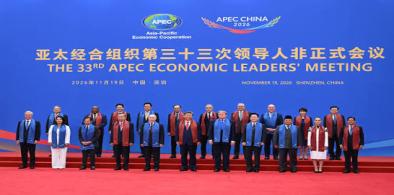
That is the paradox of Shenzhen. An odd summit, convened by three leaders with different compulsions, produced an anodyne declaration that nevertheless impinges onto India's core concerns: UN reform without India, ICC impunity versus UNCLOS, and energy through Hormuz.
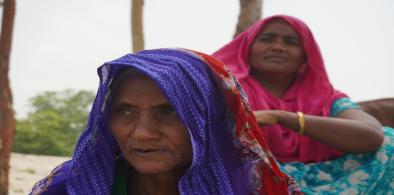
The chars formed as the Brahmaputra, Ganga and other rivers brought silt down from the Himalayas. The river islands are so fertile that they have been fought over for centuries

Today, while a large section of the Muslim community lives in intimidation and fear, at the same time there are elements like Riyaz Ansari and Ghouse Mohammad whose insanity is not only a blot on Indian Muslims but also is totally contrary to the sayings in Koran that if you kill a single innocent person, it is like killing the whole humanity, writes Dr Ram Puniyani for South Asia Monitor

Solar roofed buses may be handy in providing mobile primary healthcare, primary and adult education, agricultural extension services and training, even telecom and TV connectivity in rural and far-flung areas across South Asia and Africa, writes Amb Sarvajit Chakravarti (retd) for South Asia Monitor
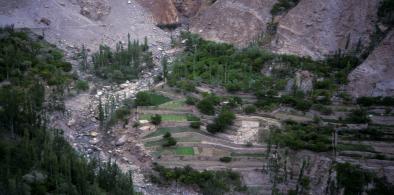
This year, an early and hotter start to the summer has forced a change in the crop cycle in Gilgit-Baltistan, high up in the Hindu Kush Himalayas

Despite public statements by a few senior Taliban leaders supporting girls' education, there has been little indication of any progress. The group's core leadership, dominated by hardline clerics, seems bent on pushing through gender discriminatory policies, writes Shraddha Nand Bhatnagar for South Asia Monitor
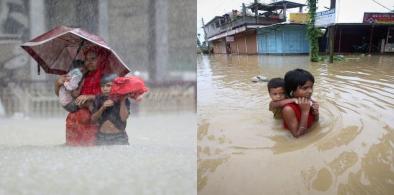
Over 54 major watercourses draining excess water from South Asia into the Bay of Bengal flows through Bangladesh, to which is added its own share of rainfall, writes Ambassador Sarvajit Chakravarti (retd) for South Asia Monitor

For Sri Lanka's tourism industry, the worst is yet to come. Experts say the downfall will continue as the energy crisis is unlikely to ease for months, writes Shraddha Nand Bhatnagar for South Asia Monitor

It’s a win-win situation for the BJP in the Presidential election. It now evidently hopes to fully enlist the Adivasis in its expansionist plans while the Congress flounders without a sense of direction, writes Amulya Ganguli for South Asia Monitor
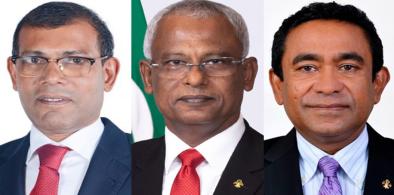
India-bashing is a preferred pasttime for opposition politicians in countries like Bangladesh, Nepal and Sri Lanka, not to mention Pakistan and Afghanistan, writes N. Sathiya Moorthy for South Asia Monitor

Only adequate remuneration and commensurate punishment for infringement can the practice of illegal gratification be significantly reduced, if not eliminated, writes Amb Sarvajit Chakravarti (retd) for South Asia Monitor

Bangladesh has proved its capacity by building a 6.15 km bridge over the country's second toughest river using its own money, writes Fumiko Yamada for South Asia Monitor
Those who were not part of the anti-British struggle had roots in the ideologies of landlord-clergy combine. They articulated nationalism in the name of religion, called it cultural nationalism, writes Dr Ram Puniyani for South Asia Monitor
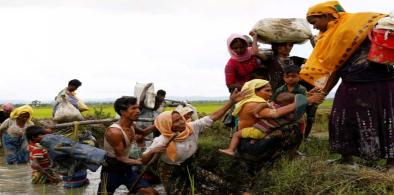
Myanmar and Bangladesh must cooperate in a neighbourly manner. Resolving the regional humanitarian problem will benefit the entire region of South Asia and Southeast Asia, writes Parvej Siddique Bhuiyan for South Asia Monitor
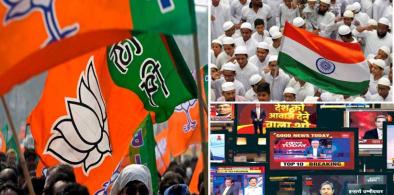
In view of the growing trade and cultural ties between India and the Arab world, it will be disastrous if differences aggravate and no remedial and timely actions are taken, writes Asif Rameez Daudi for South Asia Monitor
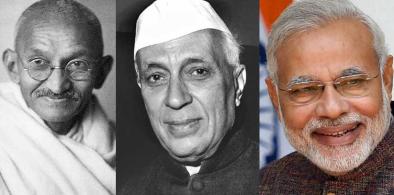
Beginning with Mahatma Gandhi and Jawaharlal Nehru till Narendra Modi, we have a tendency to associate divine qualities to a political leader, writes Dr. Suparna Banerjee for South Asia Monitor