If the Taliban’s original purpose in taking over Kabul last year was to gradually gain some international recognition for what it calls the Islamic Emirate of Afghanistan, it now stands fully destroyed



The face-offs in Arunachal Pradesh—specifically around areas like Asaphila, Taksing, and Maza—have reignited intense debate regarding Beijing's commitment to bilateral border agreements. That China signs agreements it has no intention of following on the ground is a perception shared by many Indian diplomatic and security experts.

Progress on the Ganga could also build the trust needed for wider cooperation among Bangladesh, Bhutan, India and Nepal in electricity trade, connectivity and climate adaptation. Both governments should act now.
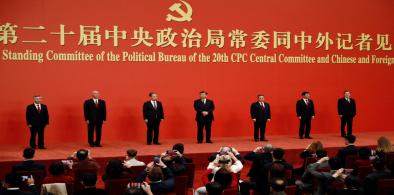
Border settlements, transportation networks, surveillance grids, and civilian administration now work alongside conventional defense planning to strengthen Beijing’s claims. Understanding China’s rise requires attention not just to military power projection but also to these quiet instruments of authority.
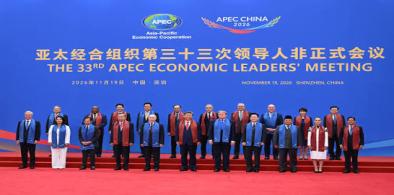
That is the paradox of Shenzhen. An odd summit, convened by three leaders with different compulsions, produced an anodyne declaration that nevertheless impinges onto India's core concerns: UN reform without India, ICC impunity versus UNCLOS, and energy through Hormuz.

If the Taliban’s original purpose in taking over Kabul last year was to gradually gain some international recognition for what it calls the Islamic Emirate of Afghanistan, it now stands fully destroyed

The ideological shift in politics towards prioritizing the majority religious denomination that has morphed into assertive political Hindutva goes against the fabric of the 'Idea of India' enshrined in the constitution

During the last eight years, Prime Minister Modi has elevated the quality of governance to a higher level and has introduced several imaginative schemes, keeping in view the requirement of the people at the lower economic level as well as the compulsive need to forge ahead in terms of technology and productivity

In recent years there has been a paradigm shift in the manner in which the government is bringing about significant policy measures to make India self-reliant and instituting mechanisms to overcome bureaucratic bottlenecks which had plagued the system for long
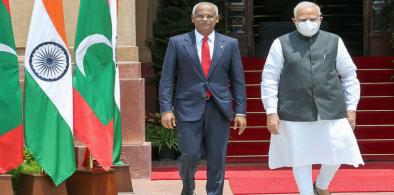
Although the Solih visit went off very well, concerns remained over domestic politics in the Maldives.

To reconcile the people of Bhutan and bring peace, we need collaborative efforts. Community agencies, local organizations, religious leaders, politicians, the King of Bhutan and businesses, all can play essential roles in this process
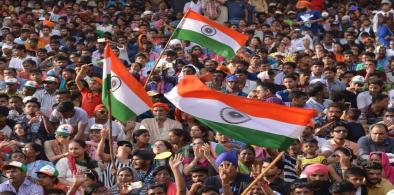
The challenges in the path of the fraternity project are many. But we must overcome them, as it is on the pillar of fraternal relations that a well-functioning and healthy democracy rests

Yet, with new technologies of 3D printing, reasonably priced materials and the Internet, one can teach students in such a way so that learning becomes enjoyable

The entire exercise can be seen as a striving to raise national morale among the people buffeted by economic stress and political turbulence
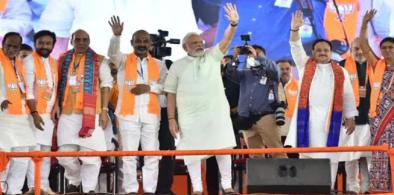
What is needed more is an end to the hate campaigns against the Muslim community and the start of affirmative action for the weaker sections of the Muslim population, writes Dr Ram Puniyani for South Asia Monitor
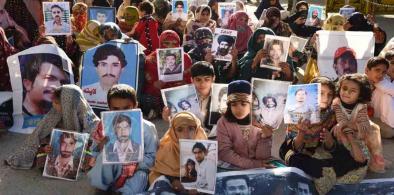
Thousands of Pakistani families are bearing the violation of the right to truth. Balochistan has been confronted with the burning issue of missing persons for the past two decades, writes Nizam Hassan for South Aisa Monitor
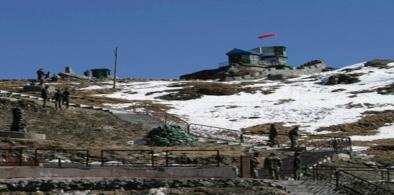
The visit by the Indian Army chief to Bhutan in the backdrop of China’s territorial advances in Bhutan and India have brought into focus China’s future intentions, writes Lt Gen P. C. Katoch (retd) for South Asia Monitor
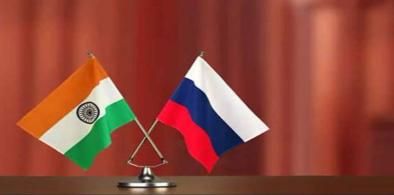
But even if we put the moral aspect aside and try to be pragmatic, to regard Russia as a future strategic partner is also wrong. It will not bring any benefit - economic or military – to India, write Prof (Dr) Vesselin Popovski, Prof Abhinav Mehrotra and Surabhi Bhandari for South Asia Monitor
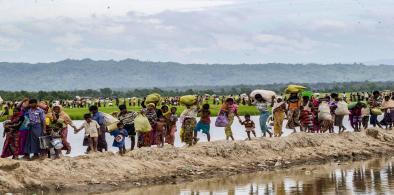
By holding the military accountable for its atrocities against the Rohingya, the ICJ might create the incentive for further international action to ensure justice for all victims of Myanmar’s security forces, writes Dr Arpita Hazarika for South Asia Monitor
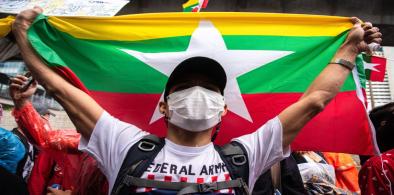
The recent executions are an attempt to terrorize the people to move away from that path of dissidence and political activism, writes Sreeradha Datta for South Asia Monitor