We need to learn a lot from China’s foreign policy; and when our own response to China is weak-kneed, how do we expect Sri Lanka to take up cudgels with Beijing?


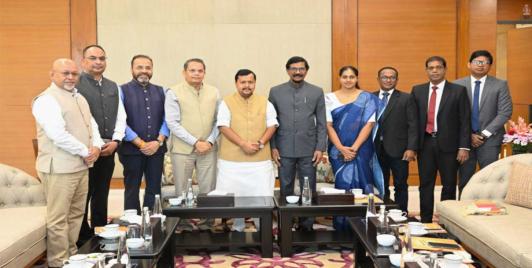
For Sri Lankan politics, this is more than diplomatic sightseeing. It raises a fundamental question whether the JVP is developing a sophisticated strategy of balancing relations with India and China or is it gradually adapting itself to the organisational models of powerful one-party or dominant-party systems in China and India respectively?

The ongoing civil war in Myanmar has caused an influx of armed cadres (Meitei, Naga and Kuki) into Manipur's border tracts like Kamjong district, further squeezing finite land resources and aggravating historical territorial disputes. What began as a localized dispute under the state's newly elected government in February 2026 has escalated into intense, multi-district armed warfare.
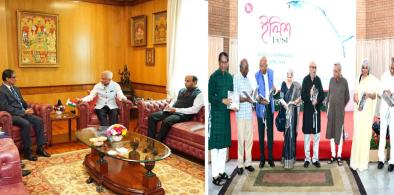
Hamidullah’s tenure has been marked by promotion of Bangladesh's soft power, with the envoy going around the country underlining the deep roots of people-to-people ties.
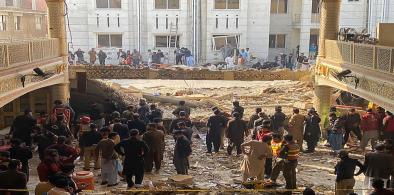
India must also recognise that Pakistan's internal security crisis has wider regional implications. Escalating Pakistan–Afghanistan tensions could create additional uncertainty along the western frontier, while attacks on Chinese projects could affect regional connectivity and investment.
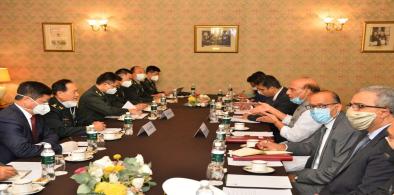
We need to learn a lot from China’s foreign policy; and when our own response to China is weak-kneed, how do we expect Sri Lanka to take up cudgels with Beijing?
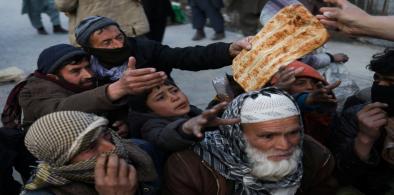
If the Taliban’s original purpose in taking over Kabul last year was to gradually gain some international recognition for what it calls the Islamic Emirate of Afghanistan, it now stands fully destroyed
The ideological shift in politics towards prioritizing the majority religious denomination that has morphed into assertive political Hindutva goes against the fabric of the 'Idea of India' enshrined in the constitution

During the last eight years, Prime Minister Modi has elevated the quality of governance to a higher level and has introduced several imaginative schemes, keeping in view the requirement of the people at the lower economic level as well as the compulsive need to forge ahead in terms of technology and productivity
In recent years there has been a paradigm shift in the manner in which the government is bringing about significant policy measures to make India self-reliant and instituting mechanisms to overcome bureaucratic bottlenecks which had plagued the system for long
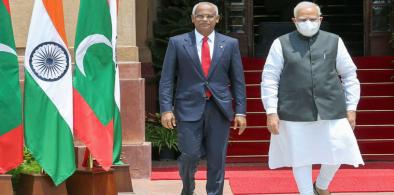
Although the Solih visit went off very well, concerns remained over domestic politics in the Maldives.

To reconcile the people of Bhutan and bring peace, we need collaborative efforts. Community agencies, local organizations, religious leaders, politicians, the King of Bhutan and businesses, all can play essential roles in this process
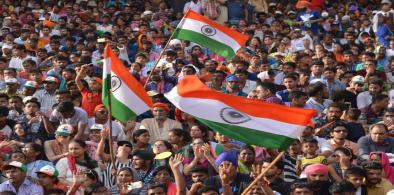
The challenges in the path of the fraternity project are many. But we must overcome them, as it is on the pillar of fraternal relations that a well-functioning and healthy democracy rests

Yet, with new technologies of 3D printing, reasonably priced materials and the Internet, one can teach students in such a way so that learning becomes enjoyable

The entire exercise can be seen as a striving to raise national morale among the people buffeted by economic stress and political turbulence
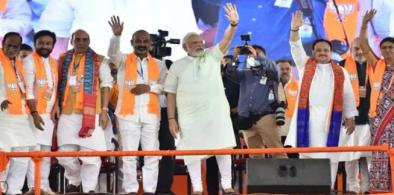
What is needed more is an end to the hate campaigns against the Muslim community and the start of affirmative action for the weaker sections of the Muslim population, writes Dr Ram Puniyani for South Asia Monitor
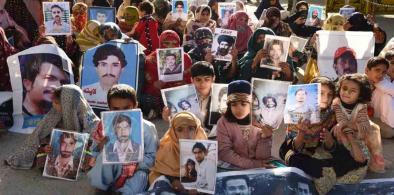
Thousands of Pakistani families are bearing the violation of the right to truth. Balochistan has been confronted with the burning issue of missing persons for the past two decades, writes Nizam Hassan for South Aisa Monitor
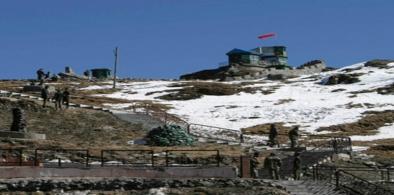
The visit by the Indian Army chief to Bhutan in the backdrop of China’s territorial advances in Bhutan and India have brought into focus China’s future intentions, writes Lt Gen P. C. Katoch (retd) for South Asia Monitor
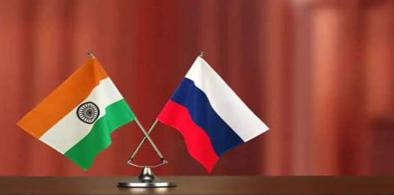
But even if we put the moral aspect aside and try to be pragmatic, to regard Russia as a future strategic partner is also wrong. It will not bring any benefit - economic or military – to India, write Prof (Dr) Vesselin Popovski, Prof Abhinav Mehrotra and Surabhi Bhandari for South Asia Monitor
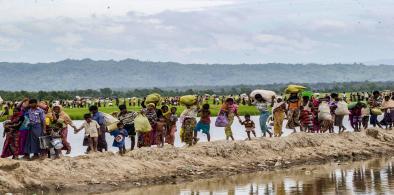
By holding the military accountable for its atrocities against the Rohingya, the ICJ might create the incentive for further international action to ensure justice for all victims of Myanmar’s security forces, writes Dr Arpita Hazarika for South Asia Monitor