The recent executions are an attempt to terrorize the people to move away from that path of dissidence and political activism, writes Sreeradha Datta for South Asia Monitor


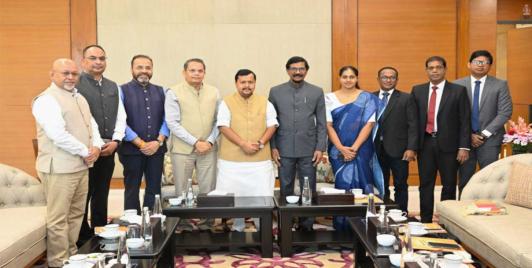
For Sri Lankan politics, this is more than diplomatic sightseeing. It raises a fundamental question whether the JVP is developing a sophisticated strategy of balancing relations with India and China or is it gradually adapting itself to the organisational models of powerful one-party or dominant-party systems in China and India respectively?

The ongoing civil war in Myanmar has caused an influx of armed cadres (Meitei, Naga and Kuki) into Manipur's border tracts like Kamjong district, further squeezing finite land resources and aggravating historical territorial disputes. What began as a localized dispute under the state's newly elected government in February 2026 has escalated into intense, multi-district armed warfare.
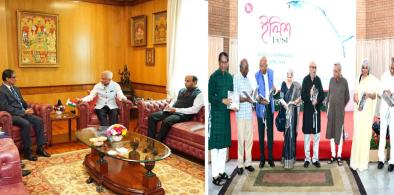
Hamidullah’s tenure has been marked by promotion of Bangladesh's soft power, with the envoy going around the country underlining the deep roots of people-to-people ties.
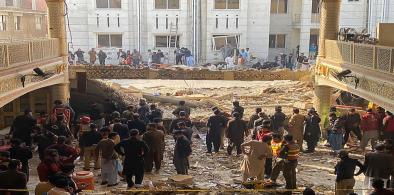
India must also recognise that Pakistan's internal security crisis has wider regional implications. Escalating Pakistan–Afghanistan tensions could create additional uncertainty along the western frontier, while attacks on Chinese projects could affect regional connectivity and investment.

The recent executions are an attempt to terrorize the people to move away from that path of dissidence and political activism, writes Sreeradha Datta for South Asia Monitor

High quality STEM education will enable India to lead the world in the evolving technological and knowledge-based economy, writes Amb Sarvajit Chakravarti (retd) for South Asia Monitor
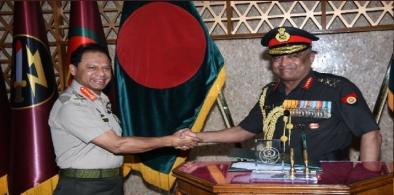
India-Bangladesh bonhomie on the security front has reached newer heights. Their strategic relations will continue to add more depth and momentum, writes Kamal Uddin Mazumder for South Asia Monitor

The people have determined that a new political order is required because of the negative experiences from the past, where the legislative and executive powers opposed each other, resulting in instability, writes Sugeeswara Senadhira for South Asia Monitor
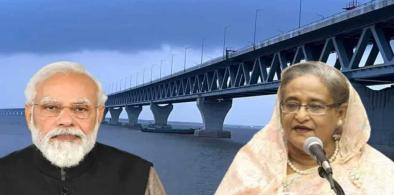
Keeping in mind the economic progress of Bangladesh, it can be said that besides the construction of the Padma Bridge, the new communication system being developed between the two countries will further strengthen their bonds, writes Tapan Das for South Asia Monitor
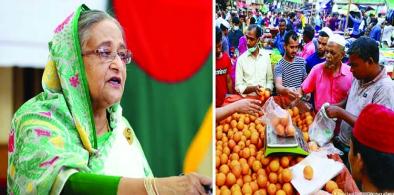
Bangladesh has already taken cautionary measures to not be a loan defaulter to avoid a Sri Lanka like situation, writes Sufian Siddique for South Asia Monitor
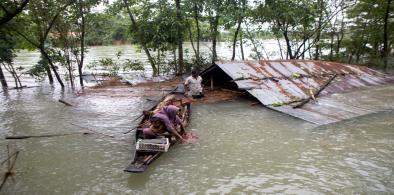
Floods in the Brahmaputra basin in Assam and downstream Bangladesh are common every year, especially during the June-September monsoon that brings South Asia most of its annual rainfall

It must be noted that tolerance, acceptability and confidence form a nation’s basic tenets. Aggression, violence and intolerance stall its progress and development, write Abhinav Mehrotra and Dr Biswanath Gupta for South Asia Monitor
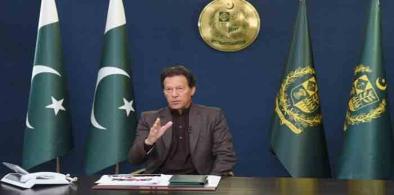
Although the results will change the government in Punjab, a politically important province of 110 million people, its implications may not be limited to the province, writes Shraddha Nand Bhatnagar for South Asia Monitor
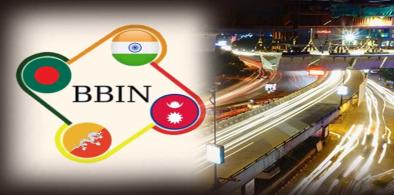
India can also help Bhutan to realize its green goals by promoting hybrid CNG/electric powered passenger and goods transport vehicles. These vehicles may be based at an EV park at Phuntsholing. Goods received there after customs clearance can then be distributed by Bhutan's own transport systems, employing their own nationals as drivers, helpers, mechanics and loaders, writes Amb Sarvajit Chakravarti (retd) for South Asia Monitor

What can we learn from Sri Lanka's disastrous style of ruling, intensification of sectarian divides, marginalization of minorities and power concentrated in autocrats is there for all to see, writes Dr Ram Puniyani for South Asia Monitor

India also no longer capitalizes adequately upon her best known international icons such as Mahatma Gandhi, writes Amb Sarvajit Chakravarti (retd) for South Asia Monitor

Instability in Sri Lanka is not in India’s interests but at the same time it offers New Delhi an opportunity to help its strategic neighbour emerge from the epic mess it finds itself in, writes Mayank Chhaya for South Asia Monitor
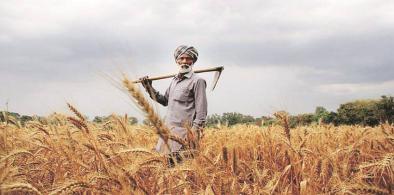
As South Asia is now better connected, ensuring BBIN food security will become even easier with packaging centres set up in each country with its own distribution, writes Amb Sarvajit Chakravarti (retd) for South Asia Monitor
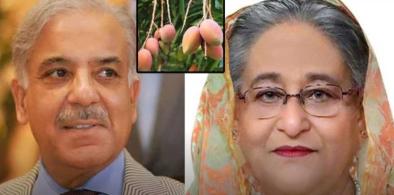
Fifty years after the separation of what was then East and West Pakistan in 1971, the exchange of mangoes is a sign that friendly ties between Pakistan and Bangladesh are possible, writes Samina Akhter for South Asia Monitor