Representational Photo

PLA’s Border Intrusions Make a Mockery of All Meets and Agreements With India

The face-offs in Arunachal Pradesh—specifically around areas like Asaphila, Taksing, and Maza—have reignited intense debate regarding Beijing's commitment to bilateral border agreements. That China signs agreements it has no intention of following on the ground is a perception shared by many Indian diplomatic and security experts.

Before the Ganga Treaty Lapses: Bangladesh and India Need Prudent Water Diplomacy

Progress on the Ganga could also build the trust needed for wider cooperation among Bangladesh, Bhutan, India and Nepal in electricity trade, connectivity and climate adaptation. Both governments should act now.

China’s 'Quiet State' from Tibet to Hong Kong: How Chinese Statecraft Weaponizes Surveillance and Development

Border settlements, transportation networks, surveillance grids, and civilian administration now work alongside conventional defense planning to strengthen Beijing’s claims. Understanding China’s rise requires attention not just to military power projection but also to these quiet instruments of authority.

Odd Summit : Why Shenzhen Should Matter for India

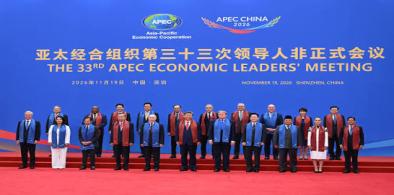
That is the paradox of Shenzhen. An odd summit, convened by three leaders with different compulsions, produced an anodyne declaration that nevertheless impinges  onto India's core concerns:  UN reform without India, ICC impunity versus UNCLOS, and energy through Hormuz.

More on Geopolitics, Security and Strategic Affairs

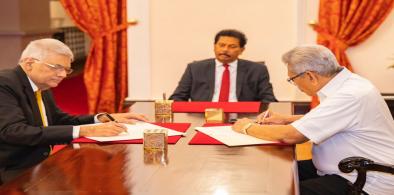
Sri Lanka: Beginning of end for political crisis, end of beginning for economy

His traditional urban backers grudgingly accept Prime Minister Ranil Wickremesinghe’s confession that they have to bear more for a few weeks more before pressing the recovery button. The same cannot be said of the rural poor, writes N. Sathiya Moorthy for South Asia Monitor


Why the US wants more engagement with Bangladesh

The US plans to sign two defense agreements with Bangladesh: GSOMIA and ACSA and, through these, the US hopes to strengthen military ties by enhancing intelligence sharing and exchanging logistical and technological support, writes Fumiko Yamada for South Asia Monitor 

Wheat exports: India's assurance to neighbours is a positive development for South Asia

India prioritizing neighbouring countries in its foreign policy objectives, particularly by assisting Sri Lanka and Afghanistan amid crises, shows its commitment to 'Neighbourhood First' policy, writes John Rozario for South Asia Monitor

Jaundiced approach to history: No room for composite culture in a changing India?

A mix of Indo-Pakistani enmity and a twisted, politically motivated interpretation of the subcontinent’s past, have helped the BJP to depict the Muslims as demons against whom the Hindus have to wage a relentless battle, writes Amulya Ganguli for South Asia Monitor

Should India rethink the ban on wheat exports?

Domestically and in the neighbourhood, too, India’s ban only creates fresh uncertainties despite the government’s assurance that government-to- government contracts will be honoured, writes N. Chandra Mohan for South Asia Monitor

Why Bangladesh can claim success in managing Covid-19

Bangladesh has a long experience in facing natural disasters and managing risks and has been utilizing the learning to cope with Covid-19 too, writes Dr Mohammad Rezaul Karim for South Asia Monitor 

Price of chauvinism: Sri Lankans soul-search as mass fury topples a prime minister

The path ahead in Sri Lanka will not be easy – for anyone. But the situation – widespread shortages of all essentials including medicines, food and fuel – have left many Sinhalese wondering if they were right in ignoring what tens of thousands of Tamils underwent for long years, writes M R  Narayan Swamy for South Asia Monitor

From donation seeker to donor: Bangladesh's assistance to Sri Lanka is a governance lesson for others

Bangladesh continues to generously host the world’s largest and growing refugee settlement despite the huge burden on economy, food management, limited resources and other circumstances, writes John Rozario for South Asia Monitor

Bridging the India-Pakistan divide: Let families reunite before it's too late

Today, in the 75th year of Independence, both India and Pakistan must honour their 2012 agreement and allow at least the elderly to meet relatives across the divide, writes Tridivesh Singh Maini for South Asia Monitor

The Indianisation of education: Education with a not-so-hidden agenda

Overall, the changes proposed in the country's education system are in tune with the concept of nationalism and culture that sectarian nationalists want to impose on the country, writes Dr Ram Puniyani for South Asia Monitor

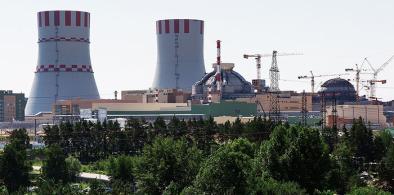
Russia-funded Rooppur nuclear power plant in Bangladesh: Wise move or potential catastrophe?

Though Russia has agreed to accept spent fuel, it is unclear how safe the procedures for removing it from reactors and transporting it from Bangladesh will be, writes Aashish Kiphayet for South Asia Monitor

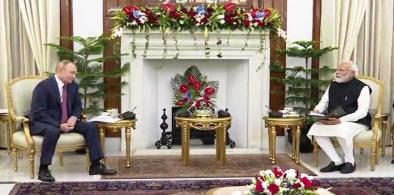
Why India should reconsider its ties with Russia

To expect that in a possible future armed conflict with a neighbor, India can rely on the Russian army is lunacy. The Russian army itself demonstrated in Ukraine what actually it represents, write Prof (Dr) Vesselin Popovski, Prof Abhinav Mehrotra and Surabhi Bhandari for South Asia Monitor

Why hate has visceral appeal in India

By using religion and nationalism in tandem, the BJP has taken giant strides forward in the electoral field so much so that its opponents – the so-called secular parties – are at their wit’s end, writes Amulya Ganguli for South Asia Monitor

A 'Made in India' de-radicalization programme that has benefited thousands

While the number of those who have benefitted from the Art of Living’s trauma relief is some 150,000, a total of 2,000 fighters are claimed to have laid down their weapons in various parts of the world including India, Sri Lanka, Nepal, Kosovo, Colombia, Ivory Coast, Iraq and the Philippines after being inspired by the spiritual group, writes M.R. Narayan Swamy for South Asia Monitor

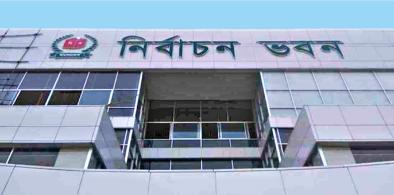
Can Bangladesh have a free and fair election?

Bangladesh's leaders struggled to protect people's right to vote when they were out of power; in power, they continue their attempts to deprive them of the right to vote, writes Aashish Kiphayet for South Asia Monitor

Newsletter Subscription

The subscriber's email address.
Stay informed - subscribe to our newsletter.