After Basil Rajapaksa's current visit, Modi is likely to fly from New Delhi to Jaffna to mark the reopening of Palaly Airport for commercial operations, writes Sugeeswara Senadhira for South Asia Monitor


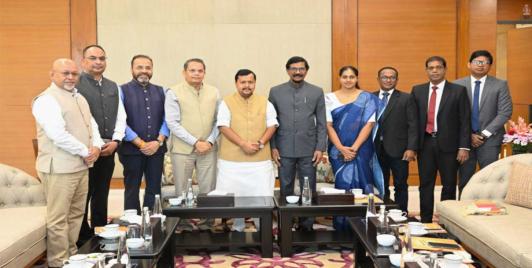
For Sri Lankan politics, this is more than diplomatic sightseeing. It raises a fundamental question whether the JVP is developing a sophisticated strategy of balancing relations with India and China or is it gradually adapting itself to the organisational models of powerful one-party or dominant-party systems in China and India respectively?

The ongoing civil war in Myanmar has caused an influx of armed cadres (Meitei, Naga and Kuki) into Manipur's border tracts like Kamjong district, further squeezing finite land resources and aggravating historical territorial disputes. What began as a localized dispute under the state's newly elected government in February 2026 has escalated into intense, multi-district armed warfare.

Hamidullah’s tenure has been marked by promotion of Bangladesh's soft power, with the envoy going around the country underlining the deep roots of people-to-people ties.
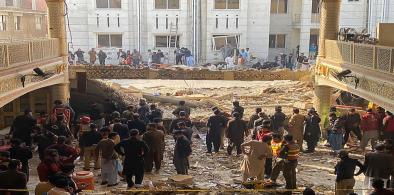
India must also recognise that Pakistan's internal security crisis has wider regional implications. Escalating Pakistan–Afghanistan tensions could create additional uncertainty along the western frontier, while attacks on Chinese projects could affect regional connectivity and investment.
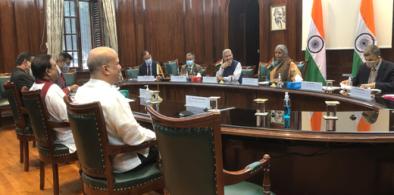
After Basil Rajapaksa's current visit, Modi is likely to fly from New Delhi to Jaffna to mark the reopening of Palaly Airport for commercial operations, writes Sugeeswara Senadhira for South Asia Monitor
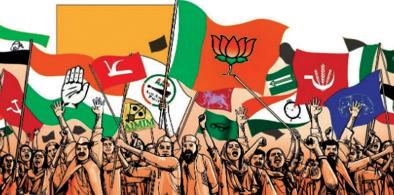
One of the major lessons of the assembly election results is that a fragmented opposition cannot take on the mighty electoral might of BJP-RSS, writes Dr Ram Puniyani for South Asia Monitor
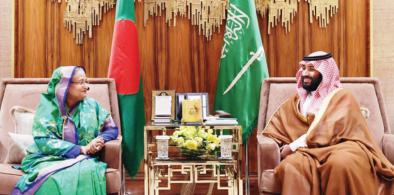
Because of Dhaka’s economic success, Saudi Arabia now perceives Bangladesh as a lucrative investment destination, writes Hussain Shazzad for South Asia Monitor
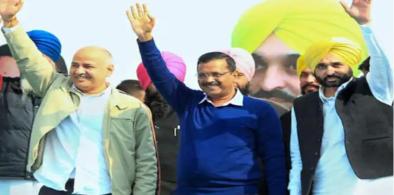
It is a no-brainer that Arvind Kejriwal’s victory speech was sharply focused on issues of governance, writes Jagdish Rattanani for South Asia Monitor
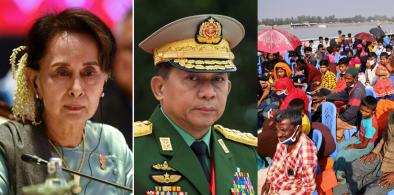
Tatmadaw, the Myanmarese junta, must be pressured to allow the Rohingya in Bangladesh to return to their homes with full dignity and civil rights, writes Kyaw Min for South Asia Monitor

The mystical traditions of South Asia transcend apparently rigid religious boundaries, write Priyanka Singh and Beena Sarwar for South Asia Monitor
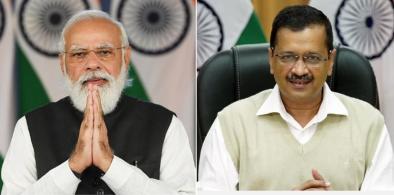
In the wake of the result in Uttar Pradesh, it is clear that 2024 is for Modi to lose since there does not appear to be any comparable singular figure who can defeat him, writes Mayank Chhaya for South Asia Monitor
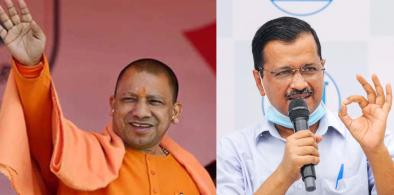
It is now almost a certainty that the AAP will replace the Congress as the BJP’s main challenger in Gujarat later this year, marking its emergence as a major alternative to the BJP at the national level, writes Amulya Ganguli for South Asia Monitor

The US and its allies will never lose sight of Afghanistan's strategic importance in a vital region, writes Saed Mansoor Sadat for South Asia Monitor
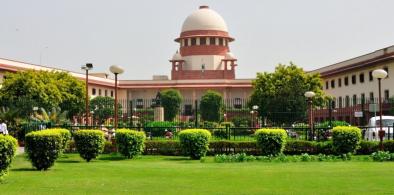
Criminal justice has its own logic at present and its discrepancies are not matching with the democratic ethos of India's secular constitution, writes Ram Puniyani for South Asia Monitor
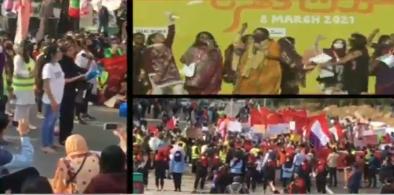
Aurat March in Pakistan has proved to be a phenomenal success, forcing society to acknowledge women’s efforts, writes Nadra Huma Quraishi for South Asia Monitor
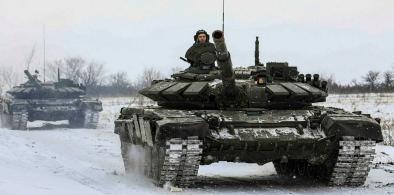
The ‘unforeseen’ would become a frightening reality, recalling what the victims of Hiroshima and Nagasaki had whispered piteously: "The living will envy the dead", writes Cmde C. Uday Bhaskar (retd) for South Asia Monitor
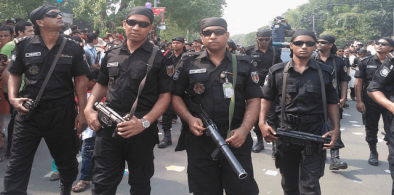
Bangladesh can neither ignore the US and India nor China in the light of the changing global geopolitical situation, writes Emilia Fernandez for South Asia Monitor
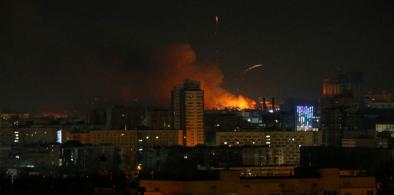
For India, an aggressive Russia does not cause concern; many here believe it to be a more reliable and effective check on China than the United States, writes Amb Dilip Sinha (retd) for South Asia Monitor
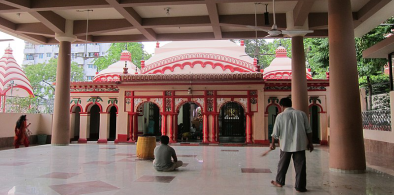
Bangladesh is being depicted unfairly - and without evidence - as a country that discriminates against its minorities, particularly Hindus, writes Anup Sinha for South Asia Monitor