


Left: Outgoing Bangladesh High Commissioner Riaz Hamidullah makes a farewell call on Indian External Affairs Minister S Jaishankar and Right: Release of coffee-table book Ilish:The Fish at the Bangladeshi High Commission

An Ilish Fest Becomes a Test of Diplomacy in Strained India-Bangladesh Ties

Hamidullah’s tenure has been marked by promotion of Bangladesh's soft power, with the envoy going around the country underlining the deep roots of people-to-people ties. 

Mounting Instability in Pakistan: Consequences for Regional Security

India must also recognise that Pakistan's internal security crisis has wider regional implications. Escalating Pakistan–Afghanistan tensions could create additional uncertainty along the western frontier, while attacks on Chinese projects could affect regional connectivity and investment.

Indian Artillery: Speed of Acquisition Is as Important for Readiness as Technology

India has demonstrated that it can develop and manufacture modern artillery systems. What needs reassessment is how quickly we acquire, integrate and field them, and how effectively we ensure that new technologies communicate and operate together.

Why Dhaka and Delhi Must Find Common Ground - and Their Shared Space

If India says the security of its Northeast, border management, trade and connectivity matter, Bangladesh can equally say that water sharing, deaths at the border, market access, energy security, river management and sovereign equality matter to it. 

More on Geopolitics, Security and Strategic Affairs

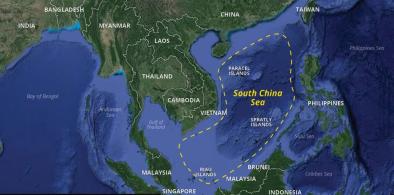
Why Beijing's Oceanographic Research Irks Philippines: Seen as Precursors to Military Expansion in Contested Waters of South China Sea

The Xiang Yang Hong 33 incident exemplifies a broader challenge in the South China Sea. For China, the mission is characterized as routine environmental research conducted in the waters. The Philippines does not view Chinese marine scientific surveys as isolated environmental initiatives


Porous Borders, Shadow Wars and Grey-Zone Infiltration: The Geopolitical Rift in US-India Intelligence Relations

The Pannun case in the US, the preceding Nijjar row in Canada, the unyielding diplomatic stances of their respective governments, and the coordinated, adversarial statements issued by the Five Eyes alliance, collectively triggered a quiet but intense counter-intelligence pivot by New Delhi.

India-US Relations: When Objectives Overlap, Perspectives Differ

One of the most durable strengths of India-US relations lies outside the government. The five million strong Indian diaspora has become an extraordinary bridge between the two societies. Indian Americans occupy influential positions in technology, academia, medicine, business and public administration. This human connectivity provides resilience that many bilateral relationships lack.

Cocos (Keeling), Sabang and Car Nicobar: India’s Quiet Maritime Rewiring

India and Australia are not building a grand alliance; they are building useful capacity. Indonesia, through its archipelagic geography, fits into that larger maritime dynamic. Taken together, these developments show how strategy is increasingly made through nodes, not narratives.

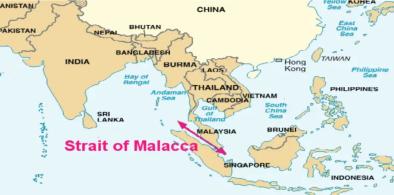
China’s Water Threats, India’s Malacca Leverage and Growing Indo-Pacific Contestation

While China's leverage over India runs through an upstream river Beijing controls, India's leverage over China runs through a chokepoint India will now sit astride. The Strait of Malacca is a 930-km passage between the Malay Peninsula and Sumatra through which an approximate of  40–50 percent of global trade and 80 percent of China's crude oil imports transit.

Is Hamas Expanding Footprint into South Asian Nations, Including Pakistan and Bangladesh?

The presence of Hamas in Bangladesh should not be ignored by security agencies across the region, including those in Bangladesh, India, and Myanmar, as such a presence may ultimately have serious consequences.

India’s Indo‑Pacific Assertion: Act East Policy in Action in Modi Visit

The significance of PM Modi's visits marks a shift from episodic diplomacy to structured engagement. The convergence of defence, economics, and technology across these four partnerships signals a pragmatic foreign policy. 

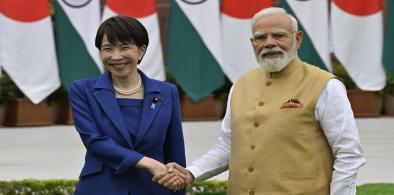
China at the Core of the India-Japan Strategic Partnership

Yet, strategic behavior of both India and China is fundamentally opposed to each other as witnessed in the agreements signed between India and Japan during Takaichi’s visit to India. China views India’s foreign policy as an effort to embed itself in an alliance aimed at containing it.

Why the NATO summit in Ankara matters for South Asia

The NATO summit can indirectly transform India from a regional power into a West Asia stakeholder by integrating India into maritime security frameworks, supporting connectivity projects, strengthening intelligence ties, reinforcing India’s role as an alternative to China. The long-term outcome is that India could emerge as a pillar of stability linking Europe, the Gulf, and the Indo-Pacific

India–Japan Summit: Strategic Convergence in a Changing Indo-Pacific Order

Japan has also proposed developing a Bay of Bengal–Northeast India Industrial Value Chain aimed at transforming the region into an integrated industrial zone. As part of the Free and Open Indo-Pacific vision, this includes strengthening cross-border connectivity with Bangladesh, Myanmar, Nepal and Bhutan. 

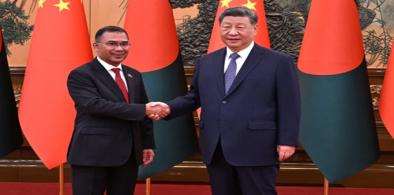
China and the Emerging Scenario in the Bay of Bengal

China's expressed interest in modernising and upgrading both Chattogram and Mongla ports suggests the emergence of an interconnected infrastructure network linking the Bay of Bengal with southwestern China through Myanmar. If realised, such connectivity would enhance trade flows, improve regional logistics and deepen China's economic footprint across the Bay of Bengal littoral, while simultaneously increasing Bangladesh's importance as a regional transit and connectivity hub.

Colombo to Kathmandu, China Seeks to Counteract US Moves Across South Asia

While Washington and New Delhi seek to strengthen bilateral ties with Colombo, Beijing has strategically engaged with the political forces that control the government. By engaging directly with actors at the core of Sri Lanka’s governance, Beijing appears to be signalling its strategic intent—projecting influence and reinforcing ideological ties. 

A Divided EU Faces Growing Scrutiny Over Taliban Contacts

Some analysts accuse the EU of double-standards arguing  that the EU has been condemning Taliban policies since they assumed power, but were now holding direct discussions with them. Such meetings undermine the EU's credibility as a defender of human rights and democratic values.

Sentenced to Silence? Mahrang Baloch’s Life Imprisonment Raises Uncomfortable Questions for Pakistan

Despite the narrative of the Pakistani state, Mahrang Baloch’s international recognition grew  through 2024.  Time magazine included her in its TIME100 Next list of emerging influential figures, citing her advocacy against enforced disappearances while the BBC named her to its 100 Women list. 

Seychelles' Importance to India: Modi Visit and Quest for Maritime Security and Stable Indian Ocean

Great powers realise the strategic value of small island states - refuelling facilities, logistics hubs, electronic listening posts, maritime surveillance nodes, diplomatic partnerships and access to vast EEZs. Their influence derives more from geographic position and political choice than from demographic size. Seychelles exemplifies this reality.