

Why the Afghanistan-Pakistan Border Keeps Burning: Keys to Peace Lies With Group Whose Loyalties Answer to No One
The borderland TTP now exploits is the same terrain that Pakistan's own security establishment worked for decades to create as "strategic depth." The world of proxy-war infrastructure seldom remains directed towards where its architects have aimed.
 Aug 11, 2026
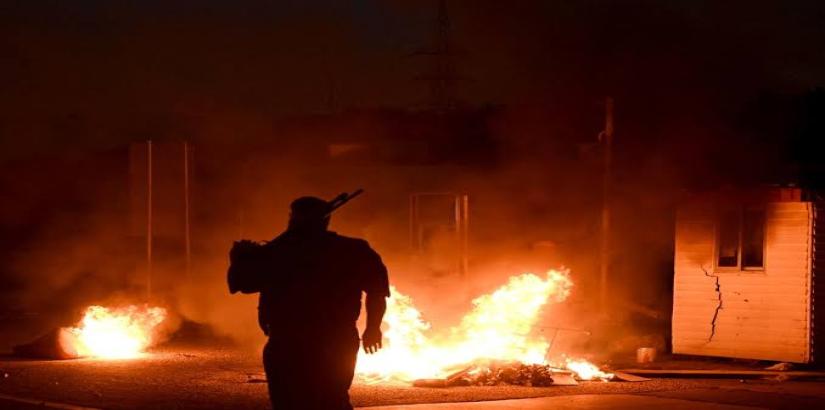
In Chaman, the Pakistani town on the border with Spin Boldak, traders complained that their earnings nearly ran down to zero on a daily basis. By the Pak-Afghan Joint Chamber of Commerce's own accounting, the annual bilateral trade, which was valued at $2.5 billion, has dropped to around $10 million. That fall is fairly easy to account for. However, it is not yet clear why none of the multiple ceasefires since October 2025 have been able to last more than a few weeks.
The standard response is that both governments lack will for peace. The convenient explanation is that the peace cannot come from the agreements that they continued to sign, because structurally they are not capable of that.
Failure of Ceasefire
All previous ceasefires were agreed between two governments. Islamabad and the Taliban government of Kabul are parties to it. But almost every round of escalation has been triggered by neither government. It is primarily done by the Tehreek-e-Taliban Pakistan (TTP), an insurgent group that is not at any table, and that is bound by none of the documents any one of the two parties has signed.
On June 8, TTP fighters attacked near Peshawar and on June 27, 19 days later, a breakaway group, Jamaat-ul-Ahrar, reached at Karachi, prompting Pakistan to counter-attack within Afghanistan as if inflicting some sort of punishment on the Afghan government. The strikes killed 41 civilians, according to UN monitors.
The ceasefire didn't fail due to a state defecting from it. It collapsed because it was never built to include the actor actually setting the pace of violence.
Triumph and Tragedy
It is here that the two-state reading of this South Asian conflict fails, with Islamabad and Kabul having a false understanding of each other from the beginning. The return of the Afghan Taliban to power in 2021 was seen as a strategic triumph by Pakistan which had hoped that the TTP was finally going to be curbed by its ideologically aligned neighbour as a condition of bilateral courtesy. It was never a convenient alliance anyway, and signs were beginning to point towards a break-up on both sides.
Kabul's reluctance - and the tragedy that has unfolded - is not a simple political calculation. Many of the Taliban commanders consider TTP fighters to be kin, not proxies. They were in the same battles against American and NATO troops, share same Deobandi heritage.
TTP's Structural Complications
The Pakistani state is not clean either. TTP has been able to exploit genuine Pashtun grievances over extrajudicial killings, brutal military presence and that is how it created a recruitment pipeline with the language of the legitimate Pashtun rights movements. There are no outside adversaries that these states are facing. A treaty signed in Doha or Urumqi can quiet the guns for a few weeks without touching what keeps the conflict running.
TTP complicates the issue further. It is not one command, but a combination of groups that have been known to split and form again from time to time. This was also evident in the Karachi attack. This type of movement fragmentation is a well-known phenomenon in the sociology of insurgency because pressure on the central leadership of a movement will tend to cause cells to lose the ability to communicate with the centre, and on many occasions not to be bound by any concessions negotiated by the central leadership.
No Single Authority
Even if Kabul had wanted to assure of TTP's silence, there might be no longer one TTP to make such a promise.
This is an irony that is not acknowledged much in the strategic discourse of Pakistan. The borderland TTP now exploits is the same terrain that Pakistan's own security establishment worked for decades to create as "strategic depth." It is porous enough for its allies to use in militant networks in the face of Indian opposition. The world of proxy-war infrastructure seldom remains directed towards where its architects have aimed.
For the approximately 100,000 displaced people OCHA has identified in Khost, Kunar, Nangarhar, and Paktika since February and the additional 17,000 displaced households in Nuristan. They lost their only means of access due to this conflict.
This gap is not just academic. There is no single authority and there is no one having an interest in ensuring the security of anyone. Kabul's government is not internationally recognised and the actor of every new round of violence is outside the formal state's borders. UNAMA has documented 372 civilian fatalities and 397 injuries in the first quarter of 2026. More than half of the fatalities was the result of a Pakistani strike on a drug rehabilitation centre in Kabul on March 16. UN investigators designated the attack as a "possible war crime".
Loyalties That Answer to Neither
None of this claims the ceasefires as “useless”. A couple of weeks provides an opportunity to the border families to have some windows to normal life. But a truce between two capitals can't control the insurgency that is being hosted by both capitals through fraternal reluctance in Kabul and unresolved grievances in Peshawar and Quetta.
Sealing doors of Torkham and Chaman for trading for more than three hundred days has not affected TTP. It primarily impoverished traders and daily wage workers who are not involved in the fight. Both governments need to address these domestic constituencies first.
The Pakistani state has thus far declined to do it for doctrinal reasons. Perhaps Kabul does not have the cohesion to do it if it wanted to. There is a need to change this. Otherwise, the border's people will continue to live inside a peace process built for two states in a war actually fed by loyalties that answer to neither.
(The author is a researcher at the Centre for the Study of Social Systems, Jawaharlal Nehru University, New Delhi, India. He is working on political violence, social movements and contemporary democracies. The views expressed are personal. He can be reached at redpluck@gmail.com)





Post a Comment