
Representational Photo

Who Will Govern AI? Its Consequences Will Shape Global Order

Humans have always pretended we can resist new inventions, from the printing press to electricity to computers, only to discover that the world shifts regardless. AI is different only in degree, not in pattern. It moves faster than our debates, scales faster than our regulations, and integrates faster than our instincts. The question is no longer whether AI will matter. It is whether we will matter in deciding how it is used.

Modi’s Israel Visit and India’s Expanding Role in West Asia

The broader geopolitical implications of Modi’s visit are equally significant. India’s expanding footprint in West Asia reflects its transition from a traditionally non-aligned actor to a proactive participant in regional affairs. Unlike major powers that often approach the region through rigid alliances, India seeks flexible partnerships rooted in strategic autonomy. Its engagement spans Israel, the Gulf monarchies, and Iran, allowing it to maintain a diversified diplomatic portfolio. 

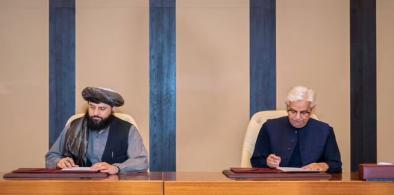
Pakistan’s Afghan Blowback: Strategic Depth Turns Strategic Liability

The larger lesson is sobering. Pakistan’s experience illustrates the perils of instrumentalising militant proxies for short-term strategic gain. Strategic depth, once viewed as a force multiplier, has become a source of strategic vulnerability. As Islamabad turns to air power to manage a problem decades in the making, the deeper fracture lies not just along the Durand Line—but within the logic of proxy warfare itself.

India’s Global Power Trajectory: Strategic Implications for Bangladesh and Region

However, a balanced assessment suggests that India’s superpower trajectory could also generate opportunities for Bangladesh. Enhanced regional connectivity, expanded market access, greater investment flows, and improved regional stability could benefit Dhaka—provided cooperation and mutual respect remain central to bilateral engagement. Ultimately, the impact on Bangladesh will depend not only on India’s power trajectory but also on how both countries manage diplomacy, trust-building, and regional cooperation in an evolving geopolitical landscape.

More on Spotlight

Destructive protests damaging to Pakistan’s economy, governance and social harmony

Perhaps the most significant damage inflicted by PTI's recent protests has been the toll on Pakistan's fragile economy. Pakistan's economy is already struggling with inflation, unemployment and a mounting fiscal deficit. PTI's protests, which have led to mass shutdowns in key cities like Islamabad, Rawalpindi, and Lahore, have worsened the economic crisis.

Five years of change in Jammu & Kashmir: Challenges of sustaining the peace and economic growth

The repeal of Article 370 not only changed the political map of Jammu and Kashmir, but also introduced a new wave of promising economic growth. While challenges remain, the steps taken by the Indian government to increase investment and improve infrastructure indicate great potential for J&K to become one of the hubs of economic development in India.

Germany and India: Need for more soft-power engagement

Germany  is not just about holocaust, beer, football, cars or high-end technology. There are lots of things to explore and exploit, in the good sense of the term. Similarly, India has moved way beyond Bollywood, chicken curry or Holi and Diwali. There is much more to explore. By shying away from doing so, the myths will persist, the stereotypes will continue, the fears will enhance. 

Political violence in Pakistan: A nation on the brink of division?

Pakistan’s struggle for peace and stability is far from over. As the government seeks accountability for those responsible for this violent protest, the need for healing has never been more pressing. PTI’s leadership must be held accountable for their role in inciting violence, spreading misinformation, and damaging the country’s social fabric. 

US-India dynamics could influence ties with Bangladesh, redefine regional politics

The sensationalized reports from Indian media about attacks on minorities could further complicate this dynamic, potentially shaping Trump's perceptions and policies toward Bangladesh. The fear is that these narratives could lead to a skewed understanding of the situation in Bangladesh, undermining Yunus’s efforts to establish legitimacy and garner international support.

Marx, Mao or Modi? Sri Lanka's delicate balancing act

Things changed overnight and within hours after the presidential election results were announced, India’s High Commissioner in Colombo Santosh Jha turned up at the JVP office in capital Sri Jayawardenepura        with a bouquet of red roses. Interestingly, Dissanayake in his brief conversation with the Indian envoy, recalled his visit to India and said that too was a contributory factor in his victory.

Sharing stories and voices of South Asia: Can a Kathmandu film festival act as a catalyst for regional collaboration?

Film Southasia is more than just a film festival. It brings together creative voices from across the region, establishing Kathmandu as a regional hub where South Asian storytellers connect across borders. It has become a special space where artists can share their stories and break down the barriers that often keep South Asian countries apart. Over the years, the festival has welcomed many iconic cultural figures, including poet-filmmaker Gulzar, actor Shabana Azmi, and directors Shyam Benegal and Goutam Ghose.

Sustaining democracy and development in Jammu & Kashmir: Looking beyond the 2024 elections

The thrust cannot simply lay on maintaining security in the region, but also a complete transformation of relations. This requires a reconciliation between the Hindus and Muslims of the region who have suffered through communal violence. The de-essentialization of religious identity is crucial in building fraternity and retaining long term internal peace in the region, while at the same time limiting Pakistani intervention

Bangladesh’s security crisis threatens regional equilibrium in South Asia

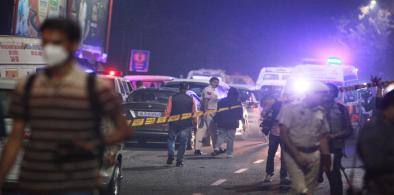
Bangladesh stands at a perilous juncture, grappling with an unprecedented security crisis in the aftermath of the July 19 jailbreak. The escape of over 2,241 inmates, including militants and top criminals, has exposed deep vulnerabilities in the nation’s security apparatus and highlighted the urgent need for action.

Post-uprising Bangladesh grapples with power, inclusion, and hope; rethink of ties with India

The aspirations of Gen-Z are on the walls, calling for a more tolerant and pluralistic society, with a sense of justice. "All political parties have heard that and understand that the newer generation are the most important voting bank at this moment. They don’t believe in the binary we have lived in for such a long time."

The changing state of Pakistani politics, for better or for worse

Today in Pakistan universities have proliferated and where in 2000 there were about 1 million post secondary students, in 2020 there were nearly 5 million and they have expectations, and they are also more political. But it is also the 30 and 40 year olds, generations of Pakistanis who are frustrated with the lifestyle of the rich and corrupt, and of a military they increasingly see in a similar light.

Pollution blows with the wind: South Asia's public health challenge needs harmonized regional action

In the larger South Asia context, air pollution does not follow national boundaries and therefore the solutions for all the airsheds cannot come from any one city or a country. The countries in South Asia – India, Bangladesh, Nepal, and Pakistan - that share a common airshed are impacted by the transboundary pollution. More than half of the air pollution across major cities in South Asia is not local but transboundary in nature.

South Asia's climate crisis needs a regional response

Regional bodies like the SAARC, the South Asian Association for Regional Cooperation, have the potential to foster cooperation on climate adaptation, disaster preparedness, and trans-border pollution control. However, geopolitical tensions, particularly between India and Pakistan, hinder progress.

India's Caribbean outreach carries geoeconomic and geopolitical significance

In the years gone by, India was defined by its religious and cultural strengths, but it has now taken Prime Minister Modi, with a new initiative, to give a boost to India-Caribbean ties through a purely development agenda. It is hoped that CARICOM would set up the mechanisms to get this agenda going. Is it that India is now showing its readiness to take on American and Chinese frontiers aimed at becoming a leader of the Global South if not a world power?

Securitization of the South Asian refugee: Where national security trumps human security

While the South Asian states securitize, local politics has often scapegoated refugee populations, turning majority insecurities into electoral capital – a fear that refugees’ encroachment  on physical and political spaces, jobs, land, corner welfare resources meted out by the state and place undue pressures on infrastructure; acase in point the rhetoric against Bangladeshi migrants in India.