
The Kashmir issue may have been handled deftly at the global politico-diplomatic level, but the abiding challenge for India remains domestic, writes C Uday Bhaskar for South Asia Monitor
Barring several imponderable items, the pomp and show and the nine-course meal banquet, Trump essentially returned empty-handed after his visit to China, with the latter asserting over Taiwan, ushering in G2, but with no major trade or investment concessions from Beijing. It is advantage China in this round, and the new-found confidence in Beijing could constrain New Delhi's moves.
Now, Bangladesh has said that future bilateral relations with India will heavily depend on successful renegotiation and renewal of the 1996 Ganges Water Sharing Treaty, which expires in December 2026. Bangladesh’s Water Resources Minister Shahiduddin Chowdhury Anee and the ruling Bangladesh Nationalist Party (BNP) General Secretary Mirza Fakhrul Islam Alamgir are pressing for immediate talks on new agreements that should not have fixed tenures.
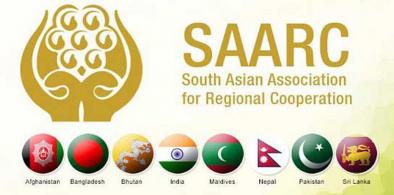
Amid this regional uncertainty, a new dynamic is emerging. China and Pakistan are taking steps to form a new regional alliance that plans to include Bangladesh as a potential member. This reality may lead to various disagreements about the need for SAARC’s revival. However, establishing active regional cooperation in South Asia would help create geopolitical pressure and push crises like the Rohingya problem towards a coordinated solution.
None of this suggests that Pakistan’s rise is occurring at the expense of India’s decline. Despite its challenges, India remains far more capable than Pakistan in areas such as advanced technology, financial capacity, and strategic alliances. Nevertheless, the evolving global environment suggests that diplomatic flexibility is becoming increasingly important. In other words, the issue is less about visibility or size and more about the ability to operate effectively amid differences and maintain communication during difficult times.
The Kashmir issue may have been handled deftly at the global politico-diplomatic level, but the abiding challenge for India remains domestic, writes C Uday Bhaskar for South Asia Monitor
PM Modi has made it clear that it cannot be business as usual. The UK would need to carefully consider whether its pre-1947 agenda of promoting an autonomous Muslim state at the intersection of South and Central Asia is a desirable objective for the West, wrties Ambassador Bhaswati Mukherjee (retd) for South Asia Monitor
Pakistan is unhappy that major players which could bail it out at the UN are all embroiled in their own affairs – the US trying to quit Afghanistan and China facing a trying time in Hong Kong, writes Mahendra Ved for South Asia Monitor
Boris Johnson has ended the British stance till now that Kashmir is a bilateral India-Pakistan issue, thereby delivering a lethal blow to India-Britain relations, writes Prakash Chand Katoch for South Asia Monitor
CDS by itself without its essential adjunct of integrated theater commands would be of little avail. It may turn out to be just one more four star-general, without any enhancement in Indian military’s war fighting capabilities, writes Lt-Gen Harwant Singh ( retd ) for South Asia Monitor
India has rudely shaken China, pushing back the bilateral Wuhan understanding with Beijing. It has hit not just China’s prime ally, but has moved close to Aksai Chin, the Kashmir territory Pakistan ceded to China, writes Mahendra Ved for South Asia Monitor
Religious leaders should promote interfaith dialogue. They should bring together followers of different persuasions for meaningful conversations. They should promote a dialogue of understanding and a shared sense of community with other faiths, writes Frank Islam for South Asia Monitor
The abolition of J&K’s special status will complete the ongoing process of annexation into the Indian Union, as it was a temporary provision, and will bring misguided and stone-pelting Kashmiri youth into mainstream politics, writes Sudhanshu Tripathi for South Asia Monitor
Experts are divided about the legality and constitutional propriety of the August 5 decisions in relation to Article 3 and the reorganization of states. What is at stake is the sanctity of constitutionalism and for PM Narendra Modi the way the Kashmir issue unfolds will define his political legacy, writes C Uday Bhaskar for South Asia Monitor
Internationally, the impact has been positive across the international community and, even China, although initially negatively disposed, has chosen not to be too vociferous in its protestations, writes Lt Gen Syed Ata Hasnain (retd) for South Asia Monitor
Haj will continue to be the harbinger of cultural and economic cooperation between India and Saudi Arabia, writes Dr H A Nazmi for South Asia Monitor
Those who have closely watched Modi believe that the prime minister wanted to give a clear signal that his government would be in a pro-active mode to handle long pending issues, writes Arun Anand for South Asia Monitor
The reason Pakistan was afraid of the plebiscite was that the raiders and troops it had sent in “had indulged in loot, arson, rape, and murder in the State. Scores of villages and towns were destroyed and hundreds of thousands of people uprooted, writes Arul Louis for South Asia Monitor

Pakistan can be expected to up the ante on terror, but any misadventure by Pakistan will be suitably responded to by India, writes Lt Gen Prakash Chand Katoch (retd) for South Asia Monitor

If, in the name of security, the BJP can, with one stroke, undo the federal asymmetry which was a product of the unique circumstances pertaining to the accession of J&K state to India, with a complex set of legal and constitutional mechanisms, the same can be done to the Northeast special powers, but with greater ease, writes Reeta Tremblay for South Asia Monitor