

War Against Iran Enters Second Month: Whither Global Leadership?
Expanding the arc of aerial/missile destruction to the Bab el-Mandeb would irreparably threaten the last viable option for Gulf oil exports and a regional war will soon cascade into an ‘epic’ global crisis. Ironically, the tally of death and destruction is barely mentioned and the war sanitized to a daily video ritual. Scroll and move on. Sagacious global leadership is absent when it is most needed and a discerning global civil society has been paralyzed by the unending Trump theatrics.
 Mar 30, 2026
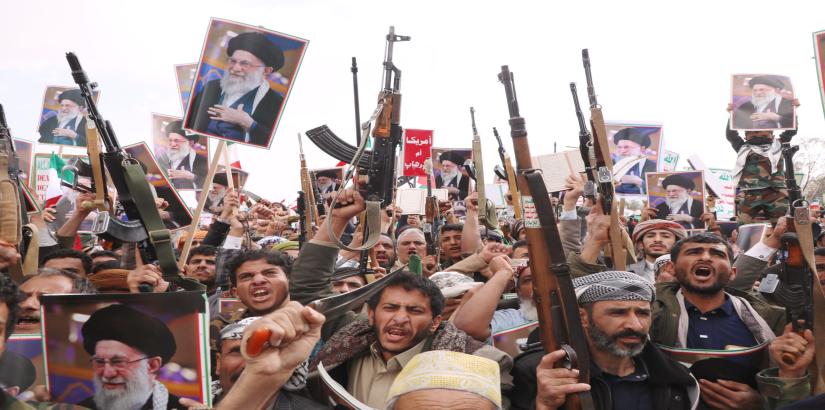
The unprovoked US-Israel war against Iran lurched into its second month on Saturday (March 28) and the more significant punctuation was the Houthi strike on Israel, which marked the proxy group's direct entry into the ongoing Iran war, with clear ripple effects on the turbulent conflict.
Yemen's Iran-backed Houthis launched a barrage of ballistic missiles, cruise missiles and drones targeting "sensitive Israeli military sites" in southern Israel including areas near the Dimona complex (which houses Israel’s nuclear assets) and Beersheba.
This was the first Houthi attack on Israel since Epic Fury (the US code name for the operation ) started and reportedly the second wave within 24 hours. Israel’s defense systems intercepted the threats with no reported casualties or damage. Houthi military spokesman Yahya Saree vowed continued operations until "aggression" against Iran and the region ends.
The Houthis (Ansar Allah), a Zaidi Shia movement originating in northern Yemen came into focus during the US war against terrorism and the post 9/11 zealotry and the American war against Iraq in 2003. As a group they pursued interlinked domestic goals (consolidating power) and larger regional objectives. Their actions blend Yemeni power politics in the long festering civil war with ideological alignment in Iran's ‘Axis of Resistance’ against the USA and Israel.
Devastating Human Tragedy
The Houthis seized the capital Sanaa in 2014, ousting the internationally recognized government and now control much of northern and western Yemen including the capital and Red Sea coast. Hodeidah, now under Houthi control, is Yemen's principal port on the Red Sea and enables this rebel group to disrupt global maritime traffic in a substantive manner.
It merits recall that during the peak Red Sea crisis (late 2023 to mid-2025), the Houthis attacked over 100 merchant vessels, sinking at least two and killing several seafarers.
This forced more than 60 percent of commercial shipping to reroute around the Cape of Good Hope, thereby adding 10 to 14 days to passage time, higher fuel costs and carbon emissions.
Consequently Suez Canal transits dropped sharply (from more than 80 containerships/week to far lower numbers) and oil flows through Bab el-Mandeb halved in some periods. While the Houthis claimed that they only targeted vessels with proven Israeli, US , UK or ‘enemy’ links – their attacks often hit other ships indiscriminately.
A look at the map will show how the Iranian closure of the Strait of Hormuz and the Houthi threat to ships transiting the Red Sea through the Bab el-Mandeb will act like a pincer and severely constrict global maritime commerce - and stoke the anxiety that has already seized the market.
Currently Brent crude is swinging in the $ 105 to 114 range and any further military action linked to the Houthis will have major adverse consequences. Global supply chains that operate in the ‘just-in-time’ mode will be hugely disrupted and the 3 F challenge – to fuel, fertilizer and food – will morph into a devastating human tragedy of hunger and deprivation. Paradoxically, Yemen which is already reeling will face yet another humanitarian crisis.
Global Crisis in Offing?
Militarily, the entry of the Houthis will complicate the tactical picture. The US and Israel will now face an active third front (Yemen/Red Sea), alongside direct strikes on Iran and proxy threats from Hezbollah/Lebanon.
This scenario could force diversion of aircraft, munitions and intelligence assets away from Iranian targets to monitor or strike Houthi launch sites. Pre-strike US assessments had warned that the Houthis could act as an "Iranian force multiplier" in a war of attrition.
In this asymmetric war, each Houthi barrage requires very expensive intercepts by US /Israeli systems such as the Arrow, Iron Dome, or ship-based defenses. This depletes US stockpiles already under pressure from Iranian salvos and has the attendant risk of higher success rates for future Iranian attacks, if defenses are stretched thin.
While the US and Israel embarked upon Epic Fury on Feb 28 with a battle plan designed for rapid degradation of Iranian capabilities, the current Houthi involvement is a major horizontal escalation. It turns the hostilities into a broader regional war of attrition, making a quick and "decisive victory" for the US and Israel that much harder.
The US and its allies could mount a devastating coalition retaliation against Houthi infrastructure, for example the port of Hodeidah, but that would further dilute resources currently dedicated to pounding Iran.
Expanding the arc of aerial/missile destruction to the Bab el-Mandeb would irreparably threaten the last viable option for Gulf oil exports and a regional war will soon cascade into an ‘epic’ global crisis. Ironically, the tally of death and destruction is barely mentioned and the war sanitized to a daily video ritual. Scroll and move on. Sagacious global leadership is absent when it is most needed and a discerning global civil society has been paralyzed by the unending Trump theatrics.
(The author is a retired Indian Navy commodore, President, Society for Policy Studies and a strategic analyst. Views expressed are personal. He can be reached at cudayb@gmail.com)







Post a Comment