

The Strait as Leverage: Hormuz the New Geometry of Power? (Part III and last)
Iran’s role in this transformation is central. Its ability to influence the Strait has reshaped strategic thinking across the region and beyond. External powers must now operate within constraints that did not exist before. For the Gulf states, the implications are immediate and tangible. Their economic lifelines pass through this narrow corridor. Any disruption affects not only revenue but also national security.For the broader international community, the lesson is clear.
 Apr 12, 2026
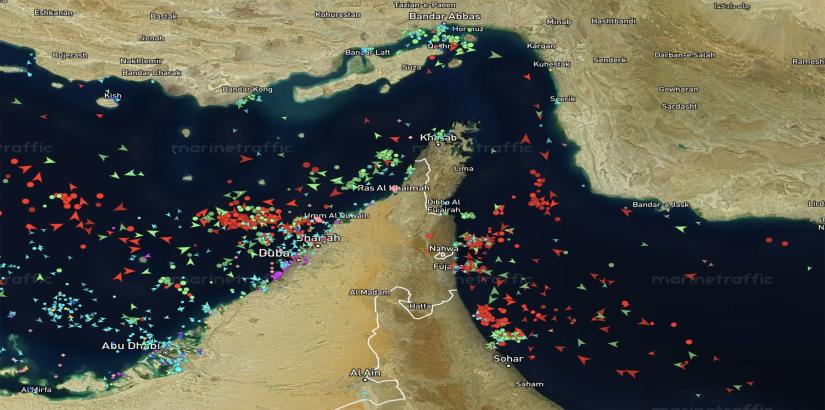
In the unfolding Gulf crisis, no space has gained greater strategic weight than the Strait of Hormuz, a critical maritime choke point. Long regarded as a secure artery of global energy flows, deemed as impervious to blockade, has now become far more consequential: a contested instrument of power, on which rests the future of the tenuous ceasefire.
The Middle East conflict has not only disrupted oil flows and raised insurance premiums. The blockade has fundamentally altered assumptions about Western naval dominance and the security of the waterway, potentially impacting regional strategic stability for decades.
At the centre of this transformation is Iran, whose expanding influence could shape the evolving power dynamics in the region. Importantly, the American planners never anticipated that Iran would take the extreme step of closing the Strait and thereafter exercising control over the movement of tankers.
From Passage to Pressure Point
The Strait of Hormuz shared by Iran and Oman is a narrow channel through which 20 per cent of the world’s oil and liquified natural gas supplies are shipped. Until the war, tanker and vessel movement remained toll-free. More importantly, the Strait is not within the category of international waters. Thus, until the conflict started, its vulnerability was largely theoretical. That is no longer the case.
Iran has demonstrated both by intent and the ability to influence traffic through the Strait, primarily by creating uncertainty. This ability to generate strategic ambiguity and to maintain that posture with resilience is an important lever for Iran.
Even limited disruptions create ripples across global markets. Prices react. Shipping routes adjust. Insurance risk calculations change materially. This gives Iran a tool that extends beyond military confrontation into what can be termed as ‘credible economic influence’.
The Strait, in effect, has emerged as a counterpoise to the punishing aerial campaign unleashed by the US-Israel coalition. A pressure point that cannot be ignored simply because of its global impact on energy markets—an aspect which Coalition planners did not adequately take into consideration.
End of Assumed Western Control
For decades, the security of the Strait was underwritten by Western naval presence, particularly that of the United States. This presence was both practical and symbolic, ensuring freedom of navigation and reinforcing a broader order in which dominant powers protected the global commons.
The recent conflict has exposed the limits of this model.
While Western forces remain capable, their ability to guarantee absolute security is constrained by the Strait's narrowness, exposure, and Iranian domination, factors that cannot be changed.
What has changed is the willingness to test it.
Iran’s actions to seize control have effectively ended the assumption of uncontested Western regional domination, undermining arrangements like the US-led CTF154. Any future arrangement will have to acknowledge Iran as a permanent and influential stakeholder. This is a difficult reality for both the United States and the Gulf states, and an important issue in the ongoing Iran–US discussions in Islamabad.
Temporary Shift in Energy Dynamics
The extensive damage suffered by Arab petrochemical infrastructure during the conflict has added another layer of complexity. Key facilities will require many months of repair, creating a temporary gap in production capacity. Iran, which was under severe Western sanctions, will be a major beneficiary as its infrastructure remains relatively intact and in a position to address this imbalance. It can increase output and supply markets facing shortfalls. The temporary lifting of sanctions by the US has allowed Iran to sell its oil and gas freely, a much-needed boost to its battered economy.
This has created a strange paradox. Iran, seen as a destabilising force, has become the supplier of necessity in a constrained market. This dual role complicates efforts to isolate or pressure it.
Global energy markets are pragmatic. They respond to supply and demand, not political preferences. If Iranian exports help stabilise prices, there will be quiet acceptance, even among those who publicly oppose Tehran.
This temporary advantage may not last, but it provides Iran with both economic relief and diplomatic leverage.
Challenge of Negotiating the Strait
Any attempt to stabilise the Strait will require negotiation. However, the issues are deeply complex and often conflicting.
The United States and its allies will insist on freedom of navigation as a non-negotiable principle, including no fees to be charged. For them, the Strait must remain an open and secure international waterway.
Iran, meanwhile, will resist any arrangement that strips it of influence. From its perspective, the Strait is not just an international corridor but also a strategic asset at its doorstep. It will seek recognition of its role, if not formal control. It is willing to exercise joint control with Oman, which shares the waterway.
Yet another sticking point is Iran's charging of a “Transit Fee” of two million dollars per tanker (or less), in Yuan. Both are seen as ‘redlines’ by the Americans. Bridging these positions will be difficult.
Possible frameworks could include joint monitoring mechanisms, de-escalation protocols, or regional agreements involving multiple stakeholders. Oman has already emerged as a potential intermediary, given its history of balanced diplomacy and geographic position.
However, even the best-designed agreements face a fundamental challenge: building trust, which is essential for effective enforcement and regional stability.
Risk of Persistent Instability
Even if agreements are reached, the Strait's future remains uncertain, prompting energy professionals to prepare for increased risks and volatility.
Incidents, whether accidental or deliberate, will remain possible. A miscalculation by a patrol vessel, a drone strike, or a collision between competing forces could quickly escalate. In this constrained environment, escalation timelines are short.
This creates a persistent layer of risk. Shipping companies will factor it into their operations. Insurance costs will remain high. Necessary naval deployments will further constrain the issue. The Indian Navy already undertakes forward, mission-based deployments in the Arabian Sea and the Gulf of Aden. ensuring presence and response,
In effect, the Strait will operate under a condition of managed instability.
Iran’s Expanding Strategic Shadow
Looking beyond the immediate, the events around the Strait reinforce a broader trend: Iran’s emerging strategic influence as a consequence of war.
If sanctions are eased or lifted, Iran’s economic position will improve. Higher revenues can support both domestic recovery and regional engagement. Over time, this could translate into a greater political and economic presence across the Gulf, an aspect that Arab States will have to contend with, a concerning prospect. The prospect of Iranian hegemony, even in a limited form, challenges existing power balances.
Yet resisting this trend may prove difficult. Geography, capability, and recent experience all work in accepting Iran as a consequential regional actor. An important issue is how this role will be defined or constrained. Gulf States and Israel will no doubt seek clarity on these issues during ongoing negotiations.
Beyond the Immediate Crisis
The Strait of Hormuz is often discussed in the context of crisis, but its significance extends beyond immediate events. It sits at the intersection of energy security, military strategy, and geopolitical competition. What happens here influences decisions in distant capitals. It shapes global markets. It affects alliances and rivalries.
The recent conflict has brought these dynamics into sharper focus. It has been shown that even well-established systems can be disrupted. It has also highlighted the importance of adaptability.
States and institutions that can adjust to this new reality will be better positioned to manage risk. Those who rely on outdated assumptions may find themselves exposed.
A Narrow Passage, A Wider Contest
The Strait of Hormuz is no longer merely a chokepoint on the map. It is a symbol of a changing order. Control is no longer assumed; it is contested. Stability is no longer guaranteed; it is negotiated.
The GCC and other countries dependent on the region for energy will consider options to mitigate this new challenge. This will come at a cost, but we must ensure that global trade is not held hostage by Iran.
Iran’s role in this transformation is central. Its ability to influence the Strait has reshaped strategic thinking across the region and beyond. External powers must now operate within constraints that did not exist before.
For the Gulf states, the implications are immediate and tangible. Their economic lifelines pass through this narrow corridor. Any disruption affects not only revenue but also national security.
For the broader international community, the lesson is clear. Critical infrastructure, no matter how well-protected, can become vulnerable amid a shifting geopolitical landscape.
The challenge ahead is to move from confrontation to managed coexistence. This will require difficult compromises, innovative frameworks, and sustained engagement.
If that effort succeeds, the Strait can remain a vital link in the global system. If it fails, it will remain a flashpoint, with local tensions triggering global consequences.
(Lt Col Manoj K Channan, an Indian Army veteran, is a strategic analyst. Views expressed are personal. He can be reached at manojchannan@gmail.com; linkedIn www.linkedin.com/in/manoj-channan-3412635; X @manojchannan.
Brig Arun Sahgal, PhD, an Indian Army veteran, is the Director Forum for Strategic Initiatives. He was previously the founding Director of the Office of Net Assessment, Indian Integrated Defence Staff (IDS), Ministry of Defence and Centre for Strategic Studies and Simulation, United Service Institution of India)






Post a Comment