

Sri Lanka-Pakistan Ties in a New Era: Focus on Security Coordination, Military Education
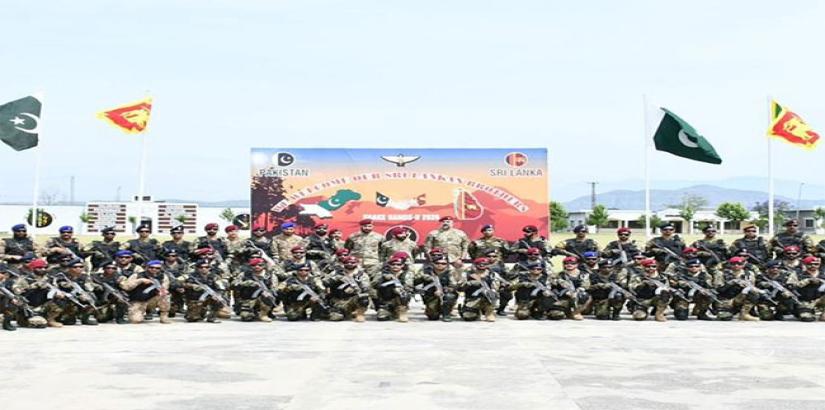
The newest symbol of Pakistan-Sri Lanka defence cooperation is Exercise Shake Hands-II, launched on April 27, 2026, in Tarbela, Pakistan. The two-week exercise brings together Pakistan Army’s elite Special Services Group (SSG) and Sri Lankan Special Forces. The purpose of the drill is to enhance interoperability, exchange operational experience and improve professional capabilities in counter-terrorism scenarios.
 May 04, 2026
The Liberation Tigers of Tamil Eelam (LTTE), commonly known as the Tamil Tigers, were a separatist militant organization founded in 1976 in Sri Lanka. The group claimed to fight for an independent Tamil state in the northern and eastern parts of the island. Over time, however, the LTTE became internationally known not only for its insurgency but also for some of the most violent tactics seen in modern militancy. Suicide bombings, assassinations, forced recruitment, attacks on civilians and economic sabotage became central to its campaign. Several countries designated the LTTE as a terrorist organization due to its methods and record of violence.
Sri Lanka’s civil conflict officially erupted in 1983 and lasted until 2009, leaving deep scars across the nation. Estimates suggest that at least 100,000 people lost their lives during the war, while countless others were injured, displaced or forced to flee abroad. Communities in the north and east faced the heaviest burden, but the pain of the conflict was felt nationwide.
At different stages of the war, the LTTE controlled large portions of territory, particularly in the Northern and Eastern provinces. For ordinary citizens, this meant years of checkpoints, insecurity, disrupted education, destroyed livelihoods and a constant fear of violence. More than one million people were internally displaced during the conflict years, while another large diaspora emerged overseas.
The LTTE gained notoriety for pioneering suicide attacks on an unprecedented scale. Between 1980 and 2000, the group reportedly carried out around 168 suicide attacks, one of the highest numbers attributed to any militant organization during that period. Their methods were later studied and copied by extremist groups elsewhere.
Among the deadliest incidents was the 1996 bombing of Sri Lanka’s Central Bank in Colombo, which killed around 100 people and wounded many more. In 2001, an attack on Bandaranaike International Airport destroyed military and civilian aircraft, severely damaging tourism and investor confidence. The LTTE was also linked to the assassinations of Sri Lankan President Ranasinghe Premadasa and former Indian Prime Minister Rajiv Gandhi, highlighting the group’s regional impact.
Consistent Defence Partner
As Sri Lanka battled insurgency and instability, Pakistan emerged as a consistent defence partner. Relations between the two countries go back decades, but cooperation deepened significantly during the most difficult years of the conflict.
One of the most frequently cited moments came in 2000, when Sri Lankan forces were under severe pressure in the north. Pakistan reportedly provided urgent military support, including Multi-Barrel Rocket Launcher systems, helping strengthen defensive positions at a critical time. Former Sri Lankan officials later acknowledged the importance of that timely assistance.
This support was seen not simply as military cooperation, but as the backing of a trusted friend during a national emergency.
Pakistan’s assistance was never limited to equipment alone. Over the years, the partnership expanded into military education, officer training, naval instruction and intelligence cooperation. Sri Lankan cadets trained in Pakistani institutions, while professional exchanges helped build long-term defence capacity.
Such cooperation is especially important in modern security environments, where intelligence gathering, command structure, discipline and rapid response often matter more than hardware alone.
Pakistan’s Counter-Terrorism Experience
Pakistan’s value as a security partner also comes from its own extensive counter-terrorism experience. For years, Pakistan confronted militant violence on its soil and launched major operations such as Rah-e-Raast, Rah-e-Nijat, Zarb-e-Azb and Radd-ul-Fasaad.
These campaigns targeted militant sanctuaries, disrupted extremist networks and restored state authority in affected regions. During Operation Zarb-e-Azb alone, around 30,000 troops were involved in a large-scale operation in North Waziristan. The experience gained from such campaigns has given Pakistan practical expertise in intelligence-led operations, difficult terrain warfare and anti-terror coordination.
That experience is now increasingly shared with friendly countries through joint exercises and training programs.
Shake Hands-II
The newest symbol of Pakistan-Sri Lanka defence cooperation is Exercise Shake Hands-II, launched on April 27, 2026, in Tarbela, Pakistan. The two-week exercise brings together Pakistan Army’s elite Special Services Group (SSG) and Sri Lankan Special Forces. The purpose of the drill is to enhance interoperability, exchange operational experience and improve professional capabilities in counter-terrorism scenarios. Exercises like these focus on hostage rescue, close-quarter combat, tactical planning and rapid-response operations.
At a time when security threats are becoming more complex, from transnational networks to lone actors and advanced technologies, such cooperation is increasingly valuable.
The story of Sri Lanka’s war against the LTTE is ultimately a reminder of the heavy cost of militancy. Decades of violence delayed economic progress, displaced families and inflicted immense suffering on citizens of all backgrounds.
Accent on Training and Security Cooperation
Yet, the current Pakistan-Sri Lanka partnership tells a different story, one of resilience, learning and strategic trust. Nations that once faced violent threats are now working together to prevent future instability.
The LTTE era was one of the darkest chapters in Sri Lanka’s modern history. But from those painful years has emerged a stronger focus on preparedness and partnership. Pakistan’s support during critical moments, combined with ongoing cooperation such as Shake Hands-II, reflects a relationship built on reliability rather than rhetoric.
Today, where bombs once dominated headlines, joint training and security cooperation offer a far more hopeful message: that experience gained through sacrifice can be transformed into peace through partnership.
(The author is a Pakistani research analyst specializing in foreign affairs and global issues. Views expressed are personal. She can be contacted at nazishpensdown@gmail.com )





Post a Comment