

Rethinking Electoral Governance: Making Indian Democracy Manipulation Free
Institutionalising mandatory constituency-level debates, organised by neutral academic or media institutions, can address this gap. These forums would require candidates to engage directly on employment, infrastructure, welfare delivery, governance performance, and manifesto vision.
 May 08, 2026
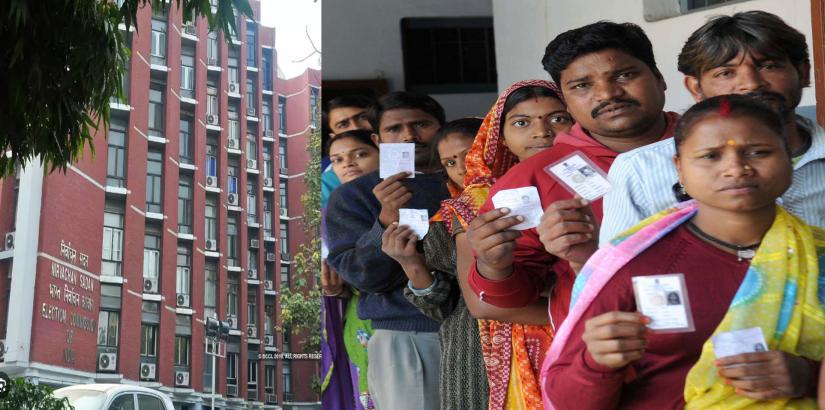
Concerns about the direction of electoral politics in India's democracy often emerge in moments of visible political shift, such as recent outcomes in West Bengal and Tamil Nadu, two of the larger and politically important states. The discomfort is usually not about who wins, but about how electoral mandates are constructed, whether through governance debate or through identity-driven mobilisation.
At the core of this debate is the constitutional promise of the Constitution of India, which guarantees universal adult franchise while also expecting elections to remain free from coercion, intimidation, and identity-based appeals. The tension lies not in the principle of democracy, but in the evolving mechanisms through which democratic choice is shaped in practice.
The question, therefore, is not whether voters should be restricted, but whether the system itself can be redesigned to make manipulation harder, costlier, and more visible.
Fast-Track Accountability as a Deterrent
One of the most practical reforms lies in addressing the time lag between electoral violations and their consequences. Under the current system governed by the Representation of the People Act, 1951, cases involving hate speech, religious appeals, or campaign misconduct often take years to reach final judgment. By then, the electoral impact has already been realised, and legal consequences lose their preventive value.
A more functional approach would be the creation of fast-track electoral benches operating only during election cycles, with strict timelines of 30 to 60 days. These benches would handle violations in real time, ensuring that accountability is not symbolic but immediate. Where prima facie violations are established, temporary campaign restrictions could be imposed until final adjudication.
This shifts the system from retrospective punishment to real-time deterrence, where violations affect ongoing campaigns rather than post-election history.
Real-Time Monitoring in a High-Speed Political Environment
Modern electoral campaigns no longer operate within bounded physical spaces. They unfold simultaneously across rallies, television, and digital platforms. Yet regulatory oversight still largely functions in a reactive mode.
Strengthening the capacity of the Election Commission of India to monitor speech and messaging in real time is therefore essential. This does not imply censorship but structured oversight. A combined system of human review and technological monitoring can flag violations as they occur.
A graded response mechanism by warnings, temporary campaign restrictions, and escalation to disqualification proceedings would ensure that repeated violations accumulate consequences during the campaign itself, not after it.
Transparency as a Tool to Rebuild Trust
One of the most underappreciated sources of electoral anxiety is not disagreement with outcomes, but uncertainty about process integrity. Allegations regarding voter list revisions or deletions, whether fully substantiated or not, can erode confidence in the system.
A practical response lies in radical transparency. Electoral rolls should be continuously updated and publicly accessible in version-controlled formats. Every addition or deletion should be traceable, with structured public logs and individual notifications where possible.
Independent audits by universities, civil society groups, and non-partisan institutions would further strengthen credibility. The objective is not only preventing malpractice but reducing the space for suspicion itself.
Regulating Campaign Finance and Digital Communication
Manipulation in modern elections is not only rhetorical; it is infrastructural. Financial resources and digital targeting increasingly determine the reach of political messaging.
Real-time disclosure of campaign expenditure, stricter monitoring of digital advertising, and mandatory transparency in funding sources are essential. Undeclared digital campaigning, especially micro-targeted ads must be brought into regulatory visibility.
This does not restrict political speech. It ensures that political influence is traceable rather than opaque, reducing asymmetries created by unregulated funding networks.
Making Political Debate Structurally Mandatory
A recurring feature of electoral politics is the absence of structured issue-based engagement. Campaigns often prioritise mobilisation over deliberation, leaving voters without consistent platforms to compare governance alternatives.
Institutionalising mandatory constituency-level debates, organised by neutral academic or media institutions, can address this gap. These forums would require candidates to engage directly on employment, infrastructure, welfare delivery, governance performance, and manifesto vision.
Such debates would not replace rallies but would introduce a parallel institutional space where accountability is public, structured, and comparable.
Civic Literacy as a Continuous Democratic Infrastructure
Manipulation cannot be addressed solely through enforcement. It also depends on the informational environment in which voters interpret political messaging.
Civic literacy, therefore, must extend beyond formal education. It must be embedded into everyday communication systems like short-form digital content, regional language explainers, and public awareness campaigns that explain how elections, policies, and propaganda mechanisms function.
The goal is not to instruct citizens how to vote, but to strengthen their ability to evaluate political claims independently.
Reforming Incentives, Not Restricting Participation
The instinctive response to concerns about manipulation in a democracy is often to question the voter. But restricting participation would undermine the foundational equality guaranteed under the Constitution of India without addressing the structural drivers of distortion.
A more sustainable approach lies in redesigning incentives. When enforcement is timely, information is transparent, campaign finance is traceable, debate is institutionalised, and civic literacy is strengthened, manipulation becomes harder to execute and easier to expose.
Democracy does not require ideal voters. It requires institutions that ensure political competition unfolds under conditions where accountability is immediate, transparency is structural, and influence must be earned rather than engineered.
(The author is a political science graduate from Delhi University and a Research Fellow, Society for Policy Studies, specializing in power politics, climate security, and strategic affairs. Views expressed are personal. He can be contacted at piyushchaudhary2125@gmail.com )





Post a Comment