

Pakistan in 2025: Deep State Grip
The year 2025 marked a mix of turbulent times for Pakistan with weakening yet stabilising economy, fractured, fragile polity and civil society, rise in enforced disappearances and heightened militancy. It also saw diplomatic initiatives with Asian states and resurgence of engagement with the United States. Overall, the Deep State with Pakistani Army leadership at the core continues to dominate the governance structures and institutions, further impinging on the democratic credentials of the country.
 Jan 06, 2026
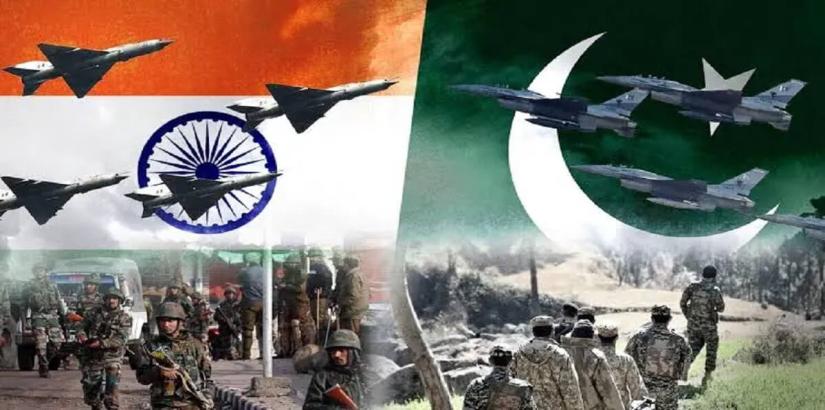
The year 2025 was marked by consolidation or rather complete military dominance, deepening political polarisation, slow yet limited economic growth, systemic and structural issues, heightened terrorist incidents, brief but intense conflict with India, and climate induced disasters.
Omnipotent, Omnipresent and Omnificent Army
“ Pakistan army is the single most dominant and the largest service institution that has ruled the country for much of the state’s existence either through covert or overt means.”
Almost half of Pakistan’s existence as an independent nation has been under direct Army rule, the rest half under indirect Army rule, signifying military’s control as ‘complete and comprehensive’, including the virtual surrender of the mainstream forces, the only change is that the military leadership now prefers to control from behind a “malleable civilian façade”.
Operation Sindoor revealed coordination gaps in the Pak army structure. This led to the creation of the new Army rocket force command and a National command Authority by the revision of Article 243 by the 27th constitutional amendment. The army expanded and consolidated its powers further under Asim Munir, who was elevated to the rank of Field Marshal which gives him lifelong legal immunity from prosecution, a permanent rank, removed only by a two-thirds parliamentary majority. He also assumed the newly created role of Chief of Defence Forces, overseeing army, navy, air force, procurement, and nuclear command with a five-year term..
Further on to limit judicial checks on the military actions, a new Federal Constitutional Court was created over and above the Pakistan Supreme Court. This triggered resignations by Supreme Court Justices Mansoor Ali Shah and Athar Minallah. Such an amendment leads to weakening judicial oversight.
General Munir’s emphasis on preserving Islamic ideology mirrors General Zia’s tenure, positioning the Army as both protector and upholder of the nation’s Islamic character. The Army draws willing or forced support from other state institutions like the legislature, executive, judiciary, media, religious leaders, and business entrepreneurs and maintains control over national security, nuclear policy, foreign affairs, domestic politics, economy, and civil society. Hence the “men in uniform” headed by Field Marshal Munir, will never abandon its practice of maintaining domination, guaranteeing “Uniformed Democracy” continues in some form or other.
Domestic Political Crisis
The year saw deeper divisions and fragmentation of the political parties. Persistent claims of election rigging by Pakistan Tehreek-e-Insaf (PTI) fuelled widespread protests and clashes with the government. The year was marked by a lethal crackdown on a rally in Islamabad and Imran Khan receiving additional sentences: 14 years for the Al-Qadir corruption case in January and 17 years for graft in December, alongside rising concerns over his health. Failed negotiations between PML-N and PTI have only exacerbated the political deadlock, while TLP demonstrations and crises in Khyber Pakhtunkhwa have contributed to heightened instability.
The government responded with measures including banning TLP after violent clashes and convicting PTI leaders with sentences of up to 10 years. Balochistan remains a victim of forced disappearances, but a disturbing trend is specific targeting of women and young girls.
Economic Collapse Averted
According to the IMF, Pakistan managed to avert an immediate economic collapse but remains burdened by high debt, weak investment, and slow employment growth. Households saw limited relief, with reforms and lower inflation (down to 6-7.2%) leading to a reduction in policy rates to 11%. These measures are expected to marginally boost GDP growth to 2.5-2.7% for FY2025. UNDP’s 2025 Human development Report(HRD), Pakistan ranks 168th out of 193 countries falling into the ‘low human development’ category with an HDI value of 0.544, reflecting significant challenges in health, education, and income. Agriculture grew by 1.18% despite crop declines, and the IMF’s $7 billion Extended Fund Facility, coupled with fiscal restraint, helped maintain solvency after concerns of near-default. However, nominal growth lagged population growth, restricting per capita increases. PPP GDP estimates stood at $2.058 trillion, with 40% of households living in poverty.
The elimination of CPEC tax zones, combined with damage from floods, heatwaves, and militancy, hampered recovery. Remittances and stock returns provided some respite. The Asian Development Bank (ADB) emphasised the need for continued reforms to achieve 3% growth in FY2026, but low investment and shortcomings in agriculture policy remain obstacles. The core challenge remains: translating stabilisation into sustained and inclusive growth.
Climate Induced Crises
Climate change was the main cause of Pakistan's severe environmental problems in 2025. Food insecurity and water scarcity were caused by extreme temperatures, floods, and droughts. Rapid urbanization exacerbated the country's problems with deforestation, inadequate waste management, widespread air and water pollution, and dwindling biodiversity. These problems put a strain on public health and resources.
Intense monsoon rains, worsened by climate change, caused the Sutlej, Chenab, and Ravi rivers in Punjab to swell. The situation was further complicated by India’s release of water from upstream dams, which it had notified Pakistan about. The resulting floods devastated a province heavily reliant on agricultural labour. The UN’s Food and Agriculture Organization (FAO) reported that 1.12 million hectares of agricultural land—9% of Punjab’s total—were affected, including over 214,000 hectares of rice and 122,000 hectares of cotton. The lack of adequate government support for recovery led to food shortages.
Increased Terrorist Incidents
The country continued to experience frequent terrorist incidents involving groups such as Baloch Liberation Army (BLA), Tehrik-e-Taliban Pakistan(TTP), and Islamic State(IS). South Asian Terrorism Portal data reveals, the total incidents and casualties for Pakistan the year 2025 were: 1047 incidents of killings, out of which 643 were civilians, 1187 were security forces, 2055 were terrorists/insurgents /extremists, hence a total of 3886 casualties.
This data reflects consistently high levels of militant activity, in several areas, with no discernible decline in violence. There were two different, but parallel tracks undertaken by the terrorists. One was the Pashtun militant groups operating throughout the former tribal regions and Khyber Pakhtunkhwa. The other was Baloch militant organizations that carried out coordinated attacks across southern and central Baluchistan. Such incidents were a strain on Pakistan’s internal security, stretching operational reach, manpower deployment, and intelligence capacity across the difficult terrain.
Foreign Policy Alliances And Compulsions
The US ended its decade-long isolation with Pakistan, exploring investments and agreements in minerals, oil, and gas, and crypto currency. Pakistan entered into a strategic mutual defence agreement pact with Saudi Arabia strengthening its deterrence. China remained an undeterred iron brother helping in commencement of CPEC’s second phase and continued to share defence technology. Relations with Iran, Bangladesh, Central Asian Republics and Libya have also improved. However, deteriorating ties with India and Afghanistan remained a significant concern this year.
The year 2025 marked a mix of turbulent times for Pakistan with weakening yet stabilising economy, fractured, fragile polity and civil society, rise in enforced disappearances and heightened militancy. It also saw diplomatic initiatives with Asian states and resurgence of engagement with the United States. Overall, the Deep State with Pakistani Army leadership at the core continues to dominate the governance structures and institutions, further impinging on the democratic credentials of the country.
(The author is the Founding Editor of oijpcr.org, Professor & Director CIRA, @ the Jindal School of International Affairs, O.P. Jindal Global University. Views expressed are personal. She can be contacted at jyoti.pathania@jgu.edu.in. This series is curated by Prof Avinash Godbole and Prof Sreeradha Datta, JGU )





Post a Comment