

India’s Global Power Trajectory: Strategic Implications for Bangladesh and Region
However, a balanced assessment suggests that India’s superpower trajectory could also generate opportunities for Bangladesh. Enhanced regional connectivity, expanded market access, greater investment flows, and improved regional stability could benefit Dhaka—provided cooperation and mutual respect remain central to bilateral engagement. Ultimately, the impact on Bangladesh will depend not only on India’s power trajectory but also on how both countries manage diplomacy, trust-building, and regional cooperation in an evolving geopolitical landscape.
 Feb 20, 2026
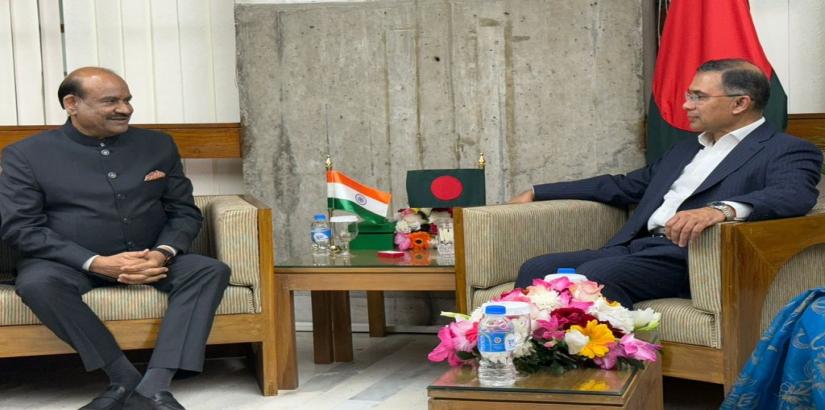
India, as a regional power in South Asia, exercises significant political, economic, and strategic influence over its neighboring countries such as Nepal, Bhutan, and Sri Lanka. Through economic leverage, diplomatic engagement, labor mobility, and development assistance, India often shapes internal and external policy choices in these states.
At the same time, its vast manpower base and expanding military capabilities enhance its dominance in regional security and defense matters. From a strategic standpoint, India’s growing presence and increasingly assertive posture position it as the central force shaping South Asia’s balance of power.
Regional Dominance to Global Ambition
In contrast, as an emerging global giant, India’s nuclear capability positions it as a key strategic deterrent power. Its no-first-use doctrine and policy of credible minimum deterrence influence regional stability and global non-proliferation discussions, particularly in relation to Pakistan and China.
India has also established itself as a global IT hub, driving innovation, outsourcing, and digital services worldwide. Its skilled workforce and technology firms play a central role in global software development, AI services, and digital infrastructure. Notably, several leading global IT companies, such as Google and Microsoft, are headed by CEOs of Indian origin, reflecting India’s expanding intellectual footprint in the global technology ecosystem.
In the realm of sports diplomacy, India has transformed cricket into a global commercial industry. The Board of Control for Cricket in India (BCCI) is widely regarded as the world’s richest cricket governing body, with a valuation exceeding ₹1,83,000 crore—far surpassing other national boards. Through financial strength, global viewership, and high-profile leagues such as the Indian Premier League (IPL), India exerts substantial influence over international cricket governance and decision-making.
India is now the world’s fourth-largest economy. Its strategic oil imports from countries such as Russia and Venezuela during periods of international political turmoil have strengthened its energy security and economic resilience. This pragmatic approach enhances India’s bargaining power in global energy and geopolitical markets.
Indian policymakers are increasingly shaping global debates on climate change, trade, security, and development. India’s leadership voice represents both emerging economies and the Global South in major international forums. As an active member of the G20 and BRICS, India plays a significant role in shaping global economic governance. It advocates multipolarity, development financing, and reform of international institutions.
Approximately 32 to 35.4 million people of Indian origin—including Non-Resident Indians (NRIs) and Persons of Indian Origin (PIOs)—live outside India, forming the world’s largest overseas diaspora. This vast diaspora strengthens India’s global influence through culture, business, education, and politics. Such soft power networks enhance India’s global image and foster diplomatic and economic connections worldwide. These strategic advantages collectively reinforce India’s ambition to raise its voice globally as a prospective superpower.
Structural Constraints Dim Regional Image
Despite its strategic opportunities, India continues to face structural challenges in its quest for big-power status. Although it has a large population and a rapidly growing economy, India does not hold permanent membership or veto power in the UN Security Council. This limits its ability to shape global security decisions and constrains its diplomatic influence compared to established major powers.
Domestically, India’s North-Eastern states face persistent challenges, including insurgency, ethnic tensions, inadequate connectivity, and economic underdevelopment. These internal vulnerabilities affect national integration and divert resources from broader global power projection.
Moreover, long-standing border disputes with China, Pakistan, and Bangladesh generate recurring security tensions. Such disputes strain diplomatic relations, increase military expenditures, and complicate India’s image as a stable and uncontested regional leader.
Implications for Bangladesh: Risks and Opportunities
How would India’s potential emergence as a global power affect Bangladesh economically and politically? If India consolidates its position as a global power, its rise would have complex implications for Bangladesh. Historically, increased Indian power could translate into stronger political influence over regional decision-making, potentially limiting Bangladesh’s strategic autonomy in diplomacy and security affairs.
Culturally, a more assertive projection of India’s national identity may raise concerns in Bangladesh regarding cultural pressure—particularly around religion and language—if influence shifts from mutual exchange to dominance. Border-related issues, including security management, migration, fencing, and water sharing, could also intensify, as a stronger India may act more decisively to safeguard its national interests.
Economically, Bangladesh might face growing pressure from trade imbalances, including higher dependence on Indian imports and comparatively limited access for Bangladeshi exports.
However, a balanced assessment suggests that India’s superpower trajectory could also generate opportunities for Bangladesh. Enhanced regional connectivity, expanded market access, greater investment flows, and improved regional stability could benefit Dhaka—provided cooperation and mutual respect remain central to bilateral engagement. Ultimately, the impact on Bangladesh will depend not only on India’s power trajectory but also on how both countries manage diplomacy, trust-building, and regional cooperation in an evolving geopolitical landscape.
(The author is a foreign policy and security analyst and educator who holds a postgraduate degree from the Department of International Relations, Rajshahi University, Bangladesh. Views expressed are personal. He can be contacted at alaminislamshuvo16@gmail.com.)







Post a Comment