

India, BRICS Fail the Iran Test: It Could Seek to Bridge Divides
For India, the failure is particularly significant as its presidency was an opportunity to translate “strategic autonomy”, the current buzzword in foreign policy circles, into multilateral leadership. True, its response is shaped by structural constraints. The country imports more than 85% of its crude oil, much of it from West Asia and Russia. Some nine million of its citizens live in the Gulf. The United States is its largest trading partner. Iran anchors the Chabahar port project and India’s access to Afghanistan and Central Asia. Each relationship is too consequential to risk.
 Mar 25, 2026
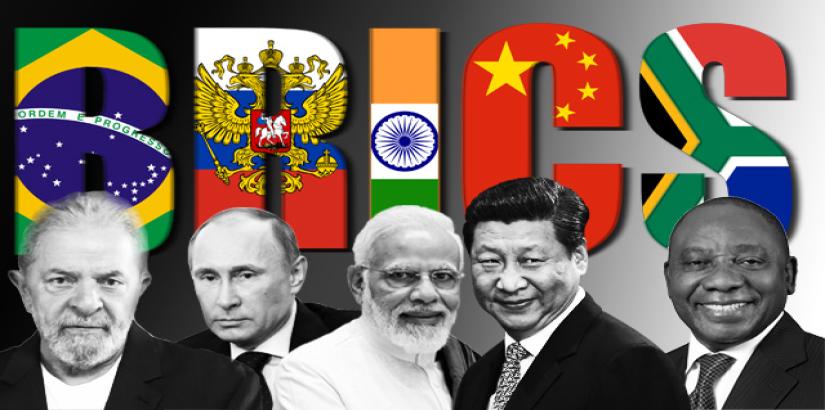
When India assumed the BRICS chair in 2026, it inherited a platform that claims to speak for a more balanced world order. The flagrantly illegal attacks by Israel and the United States on Iran has put that claim under strain. What should have been a moment for collective intervention has instead exposed the limits of BRICS cohesion and, on India’s part, hesitation in the leadership of the body.
BRICS, with the original members Brazil, Russia, India, China, South Africa, and the bloc's expanded membership, which now includes Iran, UAE, Egypt, Ethiopia, and Indonesia, appears uniquely placed to intervene in the Iranian crisis diplomatically. That must have been what was on his mind when Iranian President Masoud Pezeshkian spoke with Prime Minister Narendra Modi on 21 March as the war entered its fourth week. Citing India’s current presidency of BRICS, the Iranian leader urged the group “to play an independent role in halting aggressions against Iran and in safeguarding regional and international peace and stability”.
The bloc straddles both sides of the conflict and commands significant economic weight. It accounts for about half the world’s population and more than 40% of global GDP, far exceeding the G7. As economist Jeffrey Sachs has argued, BRICS possesses “the credibility, the economic weight, and the absence of historical complicity in Middle East imperialism” to push for de-escalation.
Tower of Babel
However, it has not yet acted. There has been no emergency summit, no joint statement, no coordinated diplomatic initiative. China, Russia and Brazil criticised the strikes. India called for restraint without naming Washington or Tel Aviv. South Africa remained cautious, while Gulf members calibrated their responses to immediate security concerns. Once again, BRICS, like the Tower of Babel, spoke in multiple tongues.
This pattern is familiar. On Ukraine war, the bloc has struggled to agree on basic questions of international law, settling for diluted language. After earlier US-Israeli strikes on Iran, it expressed “grave concern” without assigning responsibility. The current crisis, more immediate and consequential, has produced even less.
For India, the failure is particularly significant as its presidency was an opportunity to translate “strategic autonomy”, the current buzzword in foreign policy circles, into multilateral leadership. True, its response is shaped by structural constraints. The country imports more than 85% of its crude oil, much of it from West Asia and Russia. Some nine million of its citizens live in the Gulf. The United States is its largest trading partner. Iran anchors the Chabahar port project and India’s access to Afghanistan and Central Asia. Each relationship is too consequential to risk.
In that context, India’s calibrated neutrality is understandable. It has worked to secure energy flows, maintain maritime access and limit economic fallout. But there is a distinction between managing exposure and shaping outcomes. Only the former has been evident.
Ambiguity Signals Drift
Signals from New Delhi have at times deepened the ambiguity. Prime minister Narendra Modi’s visit to Israel just two days before the attacks on Iran, the absence of public condemnation of the invasion, and no immediate expression of condolences over the killing of Ayatollah Khamenei, have contributed to a perception of drift. Silence, in geopolitics, carries meaning.
More broadly, India’s obstruse response to the crisis reflects a shift in its foreign policy posture. Congress party leader Sonia Gandhi framed the stakes starkly: “India has long aspired to be more than a regional power; it has sought to serve as the conscience-keeper of the world … there is an urgent need for us to rediscover that moral strength and articulate it with clarity and commitment.” The gap between that aspiration and current reticence is increasingly apparent.
Former foreign secretary Nirupama Menon Rao offers a complementary warning against a narrower reading of pragmatism. “Iran is not peripheral to India … we cannot wish it away because it is inconvenient in a crisis.” Strategic autonomy, in her formulation, “is not about choosing the side with the larger balance sheet … it is about refusing false choices altogether.”
That distinction is crucial. India’s current approach risks sliding from autonomy into what Rao describes as “the comfort of alignment presented as pragmatism.” By avoiding clear positions in moments of crisis, New Delhi preserves flexibility in the short term but narrows its strategic space over time. A posture that treats competing relationships as liabilities to be managed rather than assets to be leveraged limits India’s ability to shape outcomes. It amounts to irresponsible statecraft.
Within BRICS, these ambiguities carry consequences. A bloc that seeks to position itself as an alternative to Western dominance cannot easily be led by a country perceived as edging closer to Western strategic frameworks. India’s reluctance to articulate a clear position on Iran reinforces doubts about its ability to anchor a coherent Global South agenda.
No Political Agency
At the same time, the crisis has exposed the structural limits of BRICS itself. It remains an economic platform without the institutional mechanisms required for coordinated geopolitical action. Its diversity becomes a constraint when member interests diverge sharply. The Iran conflict demonstrates that economic weight alone does not produce political agency.
This is the central dilemma of multipolarity. The diffusion of power does not automatically generate coordination. It requires political will and institutional capacity. BRICS has the former only intermittently and the latter barely at all. Sachs’s argument that the bloc could act collectively remains persuasive in theory. In practice, cohesion has proved elusive.
There were concrete steps available. India, as chair, could have convened an emergency summit and framed a common position rooted in international law. BRICS could have articulated conditions for de-escalation and taken them to the UN. It could have coordinated economic measures to stabilise energy markets. Even a limited joint statement would have signalled relevance. None of this materialised.
Meanwhile, China has positioned itself as a potential mediator while insulating itself from economic shocks. The longer the conflict persists, the greater the likelihood that Beijing’s influence in West Asia will expand. For India, which has sought to counterbalance China’s regional footprint, this represents a strategic setback.
The conflict is also reshaping India’s immediate environment. Instability in Pakistan, missile strikes across Gulf states hosting large Indian populations and shifting regional alignments are converging to complicate India’s security calculus. The idea of India as a net security provider now confronts a more constrained reality.
There is still space for recalibration. India could convene dialogue within BRICS, pursue incremental consensus and reassert the primacy of international law. It could seek to bridge divides rather than simply navigate them. Whether New Delhi will do so remains anybody’s guess. Moments of crisis are tests of credibility. On Iran, both India and BRICS have fallen short.
(The writer is a former UN spokesperson and a contemporary affairs commentator. Views expressed are personal. He can be reached at edmathew@gmail.com/ tweets @edmathew)





Post a Comment