

Competition for Critical Minerals can be a New Arena for International Conflict
The move by Pakistan in the Security Council is an indicator of increased apprehension among developing countries about the fact that the fruits of energy transition need to be shared more equitably. The Global South has many mineral-rich countries which usually do not get much economic benefit from extraction while bearing its environmental and social costs.
 Mar 08, 2026
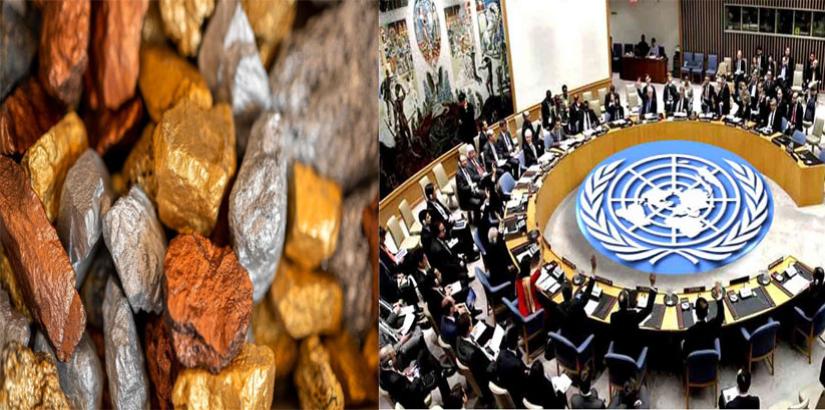
In a recent address by the permanent representative of Pakistan to the United Nations, Asim Iftikhar Ahmad, the rising competition in world markets over the most essential minerals might turn out to be a new source of geopolitical instability. In a Security Council briefing on the topic of Energy, Critical Minerals, and Security, he stated that more international cooperation was needed through which equitable and sustainable access to resources that would be central to the international energy transition would be possible.
The ambassador believes that cheap, consistent, and sustainable energy is the answer to stability in the world and economic development. However, the rapid increase in the number of electric automobiles, renewable energy sources, battery storage systems, and digital infrastructure has led to an explosion in demand for such mineral resources as lithium, cobalt, nickel, and rare earth elements. The threat of geopolitical challenges over such resources is on the rise because of the competition between governments and corporations to acquire supply chains.
Minerals in Strategic Focus
History has proven that when natural resource wealth meets poor governance, poverty, and outside interference, it can be a source of instability, as observed by Ahmad. In the absence of strong international structures and clear governmental management systems, the rising pressure of the critical minerals needed can only contribute to the worsening of the conflict and not to sustainable development.
Clean energy transition is essentially transforming geopolitics in the world. For decades, the politics of energy in the world were centered on oil and gas. However, currently, the strategic focus is moving to minerals needed in batteries, electric vehicles, semiconductors, and renewable energy infrastructure. This change has provided a changed strategic environment in which access to mineral supply chains has become a greater determinant of economic and security policies.
Case Study of DRC
The example of the Democratic Republic of the Congo (DRC) may serve as a bright example of security risks connected to critical minerals. It has one of the largest deposits of cobalt, a component of lithium-ion batteries that are also found in electric vehicles and energy storage units globally. As a matter of fact, about 70 percent of the world’s cobalt production is in the DRC, and it is the hub of the global clean energy supply chain.
The DRC has had decades of conflict even with the highly abundant mineral wealth due to the desire to control its resources. Foreign players, militias, and armed units have continually engaged in wars contesting mineral-endowed regions, especially the eastern provinces of North Kivu and Katanga. The battle over coltan, cobalt, and other strategic minerals has been so much intertwined with instability in the region and cross-border tensions.
Minerals have been used in recent years to fund the activities of rebel groups like the M23 militia, which controlled mining regions. According to reports, coltan mined in rebel-held mines is earning hundreds of thousands of dollars every month, which continues to finance the war in the area.
The humanitarian effects have been disastrous. Since the late 1990s, more than six million people have lost their lives in conflicts associated with mineral exploitation and regional tensions, and millions of others are displaced.
The case shows how resources that can bring about prosperity become rather sources of insecurity in the case of a lack of governance institutions and little international supervision.
Age of Resource Geopolitics
The competition among the major powers is also increasing regarding minerals that are of a critical nature. Nations are taking steps toward investing in foreign mining projects, entering exclusive contracts for extraction, and trying to enter long-term contracts of supply.
In fact, China is already having a dominant share in various cogs of the critical mineral supply chain, especially concerning processing and refining of cobalt and rare earth. Meanwhile, the United States and the European Union are struggling to identify other sources of supply and even establish strategic partnerships with mineral-endowed countries to reduce dependence on the same supplier.
Even though faster technological development might be promoted with the help of this competition, there are also problems associated with the supply chain fragmentation and geopolitical tension. Export controls, resource nationalism, and strategic hoarding may convert mineral markets into grounds of political leverage.
Resource Governance System
The move by Pakistan in the Security Council is an indicator of increased apprehension among developing countries about the fact that the fruits of energy transition need to be shared more equitably. The Global South has many mineral-rich countries which usually do not get much economic benefit from extraction while bearing its environmental and social costs.
Ambassador Ahmad emphasized that such states are not only sources of raw materials because they are endowed with the resources. Rather, they must be helped in strengthening local industries, improving governance institutions so that their mineral wealth leads to sustainable development.
International cooperation is required. Transparent supply chains, responsible mining, and fair trade can help prevent the occurrence of new forms of exploitation of the resource. The UN system frameworks could also promote responsible sourcing standards and ensure that the local communities gain out of the mining of minerals.
Future Conflict Prevention
Finally, the world energy shift should be accompanied by stronger regulatory tools to avoid competition over minerals developing into conflict. The practice since then of such battles with resources as the moving power proves that the unchecked rivalry may damage peace and stability.
This issue has been raised by Pakistan in the UN Security Council, and this has revealed a serious problem that international society is experiencing. Renewable energy conversion is needed to address the issue of climate change; yet it must not create new geopolitical boundaries. Critical minerals can be used to support sustainable development and global cooperation with the right management. In the wrong hands these can turn into the next stage of geopolitical aggression and conflict.
(The author is a journalist specialising in South and Central Asian security and diplomatic affairs focusing on Pakistan’s evolving strategic posture. Views expressed are personal. She can be contacted at filzaasim2025@gmail.com )





Post a Comment