
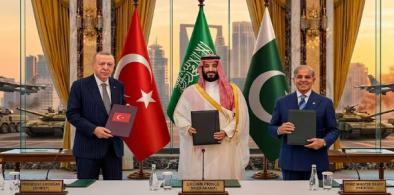
The spread of COVID-19 infections in South Asia has not been uniform across countries; while some countries were successful in controlling the pandemic, others were not, writes Partho Pratim Mitra for South Asia Monitor
For Bangladesh’s Hindus, each funeral deepens the message that their lives are negotiable and their suffering invisible. If this trajectory continues unchecked, the country risks normalizing a culture of impunity that will ultimately consume more than one community. Violence ignored does not fade; it spreads. And the price of silence, as history repeatedly shows, is always paid in lives.
Keen observers of international and regional politics will not have missed the tacit presence of the invisible hand of the US in determining the democratic transition in Bangladesh. Obviously, TarIque had been tutored by the Americans about the best way forward for the transition towards democratic rule and delivering on the promises on cooperation on regional security. The intelligentsia inside the country could have hoped for Tarique referring to ‘’historical’’ figures from the Indian subcontinent, the Muslim world, and Bangladesh’s past.
The South Asian Association for Regional Cooperation's (SAARC) Charter, by contrast, establishes no regional human rights treaty, monitoring body, or court. Scholars emphasize that governments in the subregion demonstrate a lack of deep commitment to human rights and remain unwilling to acknowledge subregional solutions. Victims of systemic violations have no forum for binding adjudication.
This fully unfettered approach to everything Trump does also has serious consequences for India. At least through the duration of the Trump administration until 2028, the Modi government will have to spread around its geostrategic and geoeconomic needs among various countries such as Japan, Australia, Germany, France and the United Kingdom or collectives such as the European Union, even as it deals with America with some judicious leveraging.
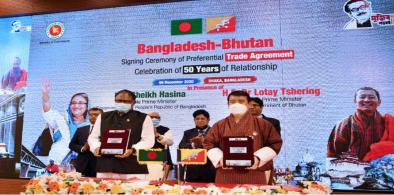
The spread of COVID-19 infections in South Asia has not been uniform across countries; while some countries were successful in controlling the pandemic, others were not, writes Partho Pratim Mitra for South Asia Monitor
The BJP governments in these states, in their quest to criminalize interfaith marriages, are going ahead with coming out with this law, despite not even a single case of ‘love jihad’ having been detected by the central investigative teams to date, writes Reeti Prakash for South Asia Monitor
Till the Afghan National Security Forces (ANSF) are confident and sufficiently armed to stabilize the country, it would be prudent for the US to retain troop strength between 5000-8000 in Afghanistan, writes Lt Gen Prakash Katoch (retd) for South Asia Monitor
The Malabar naval exercises could be seen as an obvious manifestation of the desire among members of the Quad to keep trade routes open, military confrontations in check and keep the Indo-Pacific Region open for legitimate rules-based economic activity, writes Raghbendra Jha for South Asia Monitor
COVID-19 has brought into focus supply chain issues and with it a fundamental change in the way food availability and access is viewed, one that goes beyond the conventional focus on weather, area, production, and yield (APY) paradigm of crops, writes Partha Pratim Mitra for South Asia Monitor
These are challenging times with rising majoritarianism and nationalism and, with a large Muslim population, India must watch events in Europe closely, and ensure its secular fabric remains intact, writes Lt Gen P R Kumar (retd) for South Asia Monitor
The number of ceasefire violations by Pakistan troops from January till November along the J & K border has broken all records of the past 17 years, writes Col Anil Bhat (retd) for South Asia Monitor
The police in Bangladesh have taken the role of judge, jury, and executioner, writes Aashish Kiphayet for South Asia Monitor
People in Umerkot live in communal harmony. While the Hindus arrange Iftari in the month of Ramazan and Niaz in the month of Muharram, the Muslims come forward to attend Hindu festivals, thus sending a message of love, peace, and harmony, writes Furqan Hyder Shaikh for South Asia Monitor
As the patron of the Taliban, Pakistan will wield more direct influence over Afghanistan as Washington winds down its involvement, writes Arul Louis for South Asia Monitor
India faces a grave challenge that has been accentuated by the pandemic. The crisis needs to be seen as a national imperative and addressed through a collective stakeholder approach with a sense of extreme urgency, writes Amit Dasgupta for South Asia Monitor
Conceding to the Islamist demand for stopping the installation of the Mujib statue at Dholaipar will be a huge political defeat for the Awami League, especially during the birth centenary of the founding father and a year before the Golden Jubilee of Bangladesh's independence, writes Subir Bhaumik for South Asia Monitor
On the face of it, exiting RCEP definitely represents a setback to India’s economic ambitions of engaging with the Indo-Pacific, including attracting supply chains away from China, writes N Chandra Mohan for South Asia Monitor
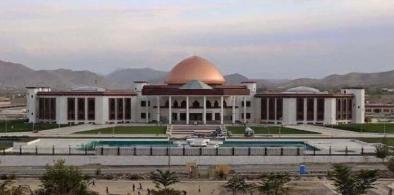
There is little doubt that the Congress will have to pay a heavy price for its blunder in Bihar, writes Amulya Ganguli for South Asia Monitor

By not accusing China of intrusions and putting the onus for talks on the army, External Affairs Minister S. Jaishankar and National Security Advisor Ajit Doval, who is the special representative for border talks, are shirking their responsibilities. This could be by design to blame the army for any territorial compromise forced by the government, writes Lt Gen Prakash Katoch (retd) for South Asia Monitor