

Bombing of Tehran

The Iran Conundrum, Trumpian Dilemma and the Shifting Sands of West Asia

Ray Takeyh, senior fellow for Middle East studies at the CFR believes that the West could have got much better dividends without this war. He says that Araghchi had tabled proposals that called for the suspension of uranium enrichment for several years before allowing it to then resume at low levels. Linda Robinson, CFR’s senior fellow, also feels that there will be mass American casualties if special forces are deployed. Already Arab States are upset with these joint operations with Israel. The consensus among CFR experts is that Trump’s ambitious objectives cannot be achieved merely with joint assaults by air or sea. 

Custodial Killings with no Judicial Remedies: A Sad Tale Across Two Punjabs

Was this the legacy that the great freedom fighters from Punjab – or extend that logic to rest of India and Pakistan where custodial deaths are common – would have wanted their land and its future generations to inherit? As if the breakdown of the country and its gory partition with a divided Punjab were not enough to torment them in their graves, wouldn’t this thought leave them completely shattered and desolate: this divided land is united in its conviction to perpetuate the very colonial mindset they fought. 

Bangladesh's Recent Election was Neither Free nor Fair

The Interim Government arranged extensive state protocol and privileges to the government-sponsored party, National Citizen Party (NCP), parties close to IG like Jamaat e Islami (JI) and their alliances, almost as if they were the government themselves. Similar privileges were given to the BNP and its allies. But no such facility was extended to the JP.

Competitive Populism vs Economic Development: When Forests are Monetised to Fund Revenue Expenditure

A democracy that is cutting down forests for votes risks mortgaging its ecological future for an electoral present. Welfare is essential; appeasement is corrosive. The difference lies in fiscal discipline, transparency and respect for citizens, who are not beneficiaries, but are owners of the republic. If we do not draw that line now, next year’s burden will demand another forest.

More on Perspective

Manipur continues to bleed as political skullduggery continues

According to a new report by the Geneva-based Internal Displacement Monitoring Centre (IDMC), conflict and violence triggered 69,000 displacements in South Asia during 2023, with Manipur alone accounting for 67,000.

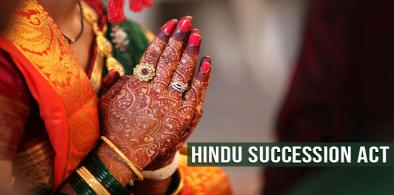
Are Hindus in danger in India due to rising Muslim population?

It is estimated that the Muslim population which is 14.2 per cent as per the 2011 census will stabilize at 18 per cent by 2050 as the trends amongst the Muslim community show. 

India's leadership in economic migration is a mixed blessing

India’s inward remittances keep growing, having more than doubled since 2010, and showing a growth of over 6 per cent per year, ahead of GDP growth. By comparison, China’s inbound remittances have been falling. Pakistan and Bangladesh get about one-fourth of what India gets.

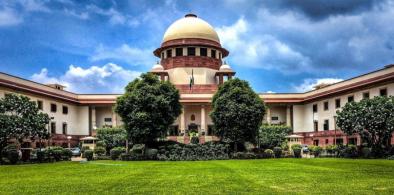
Three verdicts that upheld India's democracy

If democracy does survive in this sub-continent, posterity will certainly hail these recently pronounced three judgments as the primary reason for its preservation.

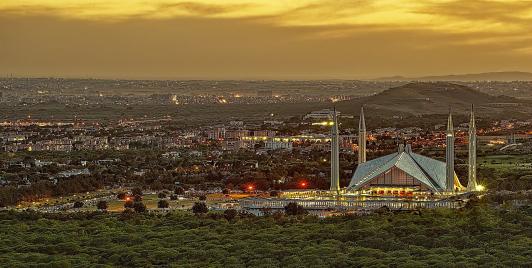
Future of Iran-Pakistan gas pipeline project remains in limbo

While Iran’s ties with the West, especially US, may have hit rock bottom, Pakistan despite the public posturing will not be able to go ahead with the project at the cost of annoying the US.

Manipur: Where voters are more concerned about existential threats than electoral preferences

At the heart of the violence lies majority triumphalism combined with a systematic denial of knowledge acquisition, specifically histories, for the minority community in Manipur.

India's election: Is the Congress setting the agenda with a sharp ideological positioning?

Do note that the BJP because of its sloganeering and expectation-setting has to cross its previous mark of 303 to be seen as victorious; the INDIA alliance has to pull the BJP below 272 to claim victory. Barring the possibility, extremely remote at this time, of the Congress and/or the INDIA alliance faring very poorly at these polls, what we have is a party that will shape the direction of policy in India in the days ahead. 

India's election: What the manifestos missed out

Despite learning a bitter lesson from Covid-19, our governments, whether at the state or national level, have failed to recognise the importance of ensuring trouble-free access to public health.

The unheard public voice: What democracy needs is a strong middle layer

The rich build gated communities for themselves, in which they pay for their own private services of security, and 24X7 power and water supply. They lose sight of the needs of people living outside their walls.

Neglecting the demands of Ladakhis can have bearing on India's national security

Mixing politics with national security in sensitive border regions like Manipur and Ladakh can cost us dearly. China is a rogue state with aggressive designs and well well-advanced in hybrid and conventional conflict with an expanding arsenal of nuclear weapons.

India's rising inequality: Government should work toward a workable wealth tax

One of the Sustainable Development Goals of the United Nations calls for a reduction in inequality. On that count, India must exert more by making the income tax net wider and ensuring a lower indirect tax burden

Gandhi to Modi: The debasement of India’s political discourse

Contrast this exchange against the utterly crass and debased rhetoric, both during the election season and otherwise, that India’s political and cultural leaders, including Prime Minister Narendra Modi, employ.

Unveiling the complexities of Naxalism: Socio-economic disparities, violence, and resistance in contemporary India

The narratives elucidate how historical marginalisation, compounded by contemporary socio-economic inequities, lays fertile ground for the propagation of Naxalite ideology, which promises liberation from caste-based oppression and economic deprivation.

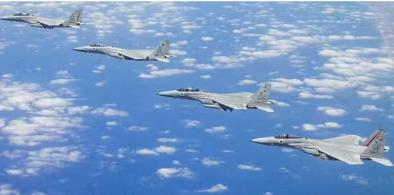
War drums in the Middle East are bad news for the economy

The war clouds just keep getting thicker and darker. And the warmongers have so far outshouted those pleading for peace. The leaders have failed to bring any sanity, let alone ceasefire or peace talks. All this does not bode well for the Indian economy, which has already been struggling with the challenges of inflation, stagnant private investment, high youth unemployment and widening inequality.

Electoral bonds scandal in India speaks of a compromised private sector

This is the inner rottenness of India’s growth story, a self-imposed colonisation of a nation that has lost its standing, never mind the growing GDP.