

India’s Targeted Policy Shift and Return of Chinese Capital
Apart from the changing geopolitical dynamics, economic factors further reinforce the China-oriented dimension of the policy shift. China is India’s second largest trading partner with bilateral trade reaching $127.7 billion in FY 2024-2025, and this figure continues to grow. This trade growth however is marked by a significant imbalance, with India’s trade deficit with China widening by about 17% to $99.2 billion from $85.07% in the same FY.
 Apr 19, 2026

On 10th March, 2026 the Union Cabinet of India approved a proposal to bring significant changes to its Foreign Direct Investment (FDI) policy. These changes included the introduction of new guidelines on investments from Land Border Countries (LBC). These guidelines focus on allowing countries that share borders with India to invest in Indian companies across both critical and non-critical sectors, aiming to unlock greater FDI inflows from global funds for startups and deep tech companies. This marks a significant departure from the restrictive stance which India adopted during the COVID-19 pandemic to curb opportunistic takeover and acquisition of Indian companies.
Under the revised framework, a more differentiated investment regime has been introduced. According to the new guidelines a Land Border Country entity having 10 percent ownership in a non-critical sector Indian company will now be permitted to increase its ownership further under the automatic route and as per the applicable sectoral caps. This provision reduces procedural friction for incremental investments and signals a reopening of space for foreign capital from neighbouring countries. However, all relevant Information and details of such investments must be reported to the Department of Promotion of Industry and International Trade (DPIIT) by the investee entity, which will ensure regulatory oversight. In contrast, to increase its investment in companies of critical sectors like manufacturing in capital goods, electronic capital goods, electronic components,
China-centric Policy Change
Polysilicon and ingot-wafer, a Land Border Country entity still have to seek approval from the authorities, but to fast-track this procedure a 60 days decision/approval timeline has been introduced. The introduction of this timeline makes India a more predictable and efficient destination for capital, particularly for firms seeking to integrate into global supply chains through joint ventures and technology partnerships.
Although these provisions apply to all land border countries, their practical implications are most significant in the case of China. Over the past few years, Chinese investments into India have been constrained by regulatory barriers imposed after the 2020 border standoff. The earlier policy framework effectively slowed down or halted new inflows, especially in sensitive and critical sectors. The current revision, therefore, signals a shift from that restrictive phase towards a more calibrated engagement, where investment is permitted under defined conditions rather than being broadly discouraged.
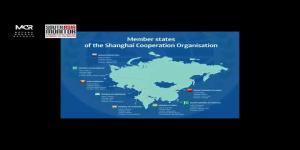
This shift is closely tied to changes in the dynamics of India–China relations in recent years .The complete disengagement of troops by both countries from contentious areas in October 2024 marked a turning point after years of military tension. This disengagement included the return of Indian and Chinese troops from Depsang and Demchok to the positions held before the stand-off of 2020. This was further followed by the restoration of high-level diplomatic mechanisms between the two countries. One of the first instances was the meeting of Indian Prime Minister Narendra Modi with Chinese President Xi Jinping in Kazan, Russia on 23rd October, 2024 during the 16th BRICS summit. The second instance was when the two met again in Tianjin, China on 31st August, 2025, on the sidelines of the Shanghai Cooperation Organization summit. These engagements were accompanied by several meaningful and tangible outcomes such as the resumption of Kailash Mansarovar Yatra after five years and the restoration of direct air connectivity between India and China. Another very significant instance highlighting the improving dynamics between China and India is China’s support for India’s BRICS chairmanship.
Changing Geopolitical Dynamics
Apart from the changing geopolitical dynamics, economic factors further reinforce the China-oriented dimension of the policy shift. China is India’s second largest trading partner with bilateral trade reaching $127.7 billion in FY 2024-2025, and this figure continues to grow. This trade growth however is marked by a significant imbalance, with India’s trade deficit with China widening by about 17% to $99.2 billion from $85.07% in the same FY. This persistent gap reflects India’s dependence on Chinese imports in key sectors such as electronics which accounted for $36.8 billion in FY 2024-25, as well as solar ingots, for which India relies almost entirely on China , precisely the sectors that are now being opened, albeit selectively, to foreign investment.
India’s revised FDI guidelines are a deliberate and targeted policy shift. While officially applicable to all neighbouring countries, their structure, sectoral focus, and timing make it evident that China lies at the centre of this recalibration. By allowing investment inflows from China within a regulated framework, India is seeking to shift part of its economic engagement from trade to investment, while managing geopolitical realities. At the same time, the retention of approval requirements in critical sectors, along with stronger reporting and monitoring mechanisms, indicates that strategic caution remains embedded in the framework.
(The writer is a PhD Research Scholar at Jamia Hamdard University, New Delhi. Views expressed are personal. He can be reached at Yadavsachin0406@gmail.com )






Post a Comment