Bangladesh press freedom

Two Years After the July Uprising, Bangladesh's Press Freedom Remains Under Question

Another defining feature of Bangladesh's current media environment is the emergence of "mob culture." The attack on The Daily Star and Prothom Alo offices is a serious example of mob attack. Media owners often hesitate to invite commentators associated with the previous government or opposing political viewpoints because they fear public backlash, protests, or attacks 

India Loves Political Scandals, But Don't Care How They End Up

For decades, Bofors was treated as a national scandal of almost Biblical proportions, with international ramifications. All guns ablaze. Yet when its judicial afterlife finally reaches a dead end, the story seems to have lost its political ammunition. Not even a recall that the much-maligned gun, which was accused of backfiring at those who fired, not at the target, had vindicated its purchase during the 1999 Kargil conflict.  

From Hashtags to Handcuffs: When Digital Democracy Becomes Digital Surveillance

India therefore needs a serious conversation on algorithmic accountability. If AI increasingly informs policing, citizens deserve clarity on its legal basis, safeguards against misuse, limits on data retention, independent oversight and effective judicial remedies. 

Changing Architecture of the Indian State: Public Trust can Neither be Legislated nor Certified

The recurring examination scandals were failures of governance. Likewise, concerns regarding foreign influence should not preclude critical examination of how regulatory institutions themselves function.

More on Public Policy and Governance

Western double standards over the rise of extremism in Bangladesh

On the streets of Dhaka, terror reigns, as well as across the country. Anti-establishment students are roughed up for speaking out. Extremist mobs roam with impunity. Police stations are besieged and overrun, as in the shocking Shahbag incident. Women are threatened into silence. Hindu families are forced to cancel weddings under threat of religious violence.

India’s Credit Puzzle: Rising Defaults and the Fragile Promise of Financial Inclusion

In a consumption-driven economy like India, expanding credit access—through microfinance NBFCs and fintech lenders—is crucial. However, regulators aInd policymakers must closely monitor this space to avoid large-scale defaults. While underserved consumer segments depend on such loans for upward mobility, repayment capacity must not be overlooked. Sustainable livelihoods and employment generation will be essential to ensuring both credit access and creditworthiness.

Is Bodh Gaya's Mahabodhi Temple Being Brahminized?

We are living in strange times where religion is being blatantly used in pursuit of a political agenda. The Buddha temple is being led on a Brahminical path; Sufi shrines are being Brahmanized. The agitation by Buddhist monks to restore their sacred place to their norms and beliefs is one such example of opposition to impose values that run counter to those of equality and non violence  preached by Lord Gautam Buddha.

India has all the ingredients to become a happy nation

The Happiness Survey reveals mega cities have increased stress levels despite employment opportunities. Overcrowding, social disconnection, and environmental issues disturb the urbanites. Small cities and villages report higher happiness due to stronger social bonds and lower cost of living.

Is It Appropriate For India to Use Rice as Feedstock for Ethanol Production?

India should also explore other avenues to reduce crude oil imports. Ethanol production can be increased through alternate, non-food feedstock like algae. Algae can grow on wastelands or coastal areas, requires no freshwater, and thrives on sunlight and carbon dioxide. Algae species contain around 20% oil, making them ideal for biofuel.

Can India ever catch up with China? Third-largest economy is stuck in middle-income trap

The first “I” of the World Bank stands for investment, which India must increase to 40 percent of GDP. It must also increase labour force participation of women from 35 to 50 percent.  The second “I” refers to infusion of new technologies, by linking with global value chains, by trade agreements, and reducing tariffs and barriers to foreign investment.  The third “I” is innovation, meaning enabling greater investment in research and development

Was Dr. Yunus’s Resignation Drama In Bangladesh Mere Bluff And Bluster?

The real motive behind Sheikh Hasina’s removal, as widely suspected, lies in her steadfast refusal to allow a U.S. military base on St Martin’s Island—an outpost that would give America strategic leverage over Southeast and East Asia. Her resistance to such neocolonial imposition sealed her fate.

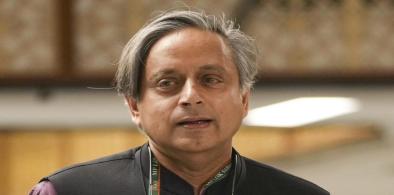
Does Shashi Tharoor have a future in the Congress party?

If Tharoor is indeed disciplined, the Congress Party would have confirmed the popular perceptions of its aversion to intra-party democracy. The extreme form of punishment, of course, would be his expulsion, something that the leadership is unlikely to risk given its electorally vulnerable position. With 99 parliamentary seats, the Congress Party cannot afford to lose any of its members no matter how some of them may step out of the line occasionally.

Pahalgam Tragedy: Need To Stem The Rising Spiral of Hatred

The path forward lies in returning to the principles espoused by former Prime Minister Atal Bihari Vajpayee—Insaniyat (humanism), Kashmiriyat (the unique cultural identity of Kashmir), and Jamhooriyat (democracy). As Vajpayee aptly said, “Friends can change, but not neighbours.” The vilification of Pakistan by the Hindu Right, amplified by a hate-spewing media, has real consequences for Indian Muslims. It poisons the domestic atmosphere and jeopardizes social cohesion.

After The Ceasefire: India Has More At Stake To Keep The Peace

So high military spending is inevitable. But it is clear that peace is not possible without economic prosperity at home. It is also clear that projecting power abroad is not possible without high, sustained and inclusive economic growth.  It is clear that a conflict free, relatively peaceful India will attract the maximum foreign capital in the world.  For this to happen, we have to invest in building peace, and reiterate to the world, that this is not an era of war.

Baying for blood cannot be the way to peace: Case for restraint in a time of conflict in South Asia

Gender politics pervades security decisions. The war-mongering media chorus was mostly male; the decision-makers at the televised but closed-door meetings were mostly male; those who will go into battle and therefore, those killed or injured will be mostly male; and those whose words about security get read and quoted are mostly male. Women still play a minor role in all these areas but are largely the majority of those bereaved, displaced, assaulted sexually, left supporting families and without assets.

Vizhinjam Port Project: A Turning Point in India's Communist Movement?

The commissioning of the Vizhinjam Port under a public-private model reflects a progressive shift in the Indian communist movement without compromising its core values. It demonstrates that modern communism in India can adapt pragmatically while upholding its commitment to equity.Can one then say that the Vizhinjam Port is a symbol of ideological transformation and a turning point for the communist movement in India?

Can Indus waters issue be de-linked from historic grievances? (Reproduction of a 2010 piece by late Harvard professor and water resources expert John Briscoe)

If Baglihar was the only dam being built by India on the Chenab and Jhelum, this would be a limited problem. But following Baglihar is a veritable caravan of Indian projects – Kishanganga, Sawalkot, Pakuldul, Bursar, Dal Huste, Gyspa. The cumulative live storage will be large, giving India an unquestioned capacity to have a major impact on the timing of flows into Pakistan

IPKF denied official battle honours for 35 years for Sri Lankan operation

In 2019 the National War Memorial was at long last constructed in Delhi and from 2021 IPKF veterans and their family members began getting together there in March every year to commemorate the sacrifices of their comrades.  This year, marking the fifth get-together since 2021, the response for the get-together was well over hundred Veterans, Veer Naris (widows of personnel killed in action) and various family members, including some grandchildren of the IPKF personnel.

'Terrorists enjoying safe havens today can easily turn against their hosts tomorrow'

Islam is a great religion, and its followers have a responsibility to ensure that extremists do not continue to tarnish its image. While the global community must persist in its fight against terrorism, the voice of the Muslim community carries special weight in this context. It is imperative that Muslims around the world help reclaim their faith from those who misuse it to justify violence.