
India-Bangladesh border fencing

India’s Push-Ins Could Push Bangladesh Towards China

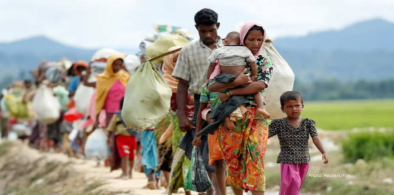
Amid strategic challenges from Beijing in Bangladesh, New Delhi cannot separate border management with foreign policy. New Delhi should hold high-level dialogue with Dhaka and develop a cooperative roadmap to facilitate the identification and repatriation of undocumented migrants from India. 

Growing Sri Lanka-India Defence Cooperation Throws Up Air-Defence Questions

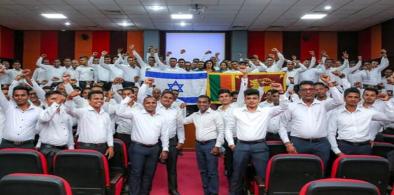
The visit therefore should not be viewed simply as another bilateral defence engagement. It represents an attempt by New Delhi to institutionalise India's security relationship with Sri Lanka, while simultaneously reassuring Colombo that India's expanding security interests need not threaten Sri Lankan sovereignty.

Belgium and India: Building a Strategic Partnership Beyond Economics and Trade

Belgium views India as an opportunity to reduce its economic dependence on China and limit vulnerability to developments in the United States. India offers scale, growth, industrial capacity and ambition, while Belgium offers technology, specialised expertise, logistics and access to the European market.

Guardians of Harmony: Acknowledging Role of Mothers as Peacebuilders

India has its own legacy of maternal peacebuilding, from Jijabai to the Meira Paibi. What we lack is the language to celebrate and institutionalize these contributions. Recognizing mothers as peacebuilders is not just a cultural insight; it is a practical necessity for societies striving for harmony.

More on Geopolitics, Security and Strategic Affairs

India's Solar Moment: The Blazing Sun Presents an Energy Opportunity of Historic Proportions

The current crisis in West Asia offers us a window.  In a world where oil routes can be disrupted overnight by wars India did not start, energy independence becomes a sovereign necessity. Every gigawatt of solar power installed is one step away from the Strait of Hormuz. Every electric vehicle on the road is a barrel of oil India does not have to import. Every rooftop panel is a small act of national self-reliance.

In Fragmenting Global Order, South Asia Needs Strategic Balancing, Regional Cooperation

South Asia’s problem is not that it lacks importance. Its problem is that it lacks collective strategy. Each country is trying to survive the new order separately. India seeks global-power status. Pakistan seeks strategic relevance and economic stability. Bangladesh seeks balanced partnerships and export security. Sri Lanka seeks recovery. Nepal seeks space between two giants. The Maldives seeks bargaining power. Bhutan seeks quiet sovereignty. Afghanistan seeks recognition and survival.

Engineering Threat Perceptions: TTP, ISI and Bangladesh’s Security Narrative

The sudden amplification of TTP-related narratives in Bangladesh appears strategically timed. Observers note that between August 2024 and February 2026, there were credible concerns regarding the facilitation—both overt and covert—of visits by Pakistan-linked militant actors into Bangladesh. Yet, these developments did not receive comparable international attention.

The Tragic Loop of Bangladesh Politics: Did the People Vote for Change or Replacement?

Bangladesh’s political future depends on whether the BNP can discipline its own networks before citizens conclude that elections only rotate predators. It must act against extortion, land grabbing, political violence, campus capture, and intimidation, not as public relations damage, but as regime-defining threats.

When Fish was on the Ballot: Elections 2026 Saw Spicy Debate Over Bengal's Plate, Pride and Palate

In the run-up to the Bengal elections, 2026, the fish debate did exactly that. Banerjee stitched fish to language, secularism and regional pride, painting the BJP as a Hindi-heartland force that would impose vegetarian norms. The BJP countered by showcasing its own non-vegetarian leaders from Assam and elsewhere, eating “macher jhol” on camera, and promising “Bengal’s way of life will not change.”

Lessons from a Downed Aircraft: What Iran Did to America's AWACS Fleet at Saudi Air Base

Iran did not defeat U.S. airpower in this conflict. It demonstrated, with one strike against one aircraft, what happens when force architecture built around high-value irreplaceable platforms meets an adversary that has spent years studying exactly which targets to hit. The E-3 destroyed at Prince Sultan is not primarily a story about one aircraft. 

Sri Lanka-Pakistan Ties in a New Era: Focus on Security Coordination, Military Education

The newest symbol of Pakistan-Sri Lanka defence cooperation is Exercise Shake Hands-II, launched on April 27, 2026, in Tarbela, Pakistan. The two-week exercise brings together Pakistan Army’s elite Special Services Group (SSG) and Sri Lankan Special Forces. The purpose of the drill is to enhance interoperability, exchange operational experience and improve professional capabilities in counter-terrorism scenarios. 

India’s Tightrope: Why New Delhi Cannot Take Sides in the U.S.–Iran War

The question India needs to answer is not whether to side with Washington or Tehran. That framing is itself a trap. The question is whether India has the political will to build the energy independence, the institutional credibility, and the diplomatic infrastructure that would make such a choice genuinely unnecessary.

Deforestation Disrupting Ecosystems, Creating Habitat Loss of Wildlife in Pakistan: Needed Targeted Policy Interventions

Deforestation in Pakistan is a pressing issue with serious implications for wildlife and ecological balance. Habitat loss, human-wildlife conflict, and ecosystem disruption are already evident, and the situation will worsen without decisive action. While initiatives like large-scale tree planting are a step in the right direction, they must be complemented by strong policies, effective enforcement, and community involvement. 

Looming Energy Crisis in South Asia: Strait of Hormuz Disruption is Reshaping Benchmarks of Regional Leadership

South Asian states prioritise partners who can deliver immediately in times of economic and political uncertainty. Despite expanding economic ties with China, they continue to turn to India for vital supplies like diesel, LPG and crude oil. This is not only about proximity but rather reflects a level of trust built through repeated experience. China, in response to the crisis, chose to restrict exports of refined fuels such as gasoline and diesel to protect its domestic market. 

Macroeconomic Stability and Fiscal Sustainability in South Asia: Takeaways from IMF–World Bank Spring Meetings

Macroeconomic stability and fiscal sustainability in South Asia are deeply interconnected and increasingly fragile. While the region continues to grow rapidly, structural weaknesses and external vulnerabilities pose significant risks. Insights from the World Bank and Asian Development Bank highlight that sustaining stability will require improved revenue mobilisation, credible fiscal consolidation, structural economic reforms and reduced exposure to external shocks.   

Climate Refugees Are Rising: Is South Asia Prepared for a Looming Climate Disaster?

South Asia is therefore not facing one climate migration crisis. It is facing many at once. Coastal displacement in Bangladesh and the Maldives is different from mountain displacement in Nepal and Bhutan. Flood displacement in Pakistan is different from drought-linked distress in Afghanistan. India contains almost every version of the crisis within one country. Sri Lanka shows how island and hill communities can be hit together. Yet the policy response remains fragmented.

A Mediator That Bleeds: Pakistan's Peacemaking Role is Riven by Contradictions

Pakistan is invited to the world's negotiating table. But a mediator's power is not spoken; it is demonstrated. A nation for whose people fuel is unaffordable, whose businesses are collapsing and whose independence is limited by 75 IMF conditions is not resilient. Until cheap energy is a strategic priority, until industrial decline is halted, until economic independence is restored, Pakistan's peacemaking pretensions will be hollow.

Will West Bengal State Elections Test India-Bangladesh Ties?

Economic ties are significant for both West Bengal and Bangladesh due to cultural linkages and geographic proximity. West Bengal acts as a gateway for Bangladeshis seeking access to medical facilities, education, and business opportunities. Significant trade also takes place through land ports. Hence, the first response of the BNP-led government would likely be to minimize any chances of a downturn in ties. New Delhi, too, will continue to prioritize Bangladesh, especially at a time when Dhaka has outlined defense modernization plans with likely Chinese help. 

How Sri Lanka Balanced India and China Ties to Maximise Developmental Gains

The architecture of financial and infrastructural assistance deployed by India and China in Sri Lanka differs significantly. Their infrastructure profiles, however, are not fundamentally competitive and instead represent distinct advantages that Sri Lanka has leveraged for its development. India and China are essential pillars of Sri Lanka's development future and economic ambitions.