Colombo Port City

China’s Criminal Footprint in Sri Lanka has Regional Security Implications

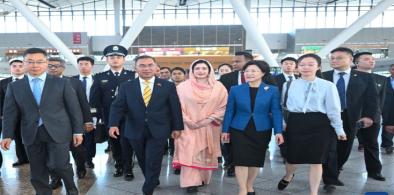
When a Chinese company won the contract to establish hybrid wind and solar energy projects on three islands off the northern Jaffna peninsula—just 45 km from Rameswaram in Tamil Nadu—the security implications extended far beyond economics. Against this backdrop, India’s concerns are entirely justifiable. Sri Lanka faces a pressing question: how will the nation confront the infiltration of Chinese global criminal networks? Since Mahinda Rajapaksa’s tenure, Chinese presence in Colombo has steadily increased, with Sri Lanka positioned as a partner state in Beijing’s Belt and Road Initiative.

Wolf World or a Multipolar World? How Major Powers Exercise Power Will Determine Emerging International Order

The growing role of middle powers adds another layer of complexity. Yet the term itself remains imprecise. Not every country outside the United States and China qualifies as a middle power, and many reject the label altogether. India, for example, increasingly sees itself as a leading power pursuing strategic autonomy rather than as a middle power seeking alignment with one bloc or another.

Is Northeast India's Permit System Inhibiting India-Japan Paradiplomacy? Colonial-Era System may be Stumbling Block to Subnational Exchanges

If India and Japan genuinely envision Northeast India as the gateway connecting South Asia with the Bay of Bengal and the Indo-Pacific, then the next chapter of the partnership cannot remain confined to New Delhi and Tokyo. It must also be written in Guwahati, Shillong, Aizawl, Imphal, Agartala, Kohima, Gangtok and Itanagar 

Bangladesh's Strategic Balancing and India's Neighbourhood Challenge: China Will Consolidate Influence if New Delhi Fails to Deliver

In several neighbouring countries, including Bangladesh, Sri Lanka and Nepal, China has demonstrated an ability to move from agreements to implementation far more rapidly than many competitors. India, despite enjoying unmatched geographic and cultural advantages, has often struggled with delays 

More on Geopolitics, Security and Strategic Affairs

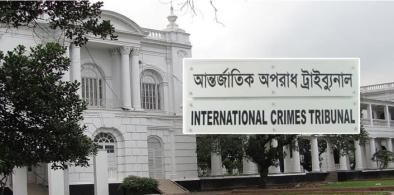
Bangladesh’s International Crimes Tribunal Under Fire: Serving Justice or Political Retribution?

Yunus created a suffocating atmosphere in Bangladesh by pushing the country towards the fate of a Caliphate, threatening the nation’s Bengali soul. Simultaneously, he weaponized the ICT and turned it into an instrument of targeting Sheikh Hasina by appointing Jamaat-e-Islami leaders into key positions in it. As a result, Hasina was handed death penalty in two cases, while she faces hundreds of murder charges—most of which were lodged by the activists of Bangladesh Nationalist Party (BNP) and Jamaat. 

Reevaluating Shakti: Transforming Divine Energy into Powerful Social Capital in South Asia

In modern South Asia, Shakti has been reborn in a different way through social reforms, feminist movement and gender equality policies. Rather than being rooted mainly in the kinship systems, feminine power now becomes more manifest in legal rights, schooling, political involvement and social movements. South Asian feminist movements have been inspired by world notions about gender justice and local cultural practices. In most situations, activists rebrand the concept of Shakti to mean the power of women, their independence and their struggle against patriarchy. 

Iran Is No Pushover: Lessons from a Troop-less War With Regional Ramifications

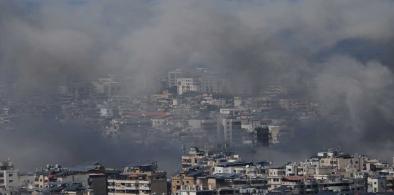
The first 15 days of the conflict have demonstrated that Iran is far from a pushover. While the United States and Israel dominate in technological sophistication and overall military strength, Iran’s resilience, indigenous capabilities, and asymmetric strategies have prevented a quick or decisive victory. What was perhaps expected to be a short, high-intensity campaign is increasingly resembling a protracted and unpredictable conflict—one with serious implications for regional and global stabilit

Strait of Hormuz: From Oil Chokepoint to Clean Energy Turning Point ?

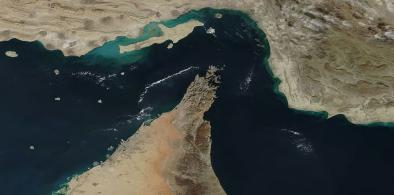
Renewable energy is no longer a distant aspiration. It is increasingly the cheapest, safest, and most secure energy option available. The Strait of Hormuz may be shaking the global economy today - but it may also be opening a window of opportunity. If the world chooses wisely, this crisis could mark the moment when humanity finally begins to move decisively beyond the fossil-fuel era.

Nepal’s Energy Dilemma: Hydropower Projects Run Into Citizen Protests

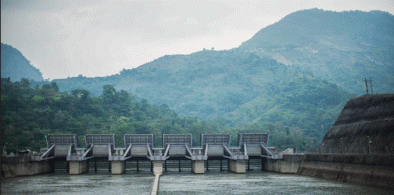
Nepal’s energy development roadmap signals bold ambitions and export agreements with India and Bangladesh, and international organizations say that Nepal is serious about becoming a regional energy powerhouse. From a macroeconomic perspective, for a landlocked country like Nepal, electricity has become its most viable strategic asset to improve trade imbalance, maintain foreign reserves and undertake infrastructure modernization. However, the backlash from provinces and local communities demonstrates that economic expansion alone cannot secure legitimacy

Argumentative Indian: Aiyar-Tharoor Debate Should Provoke Conversation Rather Than Separation

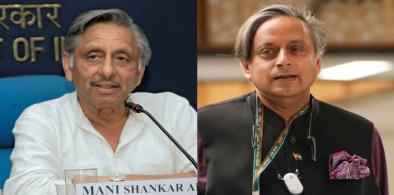
The Aiyar-Tharoor exchange has at least offered something rare in contemporary Indian politics: disagreement expressed in elegant prose rather than television shouting, screaming and even fistfights. In an age dominated by hashtags, studio debates and instant outrage, two politicians exchanging carefully argued letters feels almost like a throwback to a more civilised era. If Indian politics produced more such literary duels, readers/viewers might even begin to look forward to disagreements.

Will Bangladesh's New Government Shelve the July Charter?

Bangladesh stands at a decisive moment. The July Charter challenges the entrenched dominance that has defined its post-1991 political order. Whether it is implemented, diluted, or quietly sidelined will determine not only the balance of power among parties, but also the credibility of reformist politics in the country’s democratic future. If the BNP continues to delay or dilute implementation, and if tacit understandings emerge between the country’s two dominant parties, the reformist aspirations of the July movement may gradually lose momentum.

Witch-Hunting Persists in South Asia Targeting Vulnerable Women: Needed Stronger Protection Mechanisms

Social scientists argue that witch-hunting is a complex social phenomenon rooted not merely in superstition but in structural inequalities. Scholars studying rural India, including Surinder Jodhka, note that accusations of witchcraft often intersect with caste conflict, gender discrimination, and disputes over property or land. Elderly women, widows, and socially marginalized individuals frequently become easy targets because they lack protection within local power structures.

Cultural Diplomacy and Reviving Bangladesh–India Ties Beyond Political Divisions

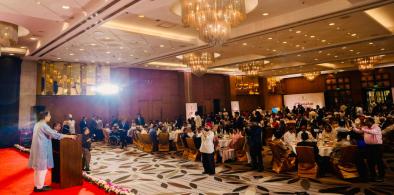
At the iftar gathering, attended by civil society members, ministers, bureaucrats and other distinguished guests, High Commissioner Verma emphasised the shared aspirations of Bangladesh and India. He stated that both nations stand at the threshold of a promising future as two vibrant and forward-looking societies. The event served as a platform to strengthen people-to-people connections and diplomatic goodwill between the two neighbours. By bringing together influential members of Bangladeshi society, the gathering reflected a clear intention to foster deeper engagement 

Raw Courage Amid Patriarchal Terror: Where Girls Have to Disguise as Boys to Survive in Taliban-ruled Afghanistan

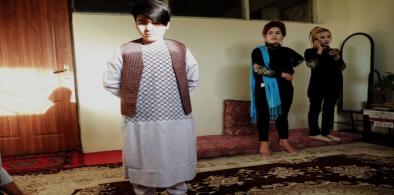
The system under the Taliban regime treats girls as disposable items. They take away childhood experiences and destroy personal identities, creating permanent emotional scars. Yet these girls are not victims without agency. They are survivors carrying entire families on their small shoulders. Omid, Parvana, and every unnamed bacha posh are proof of Afghan, and Pashtun, resilience. The world must see them. The Taliban must hear us that no amount of disguises will hide the truth that women and girls are not lesser.

Khamenei's Assassination and a Fractured Iran: Regional and Global Ramifications of a War of Attrition

Khamenei’s assassination terminates an epoch of ideological confrontation, yet inaugurates profound uncertainty. Legally and normatively, it imperils protections for sovereign leaders; strategically and politically, it probes Iran’s institutional fortitude; religiously and narratively, it unveils unifying and divisive societal forces. Diplomatic containment—through intermediaries such as Oman or Qatar—must prioritise the transition's fragility without incitement. Absent such prudence, this strike risks catalysing a wider regional conflagration, where initial tactical triumphs yield enduring strategic costs.

Reimagining a Cooperative South Asia: A Next-Gen Agenda to Revive SAARC

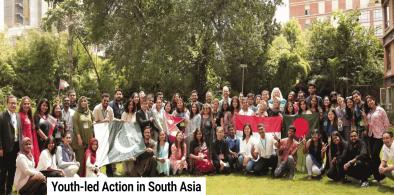
The revival of SAARC will not come from dramatic diplomatic breakthroughs. Instead, it will emerge through incremental cooperation in education, digital infrastructure, disaster response and trade facilitation. Crucially, the future of South Asian regionalism may depend on a generation that increasingly experiences the region not through borders but through shared digital, economic and cultural networks.

US–India Tariff Framework: Trade Concessions Should not Dictate Foreign Policy Choices

Trade adjustments between major economies inevitably reverberate beyond bilateral channels. Bangladesh’s potential tariff advantages in textiles could redirect labour-intensive supply chains. Pakistan, operating within the China-Pakistan Economic Corridor framework, may use India’s perceived alignment with Washington to advance its own strategic narratives. China itself will interpret these developments within the broader context of great-power competition and recalibrate its economic and strategic posture accordingly.

Why Nepal’s Gen Z Succeeded Where Bangladesh’s Failed

A more comprehensive lesson about 21st-century youth politics can be learned from the story taking place between Kathmandu and Dhaka. Gen Z has extraordinary mobilization skills. Protests can grow quickly and upend established power structures thanks to social media networks. But mobilization is insufficient on its own. Successful political transformation requires organization, leadership, and institutional strategy. Nepal’s youth built those structures quickly. Bangladesh’s did not.

Competition for Critical Minerals can be a New Arena for International Conflict

The move by Pakistan in the Security Council is an indicator of increased apprehension among developing countries about the fact that the fruits of energy transition need to be shared more equitably. The Global South has many mineral-rich countries which usually do not get much economic benefit from extraction while bearing its environmental and social costs.