India-Bangladesh border fencing

India’s Push-Ins Could Push Bangladesh Towards China

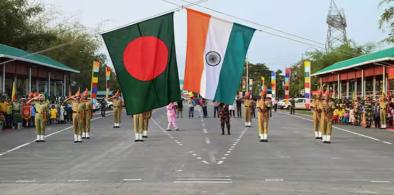
Amid strategic challenges from Beijing in Bangladesh, New Delhi cannot separate border management with foreign policy. New Delhi should hold high-level dialogue with Dhaka and develop a cooperative roadmap to facilitate the identification and repatriation of undocumented migrants from India. 

Growing Sri Lanka-India Defence Cooperation Throws Up Air-Defence Questions

The visit therefore should not be viewed simply as another bilateral defence engagement. It represents an attempt by New Delhi to institutionalise India's security relationship with Sri Lanka, while simultaneously reassuring Colombo that India's expanding security interests need not threaten Sri Lankan sovereignty.

Belgium and India: Building a Strategic Partnership Beyond Economics and Trade

Belgium views India as an opportunity to reduce its economic dependence on China and limit vulnerability to developments in the United States. India offers scale, growth, industrial capacity and ambition, while Belgium offers technology, specialised expertise, logistics and access to the European market.

Guardians of Harmony: Acknowledging Role of Mothers as Peacebuilders

India has its own legacy of maternal peacebuilding, from Jijabai to the Meira Paibi. What we lack is the language to celebrate and institutionalize these contributions. Recognizing mothers as peacebuilders is not just a cultural insight; it is a practical necessity for societies striving for harmony.

More on Geopolitics, Security and Strategic Affairs

India’s Indo‑Pacific Assertion: Act East Policy in Action in Modi Visit

The significance of PM Modi's visits marks a shift from episodic diplomacy to structured engagement. The convergence of defence, economics, and technology across these four partnerships signals a pragmatic foreign policy. 

China at the Core of the India-Japan Strategic Partnership

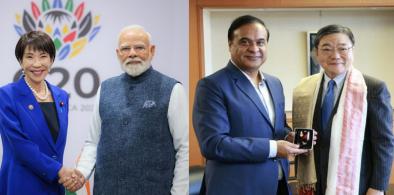
Yet, strategic behavior of both India and China is fundamentally opposed to each other as witnessed in the agreements signed between India and Japan during Takaichi’s visit to India. China views India’s foreign policy as an effort to embed itself in an alliance aimed at containing it.

Why the NATO summit in Ankara matters for South Asia

The NATO summit can indirectly transform India from a regional power into a West Asia stakeholder by integrating India into maritime security frameworks, supporting connectivity projects, strengthening intelligence ties, reinforcing India’s role as an alternative to China. The long-term outcome is that India could emerge as a pillar of stability linking Europe, the Gulf, and the Indo-Pacific

India–Japan Summit: Strategic Convergence in a Changing Indo-Pacific Order

Japan has also proposed developing a Bay of Bengal–Northeast India Industrial Value Chain aimed at transforming the region into an integrated industrial zone. As part of the Free and Open Indo-Pacific vision, this includes strengthening cross-border connectivity with Bangladesh, Myanmar, Nepal and Bhutan. 

China and the Emerging Scenario in the Bay of Bengal

China's expressed interest in modernising and upgrading both Chattogram and Mongla ports suggests the emergence of an interconnected infrastructure network linking the Bay of Bengal with southwestern China through Myanmar. If realised, such connectivity would enhance trade flows, improve regional logistics and deepen China's economic footprint across the Bay of Bengal littoral, while simultaneously increasing Bangladesh's importance as a regional transit and connectivity hub.

Colombo to Kathmandu, China Seeks to Counteract US Moves Across South Asia

While Washington and New Delhi seek to strengthen bilateral ties with Colombo, Beijing has strategically engaged with the political forces that control the government. By engaging directly with actors at the core of Sri Lanka’s governance, Beijing appears to be signalling its strategic intent—projecting influence and reinforcing ideological ties. 

A Divided EU Faces Growing Scrutiny Over Taliban Contacts

Some analysts accuse the EU of double-standards arguing  that the EU has been condemning Taliban policies since they assumed power, but were now holding direct discussions with them. Such meetings undermine the EU's credibility as a defender of human rights and democratic values.

Sentenced to Silence? Mahrang Baloch’s Life Imprisonment Raises Uncomfortable Questions for Pakistan

Despite the narrative of the Pakistani state, Mahrang Baloch’s international recognition grew  through 2024.  Time magazine included her in its TIME100 Next list of emerging influential figures, citing her advocacy against enforced disappearances while the BBC named her to its 100 Women list. 

Seychelles' Importance to India: Modi Visit and Quest for Maritime Security and Stable Indian Ocean

Great powers realise the strategic value of small island states - refuelling facilities, logistics hubs, electronic listening posts, maritime surveillance nodes, diplomatic partnerships and access to vast EEZs. Their influence derives more from geographic position and political choice than from demographic size. Seychelles exemplifies this reality.

China's Nuclear Disarmament Diplomacy and its Expanding Strategic Arsenal

The unprecedented scale of China's nuclear infrastructure build-up increasingly raises questions about whether this represents strategic balance or strategic hypocrisy. As Beijing's capabilities grow, so too will international scrutiny of the widening gap between its disarmament discourse and its nuclear realities.

A Gulf Truce with Global Consequences: Will it Bring Durable Peace?

A military confrontation in the Gulf can raise food prices in South Asia, accelerate inflation in Africa, disrupt supply chains in Europe, and unsettle financial markets across the globe. The reopening of the Strait of Hormuz is therefore more than a maritime development; it is a reminder of the profound interdependence that defines the contemporary international order.

Bangladesh’s Lord Ram Statue Controversy fuels Renewed Debate over Religious Freedom and Social Cohesion

The controversy surrounding the proposed Lord Ram statue has emerged at a time when the BNP government has been in office for only 100 days. Some political observers believe that certain groups may be attempting to exploit the issue to deepen existing tensions between Bangladesh and India 

Foreign Funds, Civil Society Freedoms, National Security and India-US Friction

Every democracy permits foreign funding under regulated conditions. The question is whether democratic states possess adequate mechanisms to ensure transparency, accountability and protection against external influence operations, which could be against core national interests.

India's Push-In Policy on Suspected Illegal Immigrants: Need to Mitigate Human Suffering

Over the past two months, a series of alleged push-in incidents along the Bangladesh-India border has reportedly left scores of people stranded in zero-line and no-man's-land areas under difficult conditions.

From Protectorates to Partners: The US Resets Security Expectations in Asia

The central message at the Shangri-La Dialogue is that America is staying, but on new terms. It will remain the core military balancer in the Indo-Pacific, but it expects allies and partners to become serious contributors. The era of strategic free-riding is ending. The new Indo-Pacific order will increasingly be defined by those willing and able to share the burden of preserving it.