

Hasina’s December Gamble: Will it Become a Moment of Confrontation or Reconciliation?
December could therefore become much more than Victory Month. It could become a test of whether Bangladesh's next chapter will be written through democratic accommodation or another round of political vengeance. The danger is that a leader returning to face her past could inadvertently reopen the country's deepest wounds.
 Aug 09, 2026
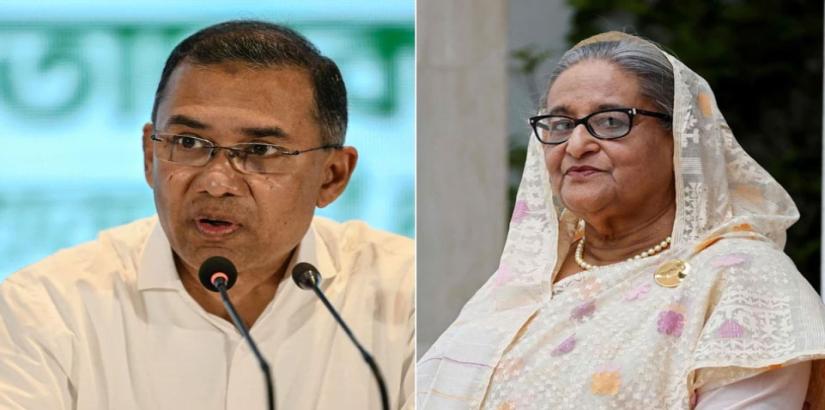
Sheikh Hasina has chosen an unusually loaded month for her proposed return to Bangladesh. December is not merely another page on the calendar. It is Victory Month, culminating in December 16, when Bangladesh commemorates the surrender of Pakistani forces in 1971 and the birth of the nation. For Hasina and the Awami League, the symbolism is particularly potent because the party has traditionally presented itself as the political custodian of the Liberation War, Bengali nationalism and the legacy of Sheikh Mujibur Rahman.
That makes the announcement considerably more than a declaration of personal intent. It is a political message, a psychological signal and potentially a calculated attempt to reclaim a narrative that has been under sustained assault since Hasina fled the country in August 2024.
Her proposed return also carries an extraordinary degree of risk. She faces a death sentence in absentia, multiple criminal cases and the likelihood of immediate arrest. Yet she has said she is prepared to return and surrender. Her earlier declaration that she and senior Awami League figures would return together suggests that this may be conceived not as the homecoming of an individual, but as an attempt to revive a political movement that has been pushed to the margins.
What Hasina Return Might Unleash
The central question, therefore, is not whether Hasina can physically return. She can. The more important question is what her return would unleash.
Bangladesh has already experienced an extraordinary political rupture. The fall of a leader who had dominated the country for years did not automatically produce political reconciliation. Instead, the Awami League was banned, its leaders faced arrests and prosecutions, and symbols associated with Mujibur Rahman and the party became targets of public anger. The political space that opened after Hasina's departure has consequently been intensely contested.
Her physical presence could transform that contest overnight. An exiled Hasina can be dismissed by her opponents as a fugitive living under Indian protection. A Hasina standing in Bangladesh, facing arrest and possible imprisonment, would be a very different political proposition. She could present herself as a leader willing to confront the consequences of her actions and challenge what she regards as politically motivated proceedings. Her supporters, meanwhile, could portray her return as an act of defiance and sacrifice.
That is precisely where the danger lies. If large numbers of Awami League supporters mobilise around her arrival, the government would face an unenviable choice. Allowing a major political mobilisation could be interpreted as surrendering control of the streets. Suppressing it could create precisely the kind of confrontation that turns Hasina from a controversial former prime minister into a political martyr.
Bangladesh could consequently find itself caught in a cycle of mobilisation, counter-mobilisation and repression. The possibility of clashes between Awami League supporters and rival political or Islamist groups cannot be dismissed. Even a relatively limited confrontation could acquire an exaggerated political and communal dimension in an atmosphere already charged with suspicion.
The greatest danger would not necessarily be a return to the old Hasina versus Khaleda Zia-style binary. Bangladesh's political landscape has changed. New actors, new ideological currents and a younger generation that played a decisive role in the 2024 upheaval have entered the arena. Hasina's return could therefore produce a three-way or even more fragmented struggle for political legitimacy.
Choice of December
This is why December is such an interesting choice. Victory Month gives Hasina an opportunity to wrap her political argument in the language of national history. By returning at a moment when the Liberation War occupies the centre of Bangladesh's public consciousness, she can attempt to shift the argument from "Hasina versus the State" to "What kind of Bangladesh did the Liberation War create, and who has the right to claim its legacy?"
That is a much more formidable political question. It also places her opponents in a difficult position. If they arrest her immediately, they risk turning her detention into the defining spectacle of Victory Month. If they permit her supporters to organise, they risk allowing the Awami League to regain political oxygen. If they suppress demonstrations, they could reinforce Hasina's contention that democratic space has been denied to her party.
In other words, almost every response carries a political cost. Yet there is another possibility. Hasina's December announcement may be partly intended to create negotiating space rather than necessarily culminate in a dramatic homecoming. By fixing a date several months away, she has given Bangladesh and India considerable time to assess the political environment. Circumstances could change substantially before December. Legal proceedings could evolve. Political negotiations could begin. Guarantees could be discussed. The Awami League's status could be reconsidered. A political accommodation that presently appears impossible may become less impossible if the costs of continued confrontation rise.
India, inevitably, sits at the centre of this equation. New Delhi has so far maintained that Bangladesh's extradition request concerning Hasina is a legal matter and that it will be dealt with according to applicable law and due process. India has not publicly committed itself to handing her over.
That ambiguity is strategically useful to India. It gives New Delhi room to manoeuvre without publicly turning Hasina into an instrument of Indian policy. At the same time, India has a substantial interest in preventing Bangladesh from sliding into prolonged instability.
India's preferred outcome is unlikely to be a Bangladesh permanently aligned against it. Geography makes that unrealistic. Bangladesh shares a long border with India, surrounds much of the country's northeastern access, and occupies an important position in the Bay of Bengal. Stability in Bangladesh is therefore not a luxury for New Delhi. It is a strategic necessity.
India consequently has to perform a difficult balancing act. It cannot appear to dictate Bangladesh's internal politics. Nor can it afford to ignore the security implications of an increasingly hostile Dhaka. New Delhi must preserve working relations with the government of the day while simultaneously ensuring that Bangladesh does not become a platform for anti-India militancy, uncontrolled cross-border activity or intensified communal tensions.
Hasina's continued presence in India complicates that calculation. Her recent public intervention from New Delhi has already provoked an angry reaction from Dhaka, which accused India of allowing an affront to Bangladeshi sovereignty. India, for its part, has distanced itself from the event.
The incident is instructive. Whatever New Delhi's private calculations may be, it cannot afford to be seen as directing Bangladeshi politics through Hasina. Such a perception would strengthen the very nationalist forces that are hostile to India.
At the same time, India cannot casually abandon a former leader who has been living on its soil since fleeing Bangladesh. Extraditing her in circumstances where she faces a death sentence would have enormous political and humanitarian implications. Keeping her indefinitely in India, however, will remain a source of friction with Dhaka. That is India's dilemma.
Opportunities for Islamabad?
Pakistan, meanwhile, has an entirely different calculation. Islamabad does not need to engineer events in Bangladesh to benefit from a deterioration in India-Bangladesh relations. A Dhaka that becomes more suspicious of New Delhi automatically creates additional strategic space for Pakistan. The historical irony is considerable. Bangladesh was created through a war that decisively separated it from Pakistan, yet any weakening of India's influence in Dhaka inevitably creates opportunities for Islamabad to rebuild diplomatic, economic and ideological contacts.
Pakistan's likely interest, therefore, would be less about Hasina personally and more about the strategic consequences of her return. If her homecoming produces political polarisation and a prolonged confrontation with the government, Islamabad could seek closer relations with whichever constituencies become receptive to it. Diplomatic engagement, trade, defence contacts and people-to-people links could all become more attractive avenues.
But Pakistan should not be overestimated here. Bangladesh is not waiting to become Pakistan's strategic satellite. Its nationalism is deeply rooted in the history of 1971, and any Pakistani attempt to exploit the situation too aggressively could generate a backlash. The more realistic Pakistani opportunity would be incremental - regain diplomatic space, improve visibility, expand contacts and benefit from any cooling of the traditionally close India-Bangladesh relationship.
What Kind of Bangladesh India Wants
For India, the larger concern is therefore not Pakistan suddenly becoming dominant in Dhaka. It is the gradual erosion of India's strategic goodwill and influence.
That erosion would matter enormously. For decades, India benefited from a relatively cooperative Bangladesh under Hasina. Security cooperation improved, connectivity expanded and the northeastern states benefited from greater regional integration. A hostile or unstable Bangladesh could reverse some of those gains. The consequences could extend from border management and migration to trade, transit, counterterrorism and India's northeastern security architecture.
This is why New Delhi has to look beyond the immediate question of whether Hasina should be extradited. The real strategic question is what kind of Bangladesh India wants to see emerging from this political upheaval. A stable, democratic and pluralistic Bangladesh, regardless of which party governs it, is clearly in India's interest. A Bangladesh trapped in political vendetta, street violence and ideological polarisation is not.
Three Possible Scenarios
Hasina's return could conceivably contribute to either outcome. In the most optimistic scenario, her arrival forces Bangladesh's political class to negotiate. The Awami League could seek a controlled return to political activity, perhaps subject to legal accountability. Hasina could face the judicial process without the proceedings becoming a vehicle for political revenge. Her supporters could return to mainstream politics. The government could gradually rebuild democratic institutions by allowing political competition rather than attempting to permanently eliminate a major party. That would be the mature outcome.
The darker scenario is considerably more troubling. Hasina returns, is arrested, and her supporters take to the streets. Rival groups respond. Violence spreads. The government resorts to force. Communal tensions rise. The Awami League begins portraying itself as persecuted, while its opponents portray any mobilisation as an attempt to resurrect an authoritarian order. The result could be prolonged instability, economic uncertainty and a further deterioration in relations with India.
There is also a third possibility, perhaps the most politically realistic. Hasina returns but becomes the centre of a prolonged legal and political standoff. She is detained or placed under stringent restrictions while negotiations continue over the future of the Awami League. The party remains politically weakened but is not entirely extinguished. Over time, Bangladesh's political system is forced to absorb it in some form.
Such an outcome would not satisfy everyone, but it might prevent the country from being consumed by the politics of permanent retribution.
Ultimately, Hasina's December gamble is a test of whether Bangladesh can distinguish accountability from political annihilation. There is a legitimate question about whether a former leader facing grave allegations should be held accountable. There is an equally important question about whether an entire political constituency can simply be erased from democratic life. The answer to one should not automatically determine the answer to the other.
Country at Crossroads
Bangladesh now stands at an unusually consequential crossroads. Hasina's return could become a moment of reconciliation, a moment of confrontation or a catalyst for another period of instability. Much will depend on how the government handles her arrival, how her supporters behave, how rival political forces respond and whether the judiciary is allowed to operate with credibility rather than becoming an extension of political conflict.
For India, restraint will be as important as influence. New Delhi's objective should not be to restore Hasina to power. Nor should it be to facilitate her political destruction. Its larger interest is a stable neighbour whose territory is not used against Indian security interests and whose political system remains sufficiently open to accommodate competing forces.
For Pakistan, the temptation will be to read every deterioration in India-Bangladesh relations as an opportunity. But Bangladesh's political evolution will ultimately be determined in Dhaka, not Islamabad.
And for Bangladesh itself, the most important question is perhaps the simplest. Can a country born out of one of the bloodiest struggles for national self-determination construct a political system in which victory does not require the permanent humiliation of the defeated?
Hasina's return, if it happens, may provide the answer. December could therefore become much more than Victory Month. It could become a test of whether Bangladesh's next chapter will be written through democratic accommodation or another round of political vengeance. The danger is that a leader returning to face her past could inadvertently reopen the country's deepest wounds. The opportunity is that, by confronting those wounds rather than burying them, Bangladesh might finally begin to move beyond them.
(The author is a veteran Indian journalist, editor and commentator on regional and international affairs. The views expressed are personal. He can be reached at krajuster@gmail.com)
Relegated to prison with several cases to last a lifetime of confinement...
Hope, it is not what I fear.
🙏❤️🙏





Post a Comment