

Prolonged West Asia Conflict: US Loss of Credibility, Enormous Cost to the World
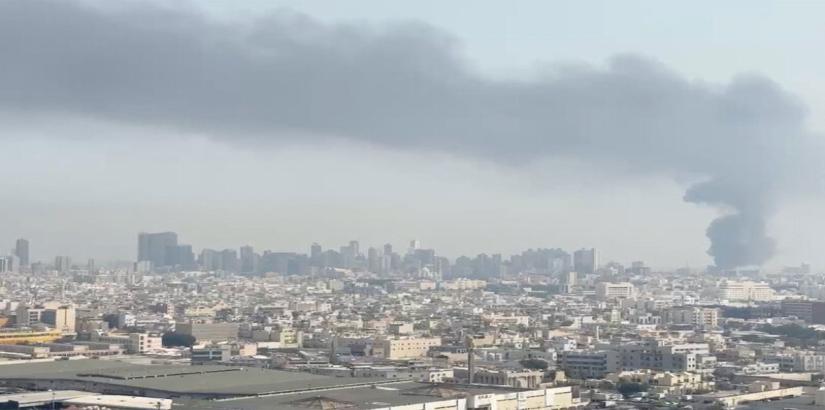
Here is something that is perhaps not widely reported. According to this account, Iranian forces were able to destroy a significant part of the logistics infrastructure supporting these large carrier operations. They struck the central logistics hub in Bahrain very early in the conflict.
 Aug 25, 2026
Iran’s President Masoud Pezeshkian has recently said that it would be better if the war ended now, while Iran is still in a position of strength. Does this indicate that Iran is beginning to feel the economic squeeze from the United States?
The reality, however, appears to be that both sides are currently in a stalemate. Both are making moves and hoping the other side will blink first. The United States is trying to apply economic pressure, while Iran continues to use the closure of the Strait of Hormuz as a source of economic leverage and fires missiles at US allies in the Arab world.
Both sides appear to believe that the pressure they are applying will eventually force the other to give way. Yet there is little indication that this is happening. US intelligence reportedly suggests that economic pressure alone is unlikely to persuade Iran to agree to an end to the war.
The Cost of a Prolonged War
The more worrying assessment, therefore, is that the war could become prolonged. Such a conflict would continue to hurt Iran, but it would also impose significant economic and strategic costs on the United States. The wider world, already affected by the conflict and its disruption to energy and trade, is watching closely.
What they see is the possibility of yet another prolonged war involving the United States—one that could further damage American credibility and influence in the world. The danger for Washington is therefore not merely the immediate cost of the conflict, but what a prolonged stalemate may say about the limits of American power and its ability to bring wars to a credible conclusion.
The Shift to Economic Warfare
China is responding to President Trump’s new threat against Iran, which includes imposing economic penalties on any country doing business with Tehran. Beijing’s Foreign Ministry spokesperson has said that sanctions and pressure tactics are not the solution.
Iran, for its part, is vowing to prosecute and imprison anyone who participates in President Trump’s so-called economic “D-Day” against Tehran. This follows Trump’s declaration that he intends to impose what he described as the most crushing economic operation ever undertaken against any country, while demanding that other nations stop doing business with Iran.
This is part of the President’s new strategy to crush Iran financially rather than continue with sustained bombing. Is this strategy a better choice?
The assessment offered by US Navy Admiral James Stavridis (Ret.) is that it is the best of a number of bad options. Trump could return to full-scale hostilities and drop “lots and lots of bombs.” But that would be enormously expensive, both in terms of the munitions involved and the potential loss of lives on both sides.
Alternatively, President Trump could simply wash his hands of the conflict - no pun intended, given its maritime character - and walk away. That, too, would be a poor option.
What remains, therefore, is essentially what we are seeing now: a blockade along Iran’s coastline. Ports along Iran’s roughly thousand-mile coastline are being subjected to pressure.
The Challenge of Sustaining the Blockade
From what can be seen, the US Navy appears to be doing a reasonably good job of maintaining that pressure. However, it is not enough to produce a quick result. The United States is therefore attempting to enlist the rest of the world to participate in or support this blockade.
That is likely to prove problematic. China may only be the first major country to decline the invitation to participate in such an effort.
Meanwhile, the USS George Washington has arrived in the region to replace the USS Abraham Lincoln. It has been reported that sailors aboard the Abraham Lincoln had been facing serious difficulties, including supply shortages, after an exceptionally long and stressful deployment.
Carrier crews operating for prolonged periods are expected to endure demanding conditions, but they depend upon a complex logistics system for food, maintenance and other essentials. They are supposed to have adequate food, hot showers and opportunities to rest away from the front line.
The Vulnerability of Logistics
So, what happened?
Here is something that is perhaps not widely reported. According to this account, Iranian forces were able to destroy a significant part of the logistics infrastructure supporting these large carrier operations. They struck the central logistics hub in Bahrain very early in the conflict.
If that assessment is accurate, it points to an important dimension of modern warfare. The effectiveness of a carrier battle group depends not merely on the warships and aircraft themselves, but on the vast logistical network that keeps them supplied, maintained and operational.
And that may become increasingly important if this conflict develops into a prolonged war of attrition.
Sanctions May Not Have Desired Effect
In regard to sanctions, an important aspect is that if they are not coupled with measures to restrict supplies reaching Iran, such as the rail links through Turkmenistan that connect to the Russian and Chinese rail systems, the sanctions may not have much effect. The Iranians are very much used to surviving under sanctions and have become adept at doing without many of the things that the rest of the world takes for granted.
If these sanctions are to be effective, it will therefore be critical to combine significant action on both the military and economic fronts.
The Humanitarian and Legal Dimension
But there is also an important legal and humanitarian dimension. If the United States were to impose sanctions on countries such as Russia, China or others that continued to send food, medical supplies or medical equipment to Iran, would that amount to a war crime?
Potentially, yes. Under modern rules of warfare, deliberately cutting off food and essential supplies to civilian populations is prohibited. In earlier conflicts, including World War II, there were instances where food supplies were deliberately cut off. But the modern laws of armed conflict treat such actions very differently.
Beyond the legal implications, such a move could also have serious geopolitical consequences. It could trigger a major international outcry and influence how other countries respond to the United States.
A Possible way out
A possible way out is for the international community to put pressure on both the United States and Iran and encourage them to seek a diplomatic solution. Whichever way this war ultimately ends, the United States has already suffered a loss of credibility. Prolonging the conflict is unlikely to restore that credibility; instead, it risks imposing an enormous cost on the rest of the world.
The recent American economic offensive may further aggravate this problem. The United States is not merely imposing sanctions on Iran; it is seeking to persuade, and potentially pressure, other countries to participate in those sanctions.
For countries that have their own economic interests and foreign-policy priorities, this can increasingly be perceived not as American leadership, but as an attempt to make the rest of the world conform to American policy. China’s reaction may therefore be only the beginning of wider resistance.
The international community is already increasingly critical of the United States for initiating the war. If the original objective was to address Iran’s nuclear ambitions, and if the Strait of Hormuz is being disrupted as a consequence of the conflict, the justification for continuing the war becomes increasingly difficult to sustain.
Whatever the original objectives, a prolonged conflict could end up causing far greater damage to global energy supplies, trade and economic stability than the problem it was intended to address.
Perhaps the most pragmatic course now is therefore not to seek a military victory at any cost, but to create the conditions for both sides to step back. Diplomacy may offer neither side everything it wants, but it could provide something that continued warfare cannot: a way out without making the cost to the world even greater.
(The author is an Indian Army veteran and a contemporary affairs commentator. The views are personal. He can be reached at kl.viswanathan@gmail.com )





Post a Comment