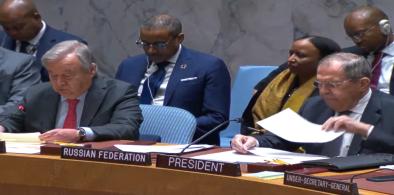
Lavrov said that the United States and the West were against a multipolar world and wanted their dominance to continue.


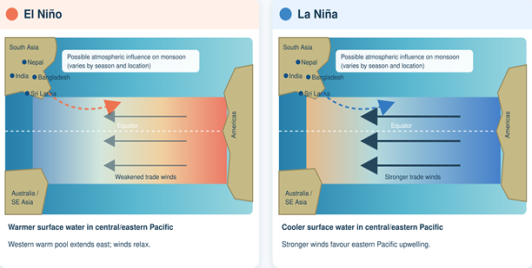
AI may genuinely extend the horizon over which seasonal climate risk can be estimated. For communities across South Asia living under the influence of the monsoon, a longer view could mean the difference between a farmer adjusting her planting in time and a family receiving a flood warning too late to act.
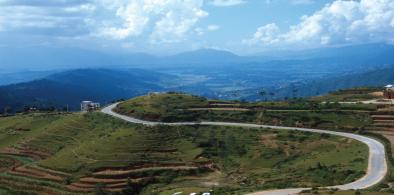
The broader lesson for South Asia is equally important. Hilly regions cannot be developed simply by transferring lowland infrastructure models into mountainous terrain. Investment has to respond to local economic systems, geography and environmental risks.

The UN's 2026 report warns that “long-term water use has exceeded renewable inflows and safe depletion limits,” leaving some water supplies beyond recovery. As the world’s largest groundwater extractor, India sits at the centre of this reckoning
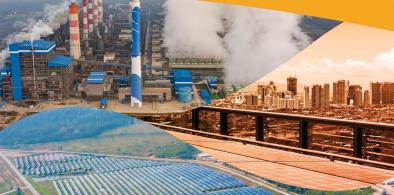
The larger economic choice for South Asia is therefore broader than whether to participate in carbon trading. The region can remain primarily a supplier of relatively inexpensive mitigation outcomes, or it can also develop the technology, professional capacity, financial products and verification systems that determine what those outcomes are worth.
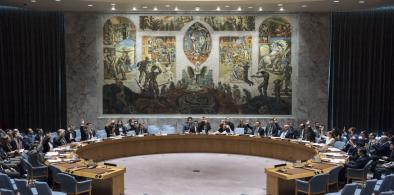
Lavrov said that the United States and the West were against a multipolar world and wanted their dominance to continue.
Pakistan’s Permanent Representative Munir Akram struck a discordant note by opposing the addition of permanent members to the Council. China's Permanent Representative Zhang Jun supported calls for reforming international financial institutions but was silent on the Council -- opposing it would have roiled the African nations that form the largest group at the UN.
There are about 4,000 Indian citizens in Sudan, and according to the Indian embassy in Khartoum of them, about 1,500 are longtime residents. An Indian ex-serviceman. Albert Augustine, who was working in Sudan, was killed by a stray bullet as he was speaking to his son while standing at the window of his apartment.
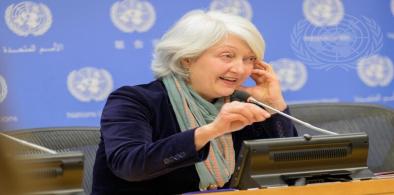
The challenges for India, she said, are “there's so many people that are in the informal labour market. Again, educational standards are highly uneven – if you go north to south, south to north in India, we see tremendous diversity within such a large country”.
Secret documents floating in social media and chat groups showed that the administration of President Joe Biden has been spying on UN officials as well as other international leaders, including US allies.
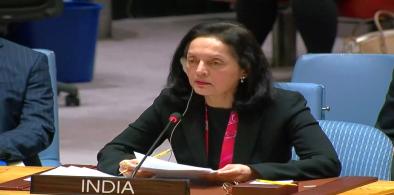
Indian officials have reported drones coming in from Pakistan to drop weapons and drugs for terrorists in Punjab and Kashmir. Last year till November, at least 22 such drones were reported captured by Indian agencies and 266 drone infiltrations were reported during the year.
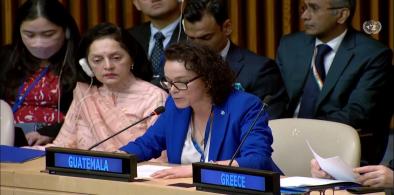
China’s poor performance in the Statistical Commission election, securing only 19 votes and trailing South Korea was a surprise because of the extensive diplomatic and economic campaigns it has undertaken around the world.
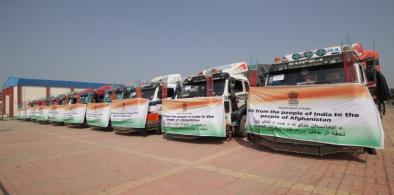
India and the UN’s World Food Programme signed an agreement last month to provide Afghanistan with 20,000 tonnes of wheat that would be sent through the Chabahar port that India is developing in Iran near the Afghanistan border, bypassing Pakistan.
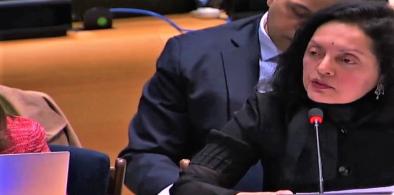
The strategy advocated by India would expose countries like China and the members of the Uniting for Consensus (UfC) group of which Pakistan is a leading member in relation to Africa, the largest regional group in the UN.
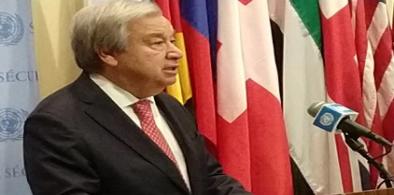
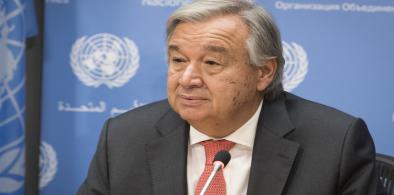
Guterres said that he has proposed to the India-led G20, the group of major emerging and developed economies, “ a Climate Solidarity Pact – in which all big emitters make extra efforts to cut emissions, and wealthier countries mobilize financial and technical resources to support emerging economies in a common effort to keep 1.5 degrees alive”.
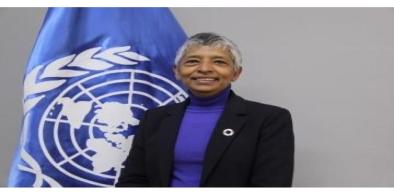
During her career of over 30 years in international humanitarian and development work, Parvathy had worked with the Asia Pacific, West Africa, Regional and Global Headquarters of WFP, according to the UN. Her experience includes strategic planning, risk management, conflict analysis and humanitarian access negotiations, the UN said.
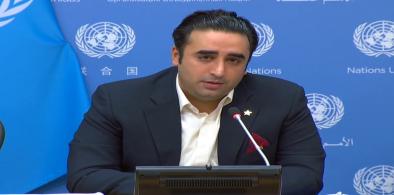
Reflecting the confused attitude of Pakistan towards India, Bilawal stumbled in his attempts to refer to India, starting with “our friends within...” then trying “with our friend... our... our...” and then backtracking to settle on “our neighbouring countries”.
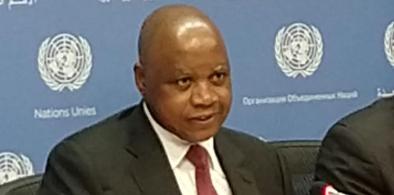
“Terrorism is terrorism”, he said dismissing excuses some countries make.
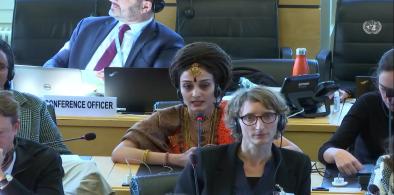
A woman with heavy makeup wearing a turban, a pendant on her forehead and necklaces introduced herself with what sounded as Vijayapriya Nithyananda, USK’s representative to the UN, She claimed that under “Supreme Pontiff of Hinduism” Nithayananda, “Kailasa has been implementing the ancient Hindu policies and indigenous solutions that are in alignment with a time-tested Hindu principles” for sustainable development”.
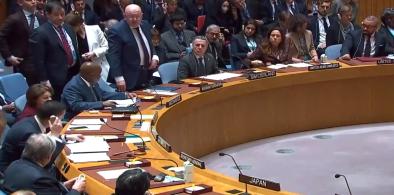
Blinken said, “When President Putin couldn’t break the Ukrainian military, he intensified efforts to break Ukrainians’ spirit”, he said listing what he said was the war’s toll: Tens of thousands of Ukrainian men, women, and children; more than 13 million uprooted people from their homes; more than half of the country’s energy grid destroyed; more than 700 hospitals, 2,600 schools bombed; and at least 6,000 Ukrainian children taken away to Russia.